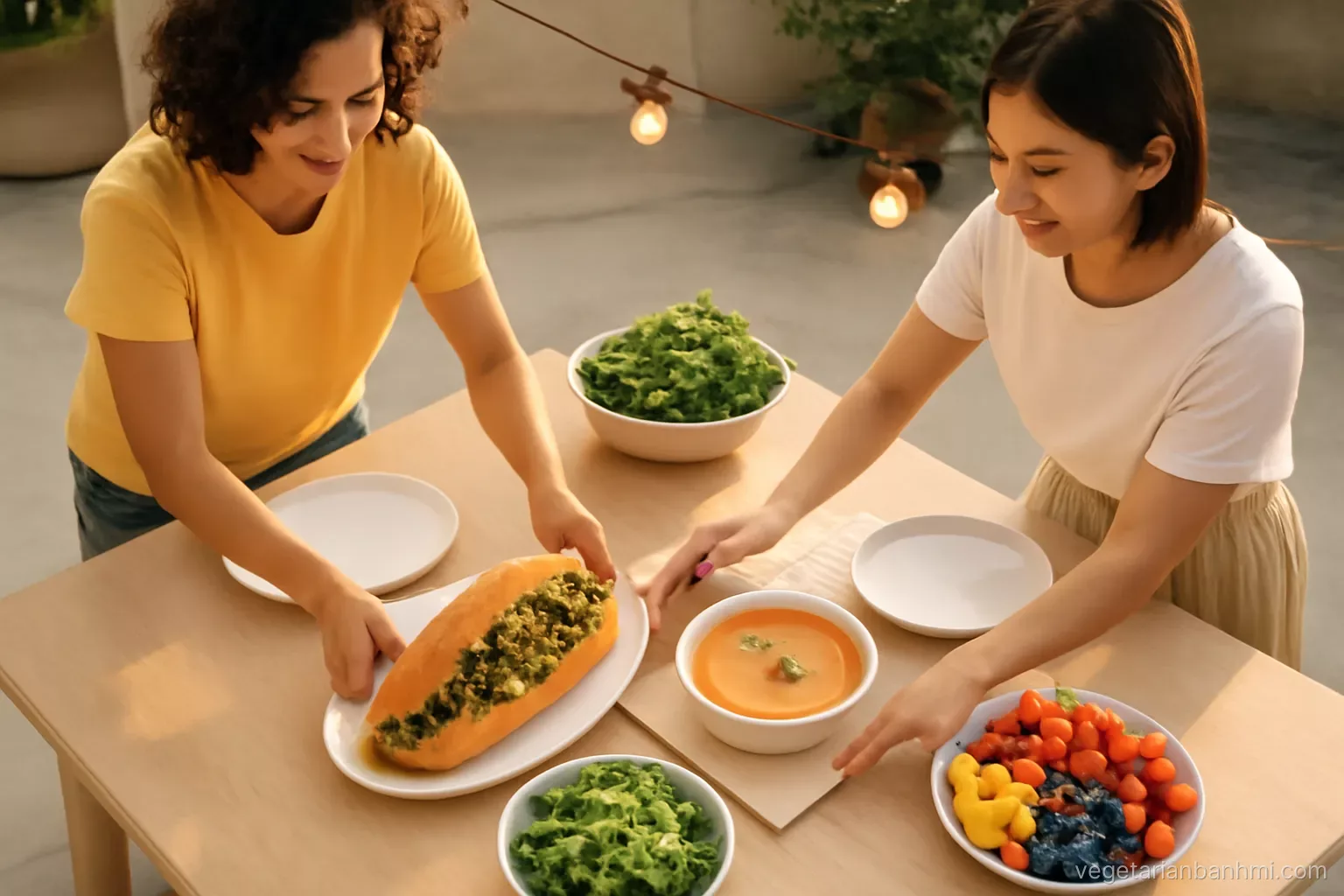
Short answer: To turn a vegan banh mi into a full meal, add one hot or brothy element (a light soup), one fresh vegetable element (a salad or fresh rolls), and fruit or a drink to finish. A tofu, tempeh or seitan banh mi already supplies carbohydrate, protein and some vegetables; the sides add volume, fibre and variety. The menus below serve 4 and include a timeline so everything is ready at once.
Is a banh mi a full meal on its own?
In Vietnam, a bánh mì is usually eaten as breakfast or a quick snack, and for many people a single sandwich is enough. As a lunch or dinner for a hungry adult, especially a vegetarian version, it can feel light. A typical roll of 70–90 g provides roughly 190–240 kcal based on USDA figures for French-type bread, and a filling of 100 g firm tofu adds about 144 kcal and 17 g of protein. Add mayo and pickles and the sandwich lands somewhere around 450–600 kcal, which is a reasonable meal for some people and a snack for others.
The bigger gap is usually vegetables and fibre, not calories. A sandwich holds only a small handful of pickles, cucumber and herbs. Adding sides fixes that, makes the meal feel generous when you are serving guests, and stretches four sandwiches into a proper table. For more on protein and nutrients, see our plant-based nutrition section.
The simple formula: one sandwich, three supporting roles
- The banh mi: starch and protein. Whole or halved, depending on how many sides you serve.
- Something warm and brothy: soup brings warmth and moisture and makes the meal feel complete, especially in the evening.
- Something fresh and crunchy: a salad, fresh rolls or a plate of raw vegetables adds volume and fibre.
- Something to finish: tropical fruit, a sweet drink or a simple dessert.
Vietnamese family meals follow a similar logic: rice, a protein dish, a vegetable dish and a soup, eaten together with fruit afterwards. Swapping the rice and protein for a banh mi keeps the same balance.
Four menus for four people
| Occasion | Banh mi | Warm side | Fresh side | Finish | Active cooking time |
|---|---|---|---|---|---|
| Weeknight dinner | 4 lemongrass tofu banh mi | Quick miso-free mushroom and bok choy broth | Cucumber and herb salad | Sliced mango or pineapple | about 45 min |
| Weekend lunch | 4 half banh mi, two fillings | Vegan canh chua (sweet-sour soup) | Green papaya salad | Iced lime tea | about 75 min |
| Guests for dinner | 8 mini banh mi, mushroom and tofu | Vegan xiu mai meatballs in tomato sauce for dipping | 12 fresh spring rolls | Coconut sticky rice or fruit platter | about 2 hours |
| Light summer meal | 4 banh mi with grilled vegetables | None, or chilled soy milk | Big herb and noodle salad | Watermelon | about 40 min |
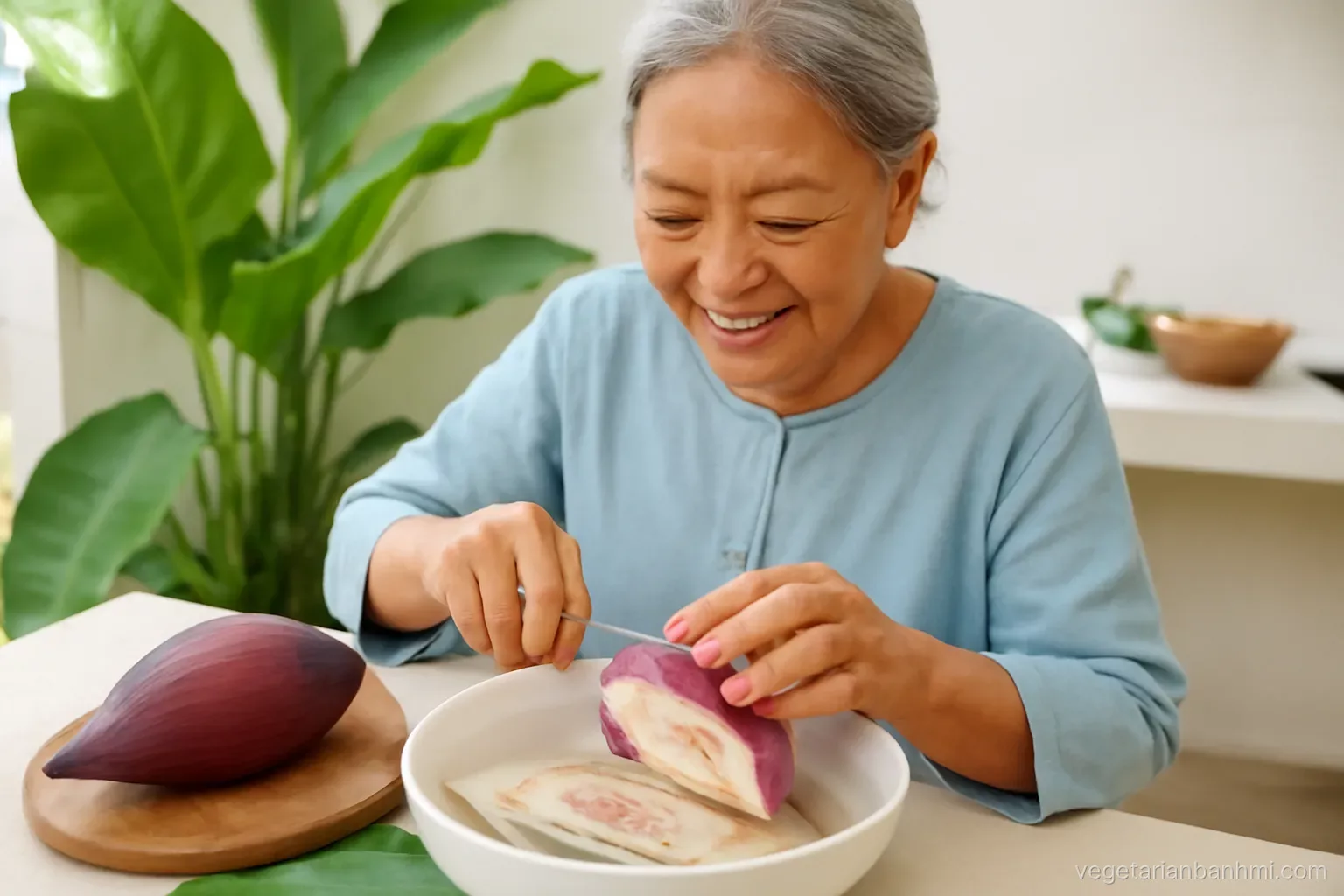
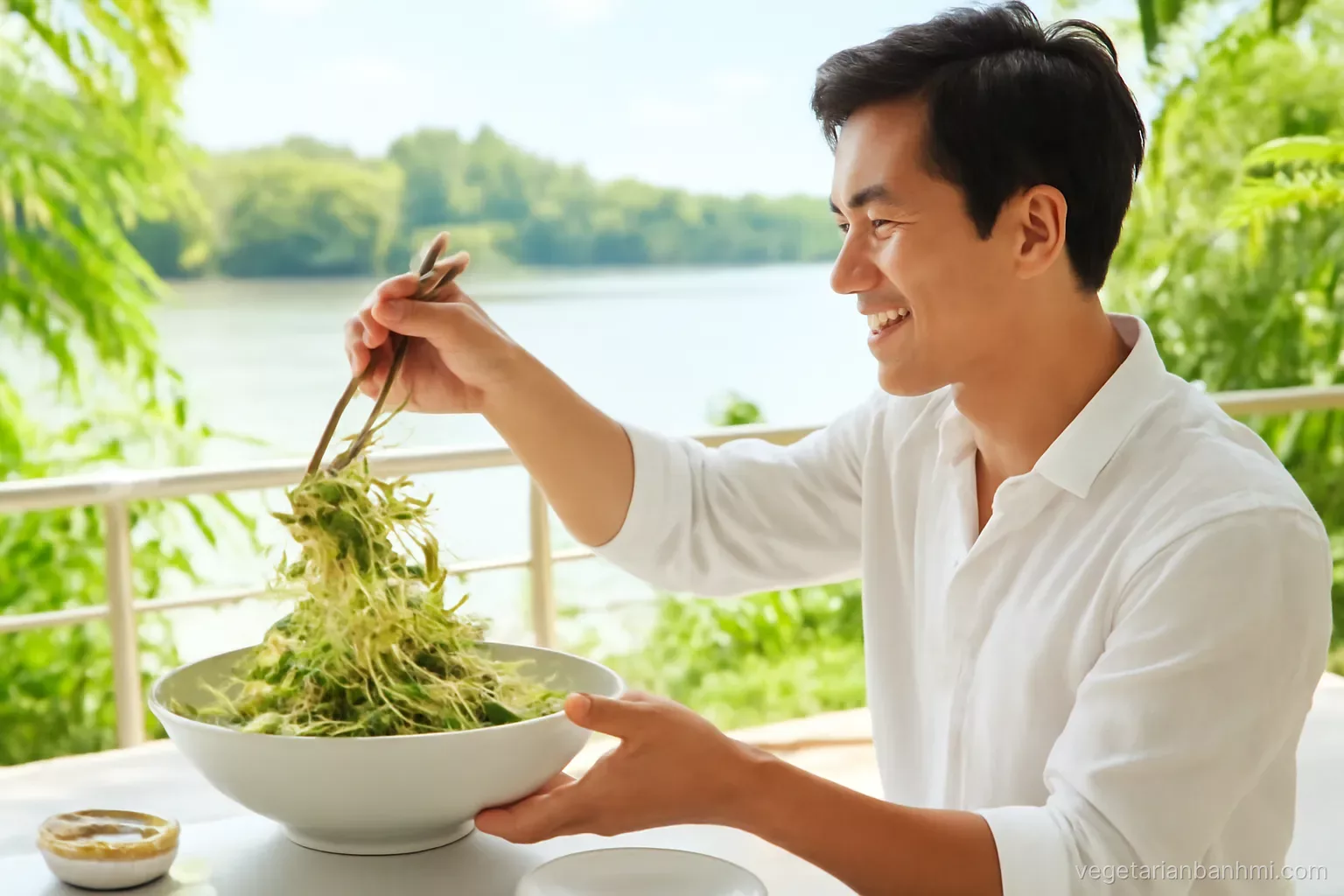
Recipes for the canh chua, papaya salad, banana blossom salad and fresh spring rolls are all in our sides, soups and salads section, and fillings, including vegan xiu mai meatballs, are in vegan banh mi recipes.
When choosing a menu, think about your oven and stove as much as the food. The bread needs the oven for the last few minutes, so anything else that bakes should finish earlier. Soups hold well on a low simmer, salads wait happily undressed in the fridge, and fresh rolls can be made an hour ahead under a damp towel. That leaves the final 10 minutes free for the one job that cannot wait: re-crisping the rolls and filling them. If you are cooking alone, choose one menu item that needs real attention and keep the others make-ahead.
A timeline for the weekend lunch menu
The trick to a relaxed meal is doing the slow, make-ahead parts first and assembling the sandwiches last, so the bread is crisp when it reaches the table. Here is a sample plan for lunch at 1 pm, for the second menu above.
- The day before or that morning: make the pickled carrot and daikon (they need at least an hour, better overnight), marinate the tofu, and make the papaya salad dressing.
- 11:45: press the tofu if you have not already, soak the tamarind, and shred, salt and rinse the papaya.
- 12:15: make the soup broth with pineapple and tomato; keep it at a gentle simmer.
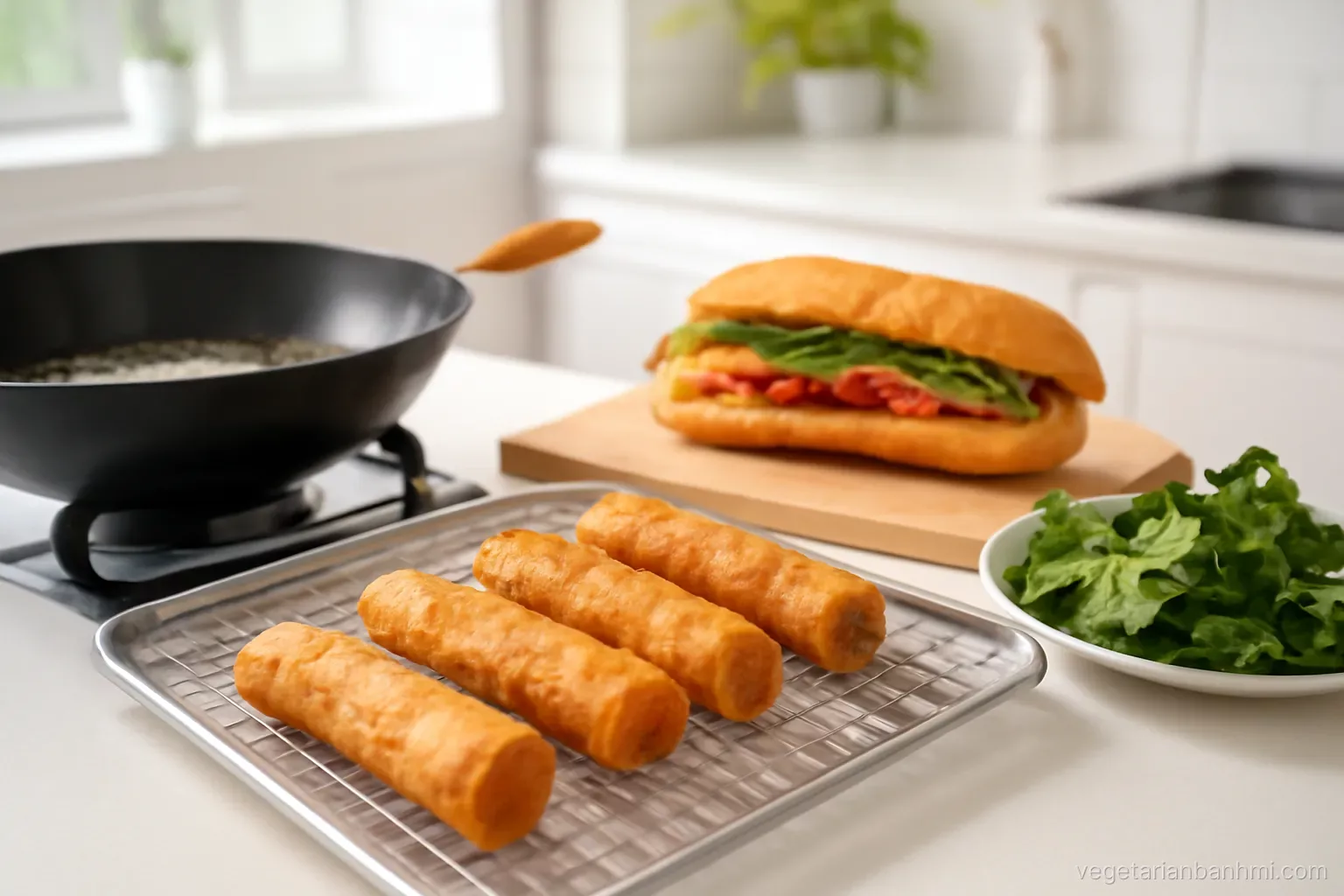
- 12:25: cook the tofu filling and set aside on a rack so it stays crisp.
- 12:40: preheat the oven to 200°C (400°F) for the bread. Add the vegetables to the soup and turn it off when the okra is just tender.
- 12:50: toss the papaya salad and top it. Re-crisp the rolls for 3–4 minutes.
- 12:55: split, spread and fill the banh mi, cut in half, and serve everything together.
Quick sides when you have no time
Not every meal needs a recipe. When you want something on the side in under 15 minutes, these work well and use ingredients you may already have:
- Smashed cucumber salad: smash 2 cucumbers, salt 10 minutes, drain, then dress with rice vinegar, soy sauce, sugar, garlic and chili.
- Garlicky greens: stir-fry 400 g water spinach, spinach or bok choy with 3 cloves garlic in a hot wok for 2–3 minutes, season with soy sauce.
- Corn with scallion oil: sauté 2 cups of corn kernels in oil with sliced spring onions and a pinch of salt and sugar.
- Edamame: boil frozen edamame for 4–5 minutes and sprinkle with salt and chili flakes; a high-protein side.
- Instant broth: simmer vegetable stock with ginger, sliced mushrooms and tofu cubes for 8 minutes, finish with spring onions and pepper.
Scaling up or down
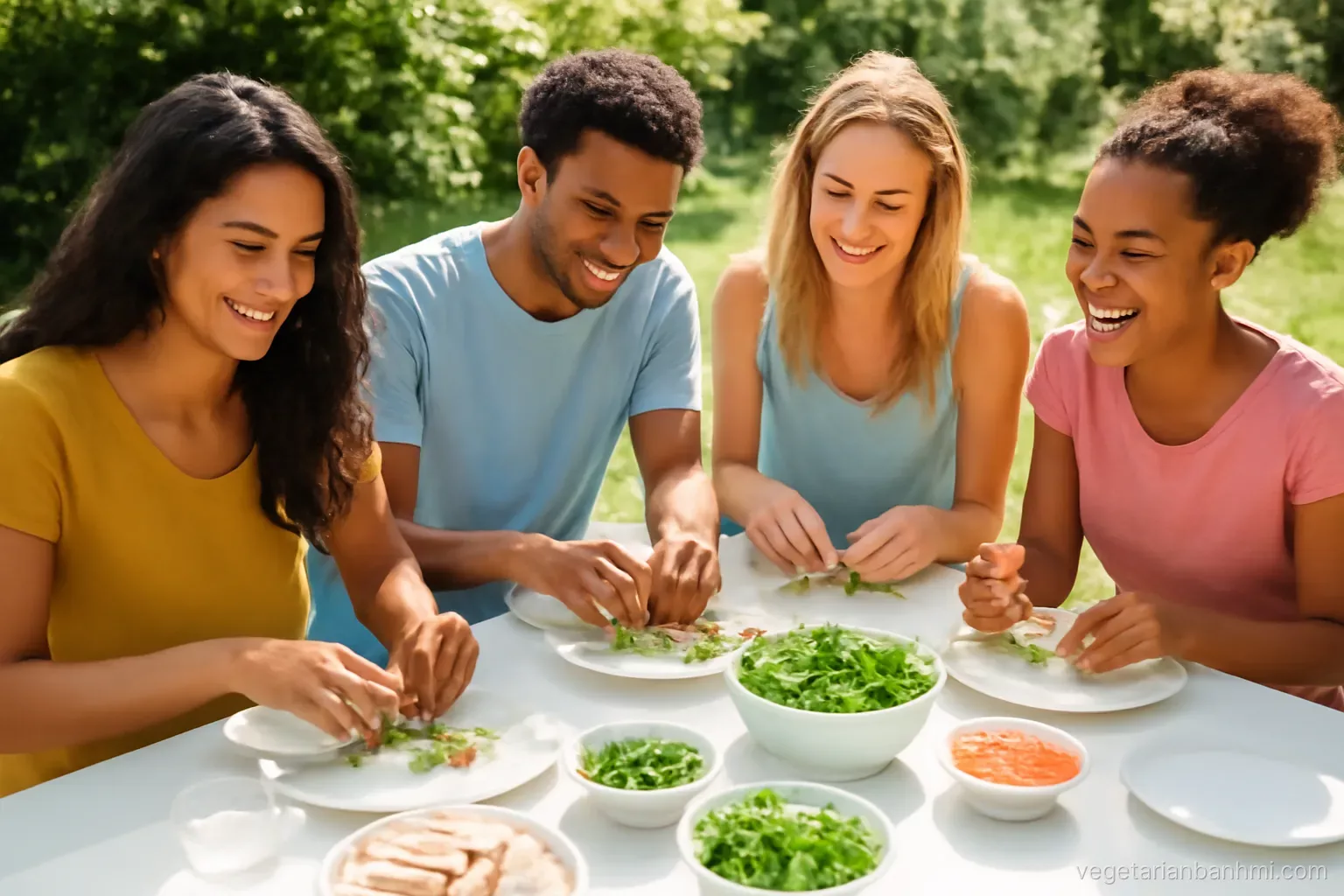
The menus above scale easily. For two people, halve the soup and salad but still make the full pickle batch, since pickled carrot and daikon keep for weeks in the fridge and improve the next day's sandwiches. For six to eight people, plan one banh mi per person plus an extra half for every two guests, double the soup, and add a second salad rather than doubling one, which gives more variety for the same work. Fresh rolls are labour-intensive in large numbers, so for bigger groups let guests roll their own at the table. For anything beyond about ten guests, our parties and gatherings guides have quantities for a self-serve banh mi bar.
Balancing the plate
A helpful way to check balance is the familiar plate model: roughly half vegetables and fruit, a quarter grains, a quarter protein. A banh mi is mostly the grain quarter with a protein layer. A soup full of vegetables and a salad bring the vegetable half up to size. If your filling is lighter in protein, such as mushrooms or grilled vegetables, add a protein-rich side: edamame, a tofu soup, soy milk or fresh rolls with tofu.
Watch the salt and sugar if you serve several Vietnamese-style sides together, since dressings, pickles and seasoning sauces each add some. Balancing one salty element with one fresh, unseasoned element, like plain cucumber or fruit, keeps the meal from feeling heavy.
Serving and food safety
Serve everything family-style in the middle of the table, as Vietnamese meals are eaten, with small bowls for soup. Put out extra herbs, lime wedges, sliced chili and a bottle of soy-based seasoning so everyone adjusts to taste. If food is sitting out for a gathering, follow the 2-hour rule from the USDA Food Safety and Inspection Service: perishable food should not stay at room temperature longer than 2 hours, or 1 hour above 32°C (90°F). Refrigerate leftovers promptly, but store bread separately from fillings.
Sources
- USDA FoodData Central – fdc.nal.usda.gov, entries for French bread, firm tofu and vegetables
- USDA MyPlate – myplate.gov, the plate model for balanced meals
- USDA Food Safety and Inspection Service – fsis.usda.gov, the 2-hour rule
Frequently asked questions
What sides go best with banh mi?
A light soup such as vegan canh chua, a crunchy salad such as green papaya salad, and fresh spring rolls are classic Vietnamese-style choices. For quick options, try smashed cucumber salad, garlicky greens or edamame.
Is one banh mi enough for dinner?
For some people, yes, but a vegetarian banh mi often lands around 450–600 kcal and is light on vegetables. Adding a soup and a salad makes it a satisfying, balanced dinner, especially for guests.
How do I keep banh mi crisp when serving a full meal?
Prepare all sides and fillings first, then re-crisp the rolls and assemble the sandwiches in the last 5–10 minutes. Serve the sandwiches immediately and keep wet sides in their own bowls.
What dessert goes with a Vietnamese meal?
Fresh tropical fruit such as mango, pineapple, watermelon or dragon fruit is the most common way to finish a Vietnamese meal. Coconut sticky rice or a sweet bean dessert works for special occasions.
How can I add more protein to a banh mi meal?
Choose a tofu, tempeh or seitan filling, and add a protein-rich side such as edamame, tofu soup, fresh rolls with tofu, or a glass of soy milk.
From Sandwich to Shared Table
With a soup, a salad and some fruit, a homemade vegan banh mi becomes a meal worth inviting friends over for. If you are in Ho Chi Minh City and short on time, Bánh Mì XANH, a fully vegan banh mi chain with 5 central shops open 24/7, takes delivery orders online.
Order from Bánh Mì XANH · 24/7 hotline / Zalo +84 923 183 183