Short answer: Vietnamese chili sauce, tương ớt, is a smooth, sweet-sour-hot sauce made by simmering fresh red chilies with garlic, vinegar, sugar and salt, then blending. The recipe below uses 300 g (about 10 oz) of fresh chilies and takes 30 minutes. Because it is cooked and well acidified, it keeps up to three weeks in the fridge; it is not shelf-stable, so do not store it in the pantry.
What tương ớt is, and how it differs from sriracha
In Vietnam, tương ớt (chili sauce) sits on every street-food table next to soy sauce and pickled chilies, and a squeeze of it goes into most banh mi just before the vendor closes the bread. Commercial Vietnamese versions are bright red, fairly sweet, mildly tangy and smooth, often thickened with a little starch. Many international readers know the rooster-bottle sriracha made in California; it belongs to the same family, but tends to be more garlicky and slightly less sweet than the sauces you meet on a Saigon sidewalk.
Making your own lets you control three things you cannot change in a bottle: the heat, the sugar and the additives. It is also naturally vegan, as long as you do not add fish sauce, which a few home recipes do. If you prefer something oilier and more aromatic, our lemongrass chili oil recipe in the sauces and spreads section is the other classic.
Choosing the chilies
The chilies decide both color and heat. Vietnamese cooks use long red chilies for body and color, and a few small bird's eye chilies, ớt hiểm, for fire. Outside Vietnam you can get very close with what supermarkets sell.
| Chili | Where to find | Heat | Use in this recipe |
|---|---|---|---|
| Fresno or red jalapeño | US and Canadian supermarkets | Mild to medium | Main body, gives bright red color |
| Long red chili (cayenne type) | Asian grocers, UK and Australian supermarkets | Medium | Main body |
| Red bird's eye chili | Asian grocers, frozen section | Very hot | 10 to 30 g for extra heat |
| Red bell pepper | Everywhere | None | Replace up to half the chilies for a kid-friendly sauce |
Use red, fully ripe chilies only. Green chilies give a dull brown sauce with a grassy taste. Wear gloves when you cut a large batch; capsaicin on your fingers lingers for hours and finds its way to your eyes.
The recipe
Makes about 350 ml (1 1/2 cups).
- 300 g (10 1/2 oz) fresh red chilies, for example 270 g Fresno plus 30 g bird's eye
- 40 g (about 8 to 10 cloves) garlic, peeled
- 120 ml (1/2 cup) distilled white vinegar or rice vinegar, at least 5% acidity
- 60 ml (1/4 cup) water
- 50 g (1/4 cup) sugar
- 8 g (1 1/2 teaspoons) fine salt
- 1 teaspoon (3 g) cornstarch or tapioca starch mixed with 1 tablespoon water (optional, for a glossy, clingy texture)
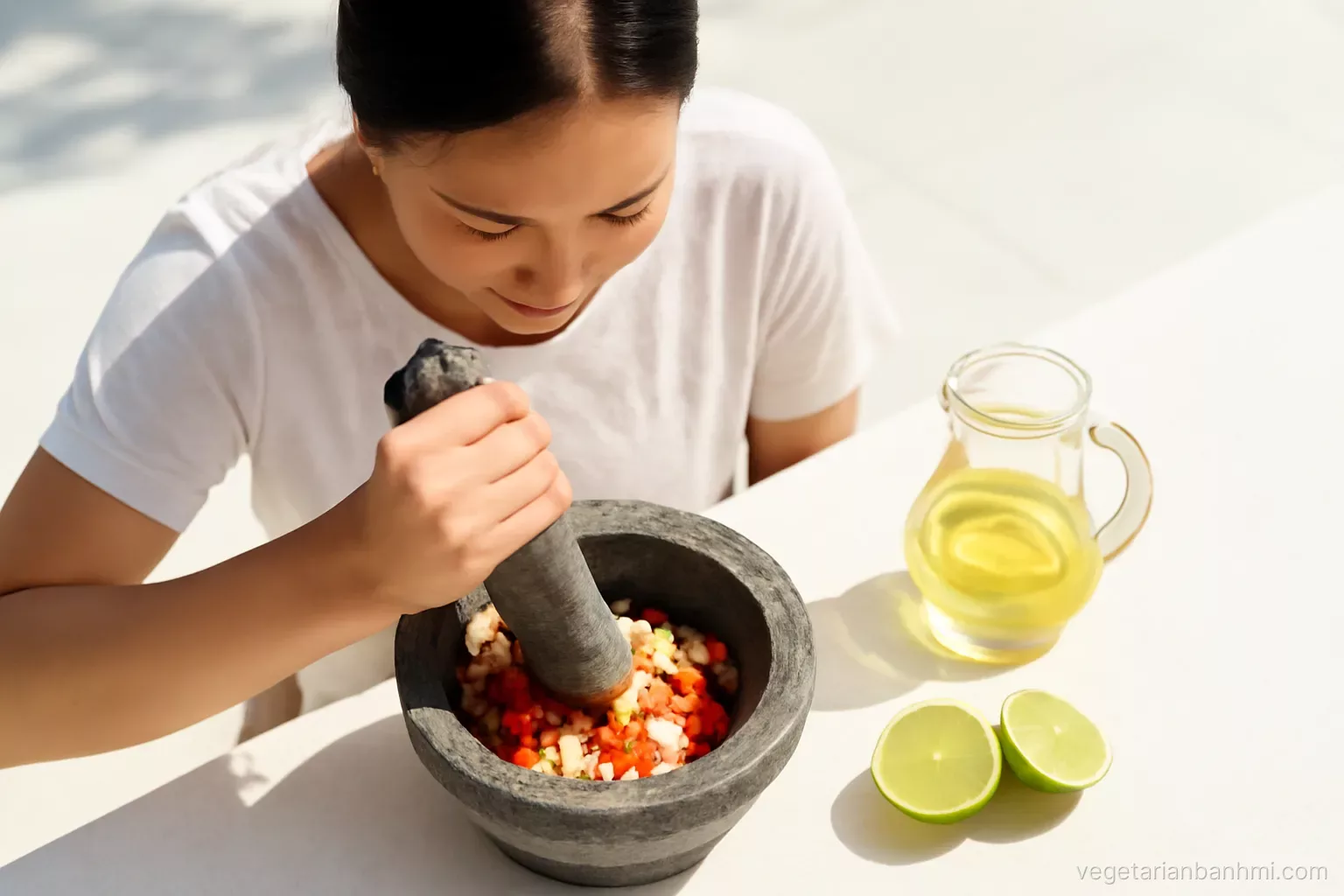
- Rinse the chilies, pull off the stems and roughly chop. For a milder sauce, slit them and scrape out some seeds and white ribs, where much of the heat sits.
- Put the chilies, garlic, vinegar, water, sugar and salt in a stainless steel or enamel saucepan. Avoid bare aluminum or cast iron, which react with the acid.
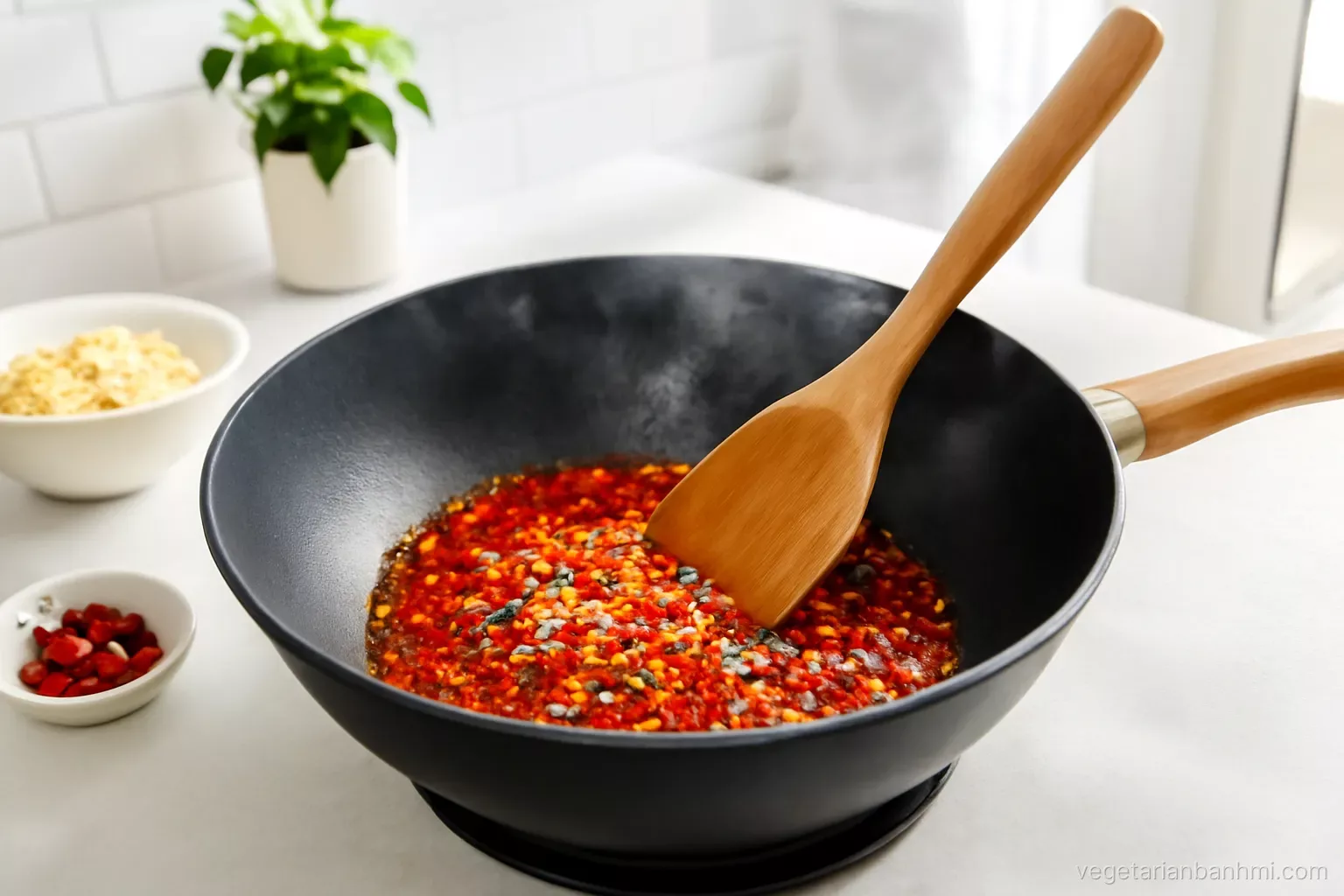
- Bring to a boil, then simmer gently, partly covered, for 10 to 12 minutes until the chilies are completely soft. Turn on the extractor fan; chili steam is harsh.
- Let it cool for 5 minutes, then blend until very smooth, 1 to 2 minutes. Vent the blender lid and cover it with a towel when blending hot liquids.
- For a silky sauce, press it through a medium sieve to remove seeds and skin. For a rustic one, skip this.
- Return to the pan, bring back to a simmer and stir in the starch slurry if using. Cook 2 minutes until glossy.
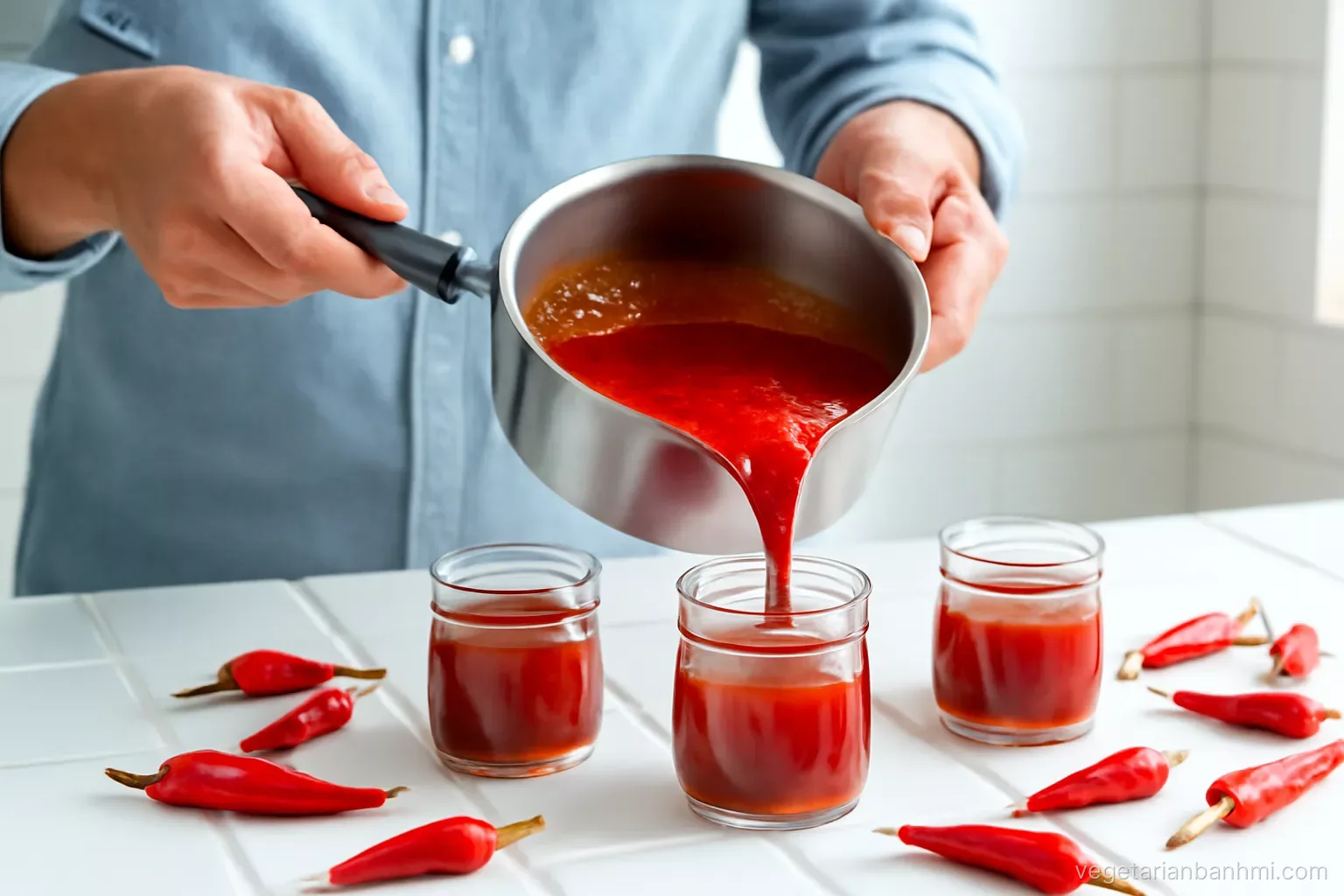
- Taste and adjust: more sugar for the Saigon street style, a splash more vinegar for tang. Pour hot into clean jars, cool uncovered for 20 to 30 minutes, then cap and refrigerate.
The sauce thickens as it cools. If it sets too thick, whisk in a little water; if it is thin, simmer a few more minutes before bottling next time.
Adjusting heat, sweetness and texture
For a family table, replace half the chilies with roasted red bell pepper and skip the bird's eye chilies entirely. You keep the color and fruitiness with a fraction of the heat. For chili lovers, keep the seeds and use up to 100 g bird's eye chilies; the sauce will be properly fierce and slightly less red.
Sweetness is where Vietnamese styles differ most from Western hot sauces. A Saigon-style sauce often tastes about as sweet as ketchup, which balances rich mayo and pâté nicely. If you prefer a sharper, more Thai-leaning sauce, cut the sugar to 25 g. For a fermented, funkier depth, see the variation below rather than leaving fresh chilies out on the counter, which is not the same thing as controlled fermentation.
Fermented variation (for experienced picklers)
Blend the raw chilies and garlic with 2.5% of their weight in salt (for 340 g of chilies and garlic, that is 8.5 g salt), pack into a clean jar with a fermentation weight or a sealed bag of brine on top, and ferment at 18 to 22°C (64 to 72°F) for 5 to 7 days, until pleasantly sour. Then cook it with the vinegar, sugar and water as above. Cooking after fermentation stops the process and makes the sauce more predictable. Discard any batch with fuzzy mold, pink or black growth, or a rotten smell.
Food safety: why vinegar and the fridge both matter
Fresh chilies and garlic are low-acid vegetables, and garlic in particular can carry spores of Clostridium botulinum. The bacteria cannot grow in properly acidic conditions; the US Food and Drug Administration uses a pH of 4.6 as the dividing line for acidified foods. This recipe adds a generous amount of 5% vinegar, which is why it is safer than oil-based chili pastes. But home cooks cannot measure pH accurately without a calibrated meter, so we treat the sauce conservatively.
- Keep it refrigerated at or below 4°C (40°F) from the day you make it.
- Use within three weeks. If you want a stock that lasts longer, freeze portions in small jars or ice-cube trays for up to six months.
- Do not reduce the vinegar to make the sauce "less sour". Adjust with sugar instead.
- Do not try to process it for the pantry unless you follow a tested canning recipe, such as those from the National Center for Home Food Preservation. Our recipe is a refrigerator sauce.
- Always use a clean spoon; never pour unused sauce from a bowl back into the jar.
Discard any jar with mold, bulging lids, fizzing that was not there before, or an off smell. When in doubt, throw it out; a batch costs a few dollars to remake.
Using it in banh mi and beyond
For one sandwich, about 1 to 2 teaspoons is enough. Squeeze it over the filling, not directly on the bread, so it does not soak the crumb. It is particularly good with crispy tofu, lemongrass tofu and fried "egg" made from chickpea flour. Pair it with vegan mayo for a creamy-spicy combination, or mix 3 parts mayo to 1 part sauce into a pink spicy mayo for sliders at a party.
Away from the sandwich, tương ớt is excellent with spring rolls, fried tofu, noodle soups and stir-fried morning glory. It also rescues bland roasted vegetables. If you are planning a full meal around banh mi, our sides, soups and salads section has ideas that all benefit from a jar on the table.
Cost and quantities
In Vietnam, chili prices at wet markets swing a lot with season and weather: in a normal season a kilo usually costs well under 100,000 VND (about 4 USD), while during shortages Vietnamese media have reported market prices of around 170,000 to 200,000 VND per kilo (roughly 7 to 8 USD). Even then, the 300 g in this recipe is a small outlay. In the US or Europe, 300 g of Fresno chilies costs a few dollars. A batch makes enough for about 50 sandwiches, which is why making your own quickly beats buying small imported bottles.
Sources
- US Food and Drug Administration – fda.gov (acidified foods and the pH 4.6 threshold)
- National Center for Home Food Preservation – nchfp.uga.edu (tested recipes for shelf-stable sauces, fermentation guidance)
- Centers for Disease Control and Prevention – cdc.gov (botulism and home-prepared foods)
Frequently asked questions
Is tương ớt the same as sriracha?
They are close relatives. Vietnamese street-stall chili sauces tend to be sweeter and milder, while the well-known rooster-bottle sriracha is more garlicky. This recipe sits in between, and you can push it either way with sugar and garlic.
How long does homemade chili sauce keep?
We recommend up to three weeks in the fridge at or below 4°C (40°F), or up to six months frozen. Discard any jar that shows mold, gas or an off smell.
Can I use dried chilies?
Yes, but the flavor and color change. Soak 60 g dried red chilies in hot water for 30 minutes and use the soaking water in place of plain water. The sauce will be darker and smokier.
Why did my sauce turn brown?
Usually because some chilies were not fully ripe, or the sauce was cooked too long. Use only bright red chilies and simmer just until soft.
Is Vietnamese chili sauce vegan?
Most are made from chilies, garlic, vinegar, sugar and salt, but a few recipes and brands add fish sauce or shrimp. Check labels, or make this version, which is fully plant-based.
Bring the Heat, Then Find It in Saigon
A jar of homemade tương ớt makes every vegan banh mi taste more like the street. If you are in Ho Chi Minh City, try the Đậu Hũ Cay (spicy tofu) banh mi at Bánh Mì XANH, a fully vegan chain with 5 central shops open 24/7, or order it to your hotel.
Order from Bánh Mì XANH · 24/7 hotline / Zalo +84 923 183 183