Short answer: The few drops of dark, savory liquid splashed into a banh mi are usually Maggi seasoning. Its formula varies by country, and it is not labeled vegan everywhere, so check the bottle you have. Good plant-based replacements are light soy sauce, tamari, liquid aminos or mushroom soy sauce, or a quick homemade seasoning of soy sauce, shiitake stock and a touch of yeast extract, kept in the fridge for up to two weeks.
Why banh mi needs that dark splash
Watch a vendor finish a banh mi in Vietnam and the last move before closing the bread is often a quick shake from a brown bottle over the filling. That is nước tương (soy-type sauce) or, very often, Maggi seasoning sauce, which arrived with French and Swiss food trade and became part of the sandwich's taste. It adds a concentrated, meaty saltiness that ties the rich mayo and the bright pickles together. Without it, a vegan banh mi can taste oddly polite.
The good news is that this flavor is almost entirely about glutamates and salt, and plant-based foods deliver both. Soybeans, wheat, mushrooms and yeast are full of the compounds that taste "savory". You can buy a near-identical effect off the shelf, or make your own in 20 minutes. If you are still assembling your toolkit, the rest of our sauces and spreads guides cover mayo, pâté and chili sauce.
Is Maggi seasoning vegan?
It depends on where your bottle was made. Maggi seasoning is built on hydrolyzed vegetable protein, typically from wheat or soy, plus salt, flavor enhancers and water. Several national versions list no animal-derived ingredients, and the UK brand describes its liquid seasoning as suitable for vegetarians. But "suitable for vegetarians" is not the same as certified vegan, recipes differ between the European, Asian and North American bottles, and some flavor enhancers can in principle come from different sources. Many vegans in Vietnam do use it; strict vegans may prefer to avoid ambiguity.
Two more facts worth knowing. First, many versions contain wheat, so the sauce is not suitable for gluten-free diets unless the label says so. Second, the plant lovage is nicknamed Maggikraut in German because it smells similar, but lovage is not what flavors the sauce. That smell similarity is useful, though: a little celery leaf in a homemade version nudges it closer to the real thing.
Shop-bought alternatives compared
| Sauce | Flavor compared with Maggi | Gluten | How much per sandwich | Notes |
|---|---|---|---|---|
| Light (thin) soy sauce | Saltier, less meaty | Usually contains wheat | 1/2 teaspoon | Cheapest, available everywhere |
| Tamari | Rounder, darker, less sharp | Often gluten-free; check label | 1/2 teaspoon | Best gluten-free option |
| Liquid aminos (soy based) | Milder, slightly sweet | Usually gluten-free | 3/4 teaspoon | Good if you find soy sauce harsh |
| Mushroom-flavored dark soy sauce | Deep, earthy, thick | Usually contains wheat | 1/4 to 1/2 teaspoon | Closest to Maggi's depth; also colors food |
| Thai soy seasoning sauces | Very close, slightly sweet | Varies | 1/2 teaspoon | Popular Maggi stand-in across Southeast Asia; read the label |
| Coconut aminos | Sweet, much less salty | Gluten-free | 1 teaspoon | Soy-free; needs a pinch of salt |
For most people, a 2:1 mix of light soy sauce and mushroom dark soy sauce gets closest to the dark, slightly sweet, meaty taste of the original. Keep it in a small bottle with a shaker cap so you dose by drops, not spoonfuls; that dosing is half of what makes Maggi work on a sandwich.
Homemade vegan seasoning sauce
This makes about 200 ml (a scant cup) and tastes intensely savory. It is not a copy of any brand; it is designed to do the same job.
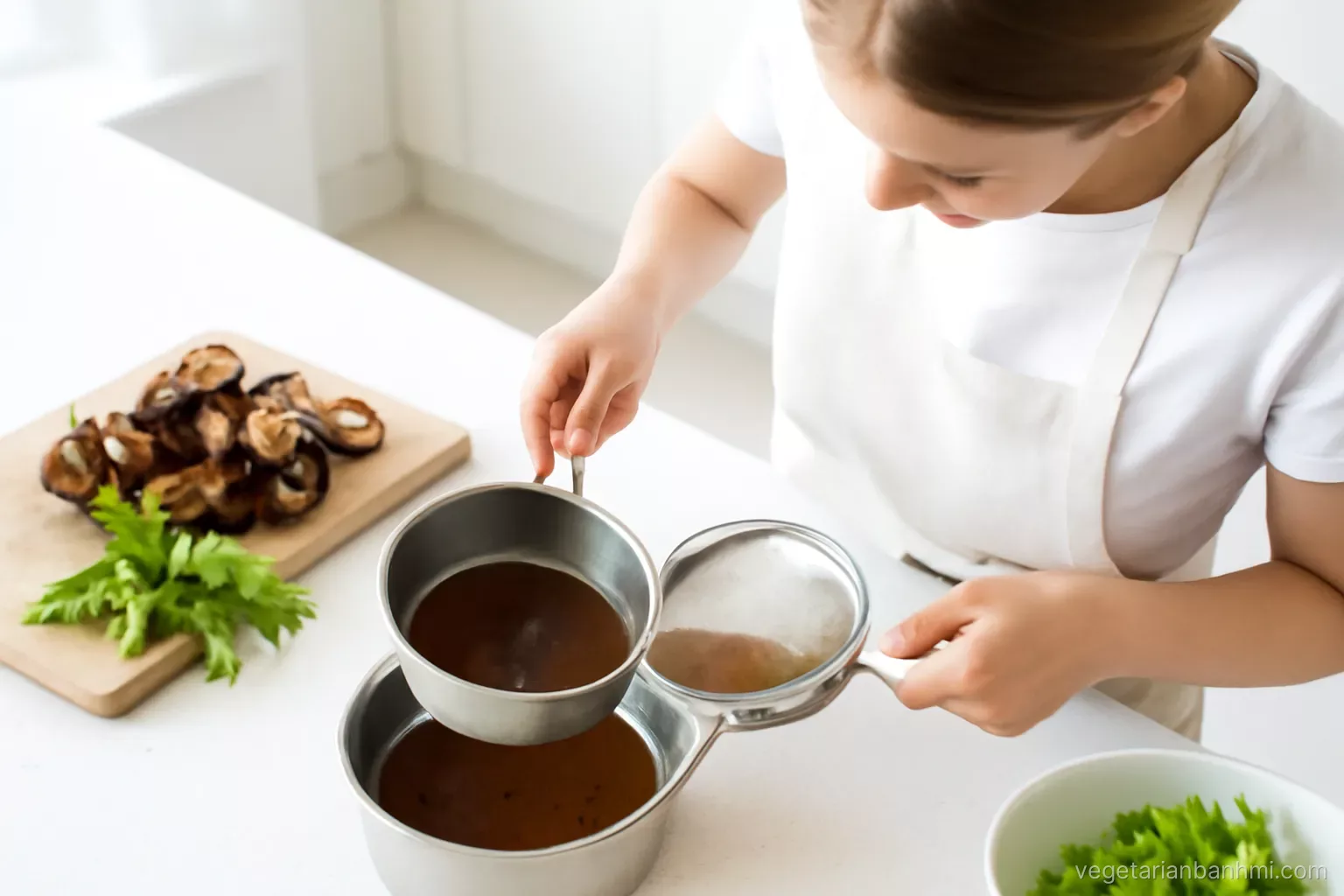
- 10 g (4 to 5) dried shiitake mushrooms
- 250 ml (1 cup) water
- 1 small handful (5 g) celery leaves, or 1 thin celery stalk, chopped
- 120 ml (1/2 cup) light soy sauce, or tamari for gluten-free
- 15 g (1 tablespoon) brown sugar
- 5 g (1 teaspoon) yeast extract spread such as Marmite or Vegemite, or 1 teaspoon nutritional yeast
- 1/2 teaspoon MSG or mushroom seasoning powder (optional)
- 1 teaspoon (5 ml) rice vinegar
- Rinse the dried shiitake and simmer them with the water and celery leaves in a small covered pan for 15 minutes.
- Remove the lid and simmer until the liquid has reduced to about 100 ml (scant 1/2 cup), around 5 to 8 minutes. Strain through a fine sieve, pressing the mushrooms. Keep the mushrooms for stir-fries.
- Return the stock to the pan with the soy sauce, sugar and yeast extract. Warm gently, stirring, just until everything dissolves. Do not boil hard, or it turns bitter.
- Stir in the MSG or mushroom powder (if using) and the vinegar. Cool, pour into a clean bottle and refrigerate.
Taste it on a piece of tofu, not straight from a spoon; on its own it will seem shockingly salty, which is exactly the point. For a sweeter, darker version closer to Southeast Asian seasoning sauces, add another teaspoon of sugar and a teaspoon of mushroom dark soy sauce.
About MSG
Monosodium glutamate is widely used in Vietnamese kitchens and is plant-derived in modern production, usually by fermentation. The US Food and Drug Administration considers it "generally recognized as safe". It is optional here; mushroom powder or more yeast extract gets you most of the way.
Storage and food safety
Bottled soy sauce is shelf-stable because of its very high salt content. The homemade version is diluted with mushroom stock, so it has less salt protecting it and should be treated as a refrigerated sauce. Keep it in a clean, sealed bottle at or below 4°C (40°F) and use it within two weeks. Freeze extra in ice-cube trays for up to three months; a single cube seasons a pot of noodles or a week of sandwiches.
Shop-bought sauces should be stored according to their labels; many keep in the cupboard but taste fresher if refrigerated after opening. Discard homemade sauce if it develops cloudiness, film, mold or a sour smell.
What you will see on tables in Vietnam
If you travel to Vietnam, you will notice that banh mi stalls and vegetarian restaurants keep a small cluster of bottles on the counter: a soy sauce, a seasoning sauce, a chili sauce and often a jar of pickled chilies in vinegar. Vegetarian restaurants, called quán chay, frequently use mushroom-based seasonings and soy sauces rather than anything with animal ingredients, because many of their customers eat vegetarian for Buddhist reasons on certain days of the lunar month. If you are vegan and unsure what is in a bottle at a regular stall, the simple solution is to ask for the sandwich without the seasoning sauce, or to eat at a fully vegan shop where every bottle on the counter is plant-based. Our vegan banh mi in Vietnam guides explain how to order with confidence.
A note on salt
Seasoning sauces are concentrated sodium. USDA FoodData Central lists regular soy sauce at roughly 900 mg of sodium per tablespoon, so the half-teaspoon used in a sandwich adds around 150 mg. That is modest, but it adds up if you also use salty pâté, pickles and chili sauce. If you are watching sodium, use reduced-salt soy sauce, cut the dose to a few drops, and let the herbs and lime carry more of the flavor. For a balanced view of a whole sandwich, see our plant-based nutrition guides.
How to use it in a banh mi
- On the filling, not the bread. Sprinkle drops over the tofu or mushrooms after they go in, so the crumb stays crisp.
- In the marinade. Replace plain soy sauce in lemongrass tofu with your homemade sauce for deeper flavor.
- On fried "eggs". Vietnamese breakfast banh mi with fried egg always gets a splash; vegan chickpea-flour omelets love it too.
- Mixed with mayo. A few drops stirred into vegan mayo makes a savory spread for a quick lunchbox sandwich.
Our vegan banh mi recipes show the order: mayo and pâté on the bread, then filling, seasoning drops, pickles, cucumber, herbs and chili.
Sources
- USDA FoodData Central – fdc.nal.usda.gov (sodium in soy sauce)
- US Food and Drug Administration – fda.gov (questions and answers on monosodium glutamate)
- USDA Food Safety and Inspection Service – fsis.usda.gov (refrigerator temperatures and storage)
Frequently asked questions
Is Maggi seasoning vegan?
Many versions list no animal ingredients, but recipes differ by country and few bottles carry a vegan certification. Read the label of your bottle, or use soy sauce, tamari or the homemade recipe above.
What is the closest substitute for Maggi on banh mi?
A 2:1 blend of light soy sauce and mushroom dark soy sauce comes very close. Thai soy seasoning sauces are also popular stand-ins, but check their labels.
Is Maggi gluten-free?
Usually not, because many versions use hydrolyzed wheat protein or wheat. Tamari labeled gluten-free or coconut aminos are safer choices.
How long does homemade seasoning sauce keep?
Up to two weeks in the fridge at or below 4°C (40°F), or about three months frozen in small portions. Discard it if it turns cloudy, smells sour or grows mold.
Can I skip the seasoning sauce entirely?
You can, but the sandwich will taste flatter. A pinch of salt on the filling and an extra squeeze of chili sauce help if you have nothing else on hand.
A Few Drops Make the Sandwich
Once you have the right seasoning sauce, your homemade vegan banh mi gets that unmistakable street-food depth. If you are in Ho Chi Minh City and want to taste a fully vegan version made by professionals, Bánh Mì XANH runs 5 central shops open 24/7, all plant-based.
Discover Bánh Mì XANH · 24/7 hotline / Zalo +84 923 183 183