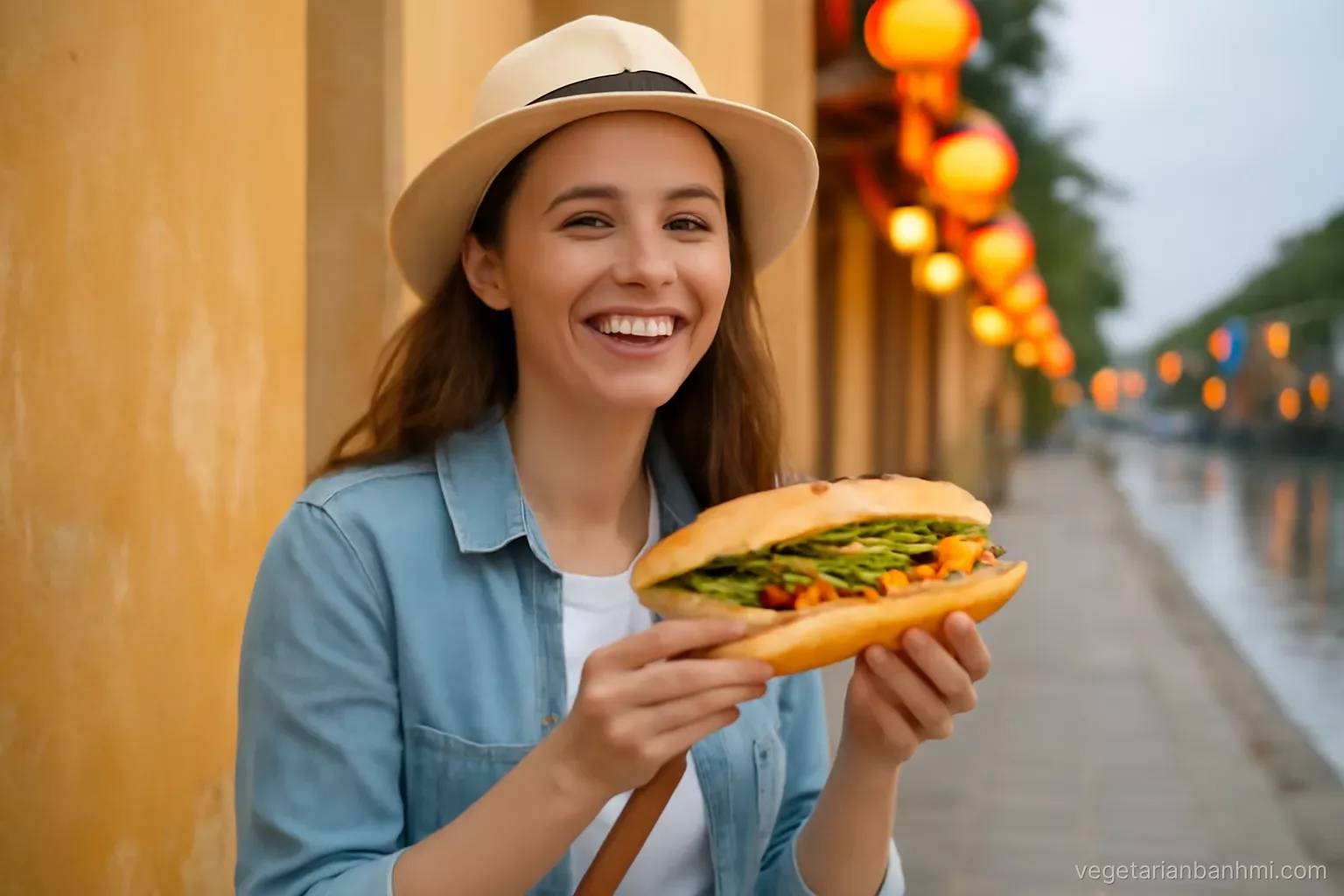
Short answer: Ask for bánh mì chay (vegetarian banh mi), then add thuần chay (strictly vegan) and the three refusals that matter most: không trứng (no egg), không pa tê (no pâté) and không nước mắm (no fish sauce). Watch the vendor build the sandwich, because the default spread and the pâté on most carts are animal-based. In a dedicated vegetarian shop you can relax; at a regular meat cart, assume nothing until you have seen it.
Why "vegetarian" is not automatically vegan in Vietnam
The word chay covers food without meat or fish, and it grows out of a Buddhist tradition that is many centuries old. That tradition generally excludes meat and fish, and many cooks also leave out pungent plants such as garlic and onion, but it does not always exclude eggs or milk. So a bánh mì chay at a neighbourhood cart might come with a fried egg, a swipe of egg-yolk spread or vegetarian "ham" bound with egg white. None of this is a trick; it is simply a different definition from the Western one.
The fix is to use the word thuần chay, literally "pure vegetarian", which is how Vietnamese vegans describe their diet. Most younger vendors in big cities recognise it, and in tourist areas many understand the English word "vegan" too. In smaller towns, the safer route is to name each ingredient you do not want rather than relying on a single label.
There is also a regional twist. In the south, a loaf is counted with the classifier ổ, so you ask for một ổ bánh mì (one banh mi). In the north you will more often hear một cái bánh mì. Either works anywhere; using the local one simply makes you sound a little more at home.
The phrases, with pronunciation hints
Vietnamese is tonal, so do not worry about perfection. Vendors hear foreigners every day and context does most of the work. Say the words clearly, smile, and point at what you want. Showing the phrase written on your phone, with the diacritics, is completely normal and often faster than speaking. For phrases beyond banh mi, such as noodle soups, rice shops and markets, see the vegan phrase guide on vietbanhmi.com.
| Vietnamese | Rough sound | Meaning | When to use it |
|---|---|---|---|
| Mình ăn chay | ming an chai | I eat vegetarian (casual) | Opening line at any stall |
| Thuần chay | twun chai | Strictly vegan | When eggs and milk matter |
| Cho mình một ổ bánh mì chay | chaw ming mot oh bun mee chai | One vegetarian banh mi, please | Ordering in the south |
| Không trứng | khom chung | No egg | Always, at meat carts |
| Không pa tê | khom pa tay | No pâté | Always, at meat carts |
| Không bơ | khom buh | No butter / no egg spread | When the default spread is not vegan |
| Không nước mắm | khom nuoc mum | No fish sauce | Before any drizzle or dipping sauce |
| Có trứng không? | gaw chung khom | Is there egg in it? | Pointing at mock meats or spreads |
| Ít ớt / nhiều ớt | it ut / nyew ut | Less chili / more chili | Personal taste |
| Bao nhiêu tiền? | bao nyew tee-en | How much is it? | Paying |
The word bơ deserves a note. In banh mi it usually means a rich, pale yellow spread whipped from egg yolk and oil, close to mayonnaise, though it can also mean butter or margarine. Out of context it is also the word for avocado, which is why a smoothie menu might list sinh tố bơ. At a sandwich cart, "không bơ" will be understood as "skip the spread".
What goes into a street banh mi, ingredient by ingredient
A standard cart builds the sandwich in a predictable order, and knowing that order lets you intercept the non-vegan parts before they land. The bread is split, spread, filled, topped with vegetables and herbs, and finished with a sauce. Here is where each layer usually stands for a vegan.
- The bread. Vietnamese baguettes are usually lean: wheat flour, water, yeast, salt and sometimes a dough improver. They are generally free of dairy and egg, but recipes are not standardised. Sweet breads labelled bánh mì ngọt or bánh mì sữa (milk bread) often do contain milk or egg.
- The spread. The yellow bơ is typically egg-based. Some carts use margarine instead. Either way, ask for none unless you can confirm a vegan version.
- The pâté. The brown pa tê is liver or pork based at almost every meat cart. A few vegetarian shops make a mushroom or soy version, and they will tell you proudly if they do.
- The protein. Tofu (đậu hũ in the south, đậu phụ in the north), mushrooms (nấm) and mock meats are the usual vegetarian options. Mock "ham" called chả lụa chay or giò lụa chay is often soy or wheat gluten but sometimes includes egg white, so ask.
- The vegetables. Pickled carrot and daikon (đồ chua), cucumber, fresh chili and herbs such as ngò (cilantro) are almost always plant-based. The pickles are made with vinegar, sugar and salt.
- The sauce. This is where most accidents happen. A splash of soy sauce (xì dầu or nước tương) is fine; a splash of fish sauce or a meat-cooking jus is not. Seasoning sauces sold under the Maggi name are usually made from hydrolysed plant protein, but formulas vary by market, so read the bottle if you can.
- Toppings. Shredded pork floss (chà bông) and crushed pork crackling are common garnishes. There are vegetarian versions of floss made from mushrooms or soy, but at a meat cart assume the real thing.
A step-by-step script for any cart
Once you have the vocabulary, the actual exchange takes about thirty seconds. The order matters because vendors work fast; if the spread goes on before you speak, it is already on.
- Before the vendor picks up a knife, say "Mình ăn chay, thuần chay" and point to yourself. This frames the whole order.
- Point at the tofu, mushrooms or vegetables you want. If there is no plant protein at all, ask for bánh mì rau (vegetable banh mi) with extra pickles and cucumber.
- Add the refusals: "Không trứng, không pa tê, không bơ." Hold up a hand in a gentle "stop" gesture as you say each one.
- When the sauce bottle comes out, ask "Nước tương hả?" (soy sauce, right?). If you are not sure, say "Không nước mắm" or skip the sauce entirely and ask for chili instead.
- Pay, say cảm ơn (thank you) and eat it within twenty minutes while the crust is still crisp.
A common mistake is to ask for vegetarian food and then accept a sandwich that looks right without watching it being made. Another is to argue with the vendor about whether egg counts as vegetarian. It is easier to accept the cultural difference and be specific. If something goes wrong, you are usually out about 15,000 to 30,000 VND (roughly US$0.60 to $1.15), so let it go and try the next cart.
Dedicated vegan shops versus meat carts
The most reliable way to get a fully vegan banh mi is to buy it somewhere that never handles meat. Vegetarian restaurants (quán chay) often sell a breakfast banh mi with tofu, mushrooms or mock meats, especially near pagodas and on the first and fifteenth days of the lunar month, when many Vietnamese Buddhists eat meat-free. In those places cross-contact is not an issue, though eggs may still appear.
In Ho Chi Minh City there is also a chain built specifically around the sandwich. Bánh Mì XANH is a fully vegan banh mi chain with five central shops open 24/7, part of the Chay 365 vegetarian restaurant group. Because the whole menu is vegan, you do not need any of the phrases above: you choose between the mixed vegetable, tofu and mushroom sandwich, the grain-based vegan cold cut, spicy tofu, a sweet butter-sugar version or a big premium sandwich, and the question of fish sauce never comes up. According to the brand, many of its shops serve more international customers than local ones.
For a wider look at where to eat this sandwich around the city, see our guide in Vegan Banh Mi in Vietnam. If you would rather recreate the street version at home after your trip, our vegan banh mi recipes rebuild it layer by layer.
Using apps when words fail
Food delivery apps are a practical backup in Vietnamese cities. Searching "bánh mì chay" or "thuần chay" in GrabFood or ShopeeFood will surface vegetarian shops near you, often with photos of the actual sandwich. The same search terms work in map apps for walking directions. Reviews written in English frequently mention whether a place uses egg or dairy, which is more useful than any official description.
A translation app with a camera mode helps with handwritten menus, but it struggles with abbreviations such as "BM chay". Keep a short screenshot of the phrases in this article on your phone; it is faster than typing in a crowded morning queue. If you have a serious allergy rather than an ethical preference, write that out clearly as well, for example "Mình bị dị ứng trứng" (I am allergic to eggs), because vendors take allergies more seriously than preferences.
Timing, prices and etiquette
Banh mi carts are busiest from about 6:00 to 9:00 in the morning, with a second, smaller wave in the late afternoon. Vegetarian carts near pagodas may sell out early on lunar observance days. Ordinary street banh mi in the big cities usually costs somewhere around 15,000 to 35,000 VND (about US$0.60 to $1.35), while a premium sit-down or chain shop charges more for larger sandwiches and better ingredients.
Pay in cash at street carts; small notes are appreciated. Bargaining is not customary for a sandwich. If you want to customise heavily, do it at a quieter moment rather than holding up a queue of commuters. And if a vendor goes out of their way to make you something special, a smile and a clear cảm ơn nhiều (thank you very much) is the right tip.
Sources
- Vietnam National Authority of Tourism – vietnam.travel (food culture and vegetarian dining)
- HappyCow vegan and vegetarian restaurant directory – happycow.net
- Bánh Mì XANH – banhmixanh.com (menu, shop addresses, opening hours)
Frequently asked questions
Is banh mi bread vegan?
Usually, but not guaranteed. Standard Vietnamese baguettes are made from wheat flour, water, yeast and salt, sometimes with a dough improver. Sweet or milk breads often contain dairy or egg, so stick to the plain crusty loaf and ask if you are unsure.
What does "chay" mean on a Vietnamese menu?
It means vegetarian in the Buddhist sense: no meat or fish. It does not always exclude eggs or milk, so vegans should add thuần chay or list the ingredients they want left out.
Is the yellow spread in banh mi vegan?
Usually not. The yellow bơ is typically an egg-yolk and oil spread similar to mayonnaise, or sometimes margarine or butter. Say không bơ unless the shop is fully vegan.
Can I get vegan banh mi at a regular meat cart?
You can get a vegetable version with pickles, cucumber, herbs and chili, and sometimes tofu. Cross-contact with meat is likely because the same knife and board are used. If that matters to you, choose a vegetarian restaurant or a fully vegan shop.
Do vendors understand the English word vegan?
In tourist districts of Hanoi, Hoi An and Ho Chi Minh City, many do. Outside those areas, Vietnamese phrases or a phone screenshot work much better than English.
Skip the guesswork in Saigon
Practise these phrases with our home recipes before you fly, and when you land in Ho Chi Minh City, head to Bánh Mì XANH: a fully vegan banh mi chain with 5 central shops open 24/7, where every sandwich on the menu is plant-based and no translation is needed.
Explore the Bánh Mì XANH menu · 24/7 hotline / Zalo +84 923 183 183