Short answer: As a practical guide, homemade vegan mayo keeps up to about 5 days in the fridge, mushroom or bean pâté about 3–4 days (or around 3 months frozen), cooked chili sauce one to several weeks depending on acidity, and quick pickled carrot and daikon about 2–3 weeks for best quality. Oil infused with fresh garlic or herbs is the exception to treat strictly: refrigerate it and use it within about 4 days, or freeze it.
Sauces and pickles are what make banh mi taste like banh mi, and they are also the best candidates for making ahead: a jar of đồ chua (pickled carrot and daikon), a tub of pâté and a bottle of chili sauce turn a weeknight sandwich into a five-minute job. But each one keeps for a different length of time, for different reasons. Vinegar protects pickles, while a creamy emulsion like vegan mayo has no such protection. This guide sets out practical storage windows, explains the reasoning so you can judge your own recipes, and lists signs that a batch should go. For the recipes themselves, see sauces and spreads and pickles and herbs.
Storage windows at a glance
Times below assume clean containers, a fridge at 4°C (40°F) or below and the item going into the fridge promptly after making. Cooked items like pâté follow USDA leftovers guidance of 3–4 days. The others are conservative practical guidelines from home cooking practice, not laboratory shelf lives; your recipe, acidity and handling all change the result. When a store-bought product's label says something different, follow the label.
| Item | Fridge | Freezer | What limits it |
|---|---|---|---|
| Homemade soy-milk or aquafaba mayo | Up to about 5 days | No, it breaks | Low acid, no preservatives |
| Mushroom pâté (cooked) | 3–4 days | About 3 months | Cooked, moist, low acid |
| Bean or nut pâté (cooked) | 3–4 days | About 3 months | Same as above |
| Quick pickled carrot and daikon | About 2–3 weeks | No, turns limp | Texture and flavor fade |
| Cooked chili sauce with vinegar | About 1–3 weeks | Yes, in small portions | Acidity and cooking |
| Oil with fresh garlic, shallot or herbs | About 4 days | Yes, several months | Botulism risk at room temperature |
| Soy-lime dipping sauce (no fresh garlic) | About 1 week | Not needed | Fresh lime flavor fades |
| Washed fresh herbs | About 3–5 days | Only for cooking | Wilting and browning |
Vegan mayo: the shortest shelf life
A homemade vegan mayo made with soy milk or aquafaba (chickpea cooking liquid), oil, a little lime or vinegar and salt is an emulsion with plenty of water and protein and very little acid. That combination is not as protective as a commercial mayo, which is made with controlled acidity and often preservatives. We suggest making it in small batches, about 250–300 ml at a time, keeping it in a clean, sealed jar at the back of the fridge rather than in the door, and using it within about a week. Always use a clean spoon; dipping a knife that has touched bread or fillings introduces bacteria. If it separates, smells sour or yeasty, or shows any mold, throw it out. Aquafaba from a can is convenient; if you cook chickpeas yourself, refrigerate the liquid promptly and use it within the same 3–4 day window as other cooked leftovers.
Pâté: freeze in portions
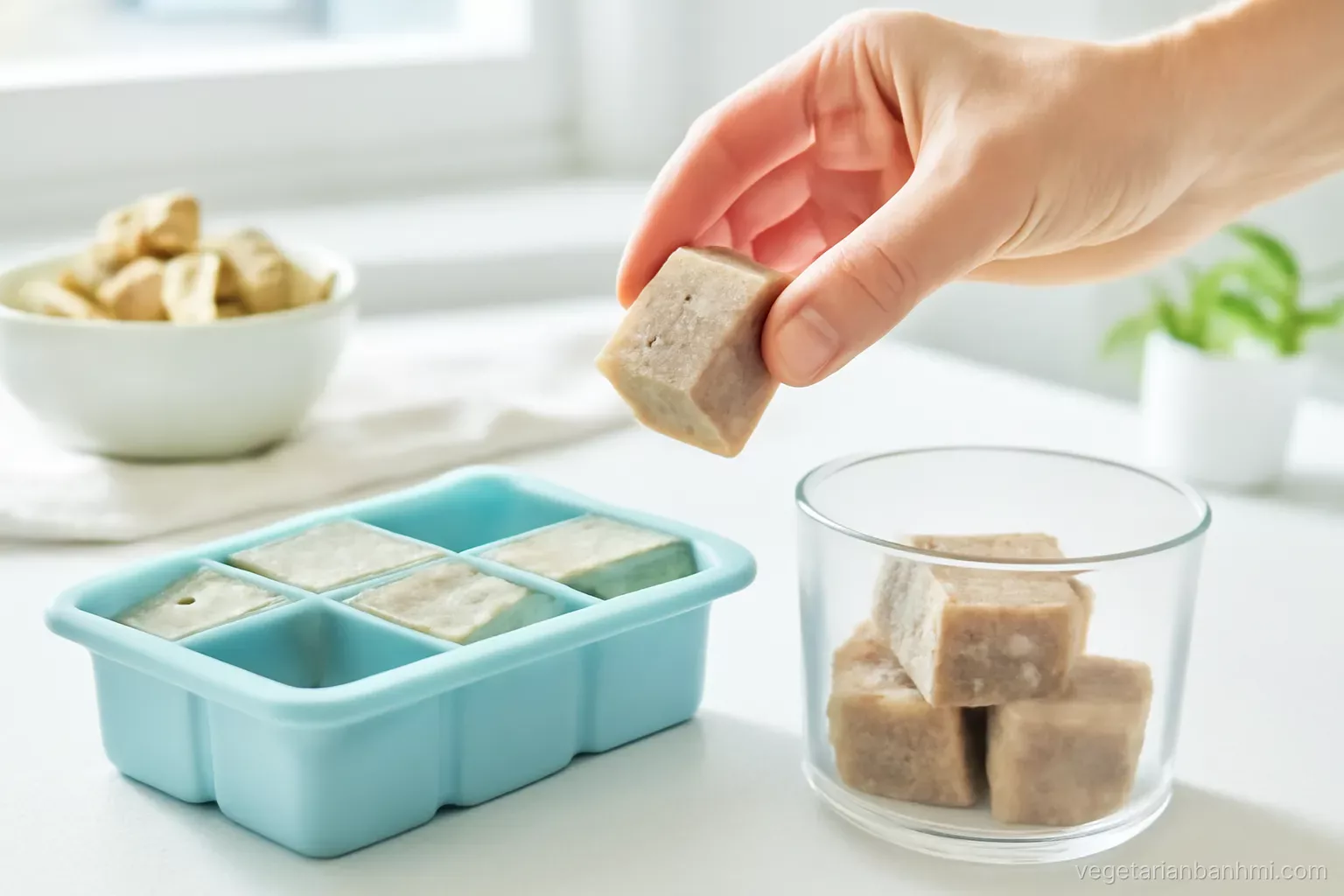
Mushroom, bean and nut pâtés are cooked, dense and moist, so they follow the USDA's 3–4 day guidance for leftovers. Cool them quickly by spreading the hot pâté in a shallow container before refrigerating. Pâté freezes very well, so the smart move is to freeze most of a batch in small portions on the day you make it. An ice cube tray works perfectly: each cube is about 1–2 tablespoons, roughly one sandwich. Once frozen, pop the cubes into a freezer bag. Thaw overnight in the fridge, stir well, and add a few drops of water or soy milk if it seems stiff.
Quick pickles: protected by vinegar, limited by texture
Đồ chua is a refrigerator pickle: shredded vegetables in a brine of roughly equal parts vinegar and water, sweetened with sugar. The acidity makes it much more resistant to spoilage than fillings or mayo, but it is not canned and not shelf-stable, so it must stay in the fridge. In practice, quality is what limits it. The pickles taste best from day one to about two weeks; after about three weeks, carrot and daikon soften and the flavor becomes flat. Make smaller batches more often rather than one huge jar.
Daikon has one quirk worth knowing: after a few days in the jar it develops a pungent, sulfurous smell. That is a natural compound in radishes, not spoilage, and it fades when the jar is open for a minute. Signs of real spoilage are different: a slimy texture, cloudy and ropey brine, fizzing, or mold. Always use clean tongs or a fork, and keep the vegetables submerged in brine.
Chili sauces and flavored oils
A cooked chili sauce made with vinegar, sugar and salt keeps reasonably well because of its acidity and the cooking step. How long depends on your recipe: a sharp, vinegary sauce lasts longer than a mild one thickened with fresh ingredients. Store it in a clean jar in the fridge and use it within one to several weeks; freezing small portions extends that further.
Oils infused with fresh garlic, shallots, lemongrass or herbs need the most caution in this guide. Fresh garlic and herbs can carry spores of the bacterium that causes botulism, and the low-oxygen environment under oil allows them to produce toxin if the mixture is kept at room temperature. University extension services advise refrigerating homemade garlic or herb oils, using them within about 4 days, or freezing them for longer storage. Never leave a homemade garlic-in-oil at room temperature, however good it looks. Shallot or garlic fried until fully crisp and dry is a different product, but if you are unsure, treat it with the same caution.
Herbs: the most fragile make-ahead
- Cilantro and mint: wash, dry thoroughly, then layer between dry paper towels in a lidded container. They typically keep about 3–5 days.
- Thai basil: darkens in the cold. Store it like flowers, stems in a glass of water at cool room temperature, loosely covered, and use within a couple of days.
- Green onions: wrapped in a damp towel in the fridge, or stood in a little water.
- Cucumbers: keep whole until the day; cut cucumber releases water and goes soft within a day or two.
Containers and labels
Clean glass jars with tight lids are ideal for pickles and sauces because glass does not hold flavors or stains. Wash jars in hot soapy water and dry them completely; for refrigerator storage you do not need to sterilize them as you would for canning, but they must be clean. Label each jar with the contents and date, even if you think you will remember. A quick look at the dates every Sunday, ideally as part of your weekly prep, keeps old jars from lingering. For a full weekly routine, see our meal prep and storage section.
Sources
- USDA Food Safety and Inspection Service – fsis.usda.gov (Leftovers and Food Safety)
- National Center for Home Food Preservation – nchfp.uga.edu (pickling and flavored oils guidance)
- FoodSafety.gov – foodsafety.gov (Cold food storage chart)
Frequently asked questions
How long does homemade vegan mayo last?
As a practical guide, about 5–7 days in a clean, sealed jar at the back of the fridge. Make small batches and use a clean spoon each time; discard it if it smells sour or separates.
Can I freeze mushroom pâté?
Yes. It freezes well for about 3 months. Freeze it in an ice cube tray for sandwich-sized portions, then thaw overnight in the fridge and stir before using.
How long do pickled carrots and daikon last?
Quick refrigerator pickles keep their best texture for about 2–3 weeks. They must stay refrigerated because they are not canned or shelf-stable.
Why do my daikon pickles smell bad?
Daikon naturally produces a pungent sulfur smell after a few days in brine, which is normal. Sliminess, ropey or fizzing brine, or mold are true spoilage signs.
Is homemade garlic oil safe to keep?
Only if refrigerated and used within about 4 days, or frozen. Fresh garlic in oil at room temperature carries a botulism risk, so never store it on the counter.
Stock the Fridge, Speed Up the Sandwich
A jar of pickles, a tray of frozen pâté cubes and a fresh batch of mayo turn any weekday into banh mi night. And if you are in Ho Chi Minh City, taste how these layers come together at Bánh Mì XANH, a fully vegan banh mi chain with 5 central shops open 24/7.
Visit Bánh Mì XANH · 24/7 hotline / Zalo +84 923 183 183