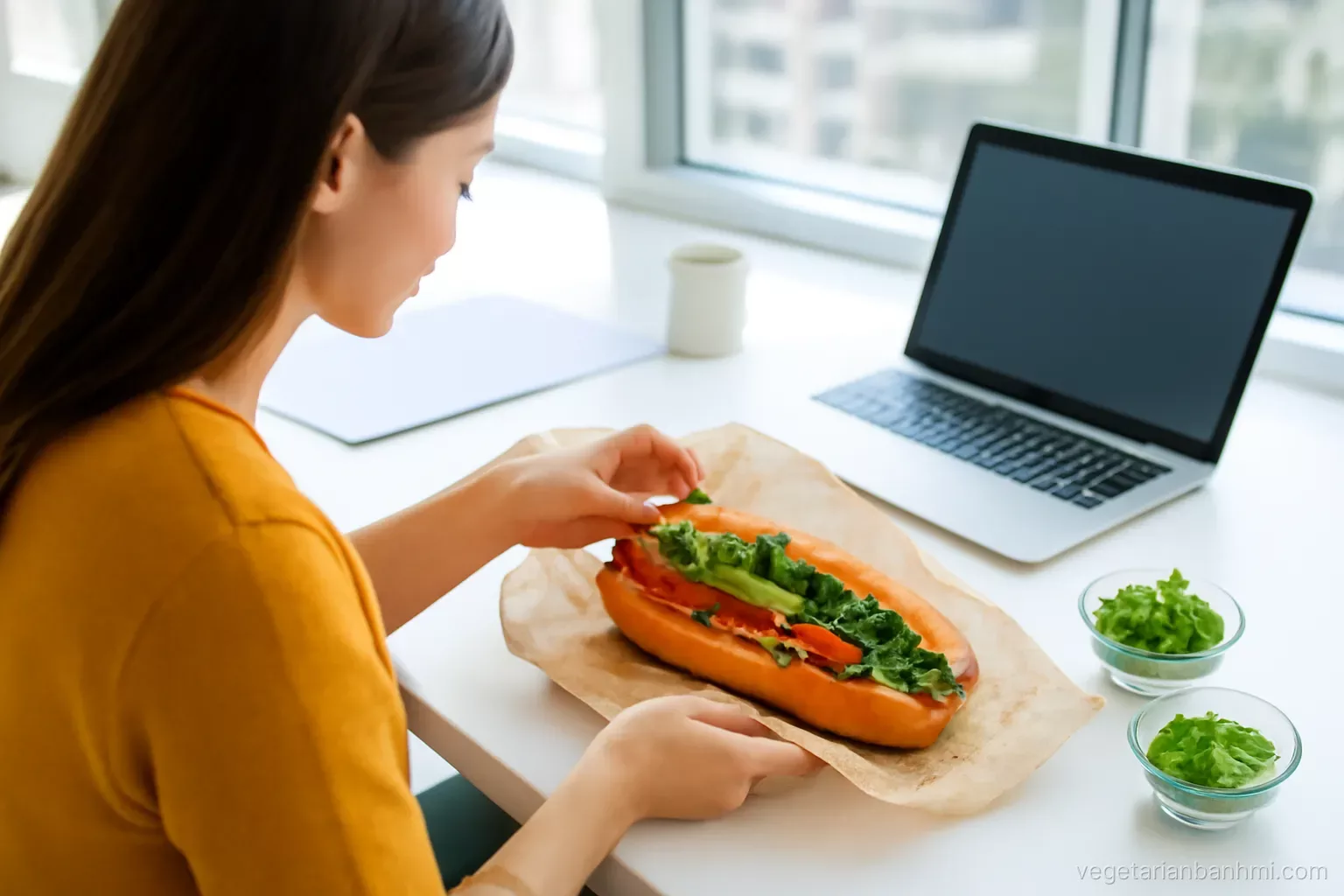
Short answer: To keep a packed banh mi crisp, spread a fat-based layer such as vegan mayo or pâté on both cut sides, keep wet ingredients like pickles, cucumber and sauce in a separate small container, and wrap the sandwich in parchment or paper rather than plastic. Pack it in an insulated bag with at least two cold sources, as USDA recommends, and add the wet toppings just before eating.
A banh mi is a contest between a crisp, airy roll and juicy fillings. At the stall, the fillings win slowly over twenty minutes while you eat. In a lunchbox, they have four hours to soak in, and the bread loses. The good news is that a few packing habits, borrowed from the way street vendors and caterers handle banh mi, keep the bread surprisingly crisp until noon. This guide covers moisture barriers, what to pack separately, wrapping, keeping food cold, and three lunchbox setups that work for office, school and outdoor days.
Why banh mi goes soggy
Three things cause most sogginess. First, liquid: pickle brine, sauce, the juice from cucumber and the marinade on tofu migrate into the crumb. Second, steam: a warm filling or a roll packed while still warm from the toaster releases moisture inside the wrapping. Third, trapped humidity: tight plastic wrap holds every bit of moisture against the crust. Fix those three and you solve most of the problem.
Build a moisture barrier
Fat repels water, which is why a thin layer of vegan mayo or pâté on the cut surfaces is not just flavor but protection. Spread it edge to edge on both sides of the split roll, about 1 tablespoon of mayo on one side and 1–2 tablespoons of pâté on the other. If you skip mayo, a thin layer of softened vegan butter or a tahini sauce works too. Then layer the driest fillings closest to the bread: tofu, tempeh or seitan slices first, patted dry if they were in a marinade. The bread should never touch pickles or sauce directly.
Toasting matters as well. A lightly re-crisped roll, cooled completely before filling, resists moisture far better than a soft one. Cool it for at least five minutes; packing a hot roll creates steam inside the wrapping. For re-crisping methods, see our guide to freezing and reheating rolls in the meal prep and storage section.
What to pack inside vs separately
| Ingredient | Inside the sandwich? | Why | How to pack |
|---|---|---|---|
| Vegan mayo, pâté | Yes | Acts as a moisture barrier | Spread edge to edge |
| Tofu, tempeh, seitan (patted dry) | Yes | Dry enough to sit against the spread | Layer directly on the spread |
| Pickled carrot and daikon | Separate | Brine soaks the crumb | Squeezed, in a small lidded tub |
| Cucumber strips | Separate or last | Releases water over time | Wrapped in a paper towel |
| Cilantro, mint, Thai basil | Separate | Wilts and darkens when crushed | Between dry paper towels |
| Chili sauce, soy drizzle | Separate | Most likely to soak in | Tiny leak-proof container |
| Fresh chili slices | Either | Low moisture | Inside, or with herbs |
At lunchtime, open the sandwich, add the pickles, cucumber, herbs and sauce, close it and eat. It takes thirty seconds and the result is close to freshly made. Some people call this a "deconstructed" banh mi; we just call it lunch that works.
Wrapping: paper beats plastic
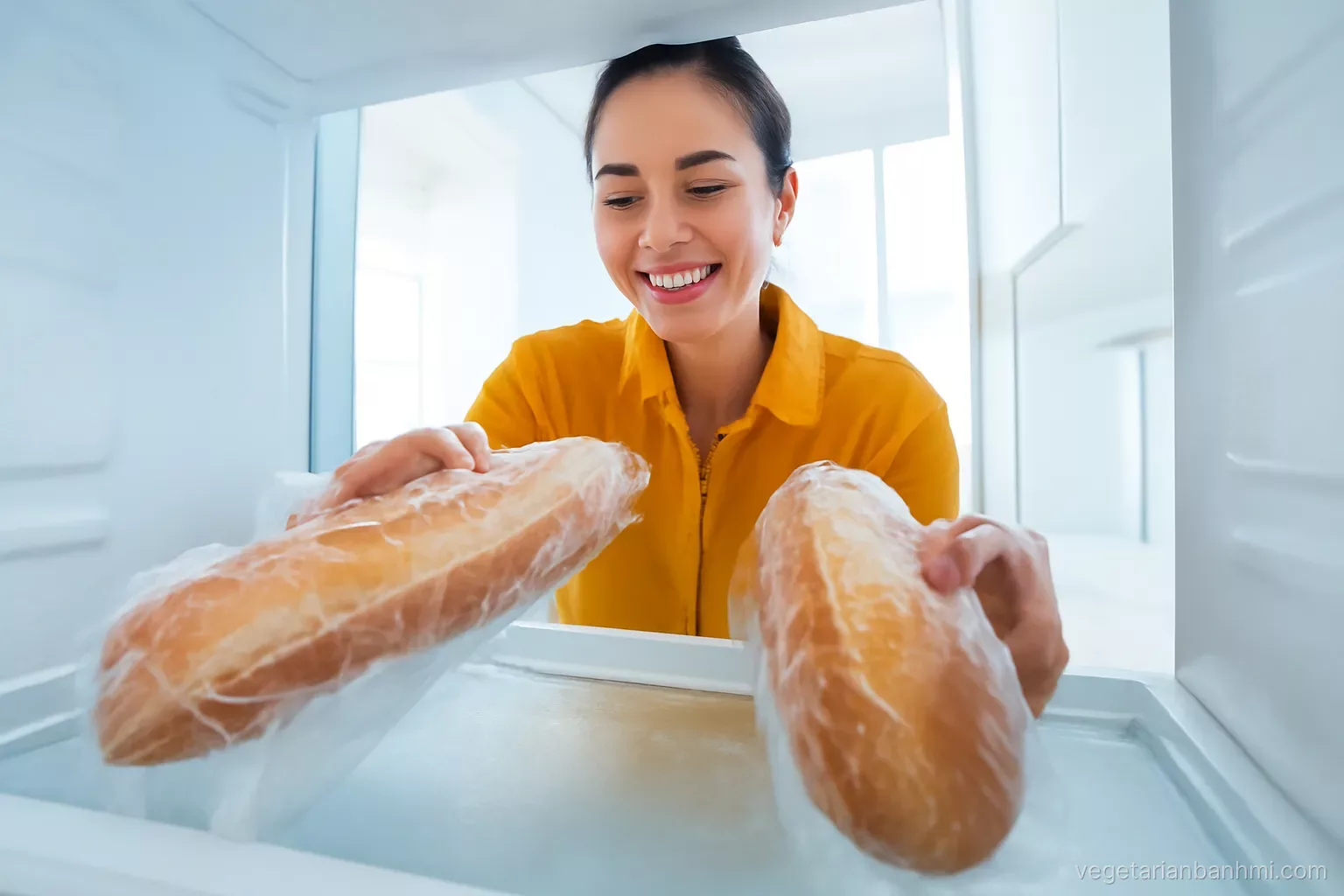
Street vendors in Vietnam often wrap banh mi in paper or slip it into a paper sleeve, and there is good reason. Paper lets a little moisture escape, so the crust does not steam itself soft. For a packed lunch, wrap the sandwich snugly in parchment or baking paper, then add a layer of foil or a reusable beeswax-style or plant-wax wrap if you need it to hold together. Twist the ends like a sweet wrapper. Avoid sealing it airtight in plastic wrap; that is the fastest route to a limp crust.
If the sandwich must travel in a crowded bag, put it in a rigid container after wrapping it in paper. A long, narrow box or a cut-to-size container protects the crust from being crushed, which is the other way a banh mi gets ruined before lunch.
Keeping it cold and safe
Cooked tofu, tempeh, mushroom pâté and vegan mayo are perishable. The USDA Food Safety and Inspection Service advises keeping perishable food out of the "danger zone", 4–60°C (40–140°F), for no more than 2 hours, or 1 hour when it is above 32°C (90°F). In practice that means a packed banh mi needs to stay cold until you eat it.
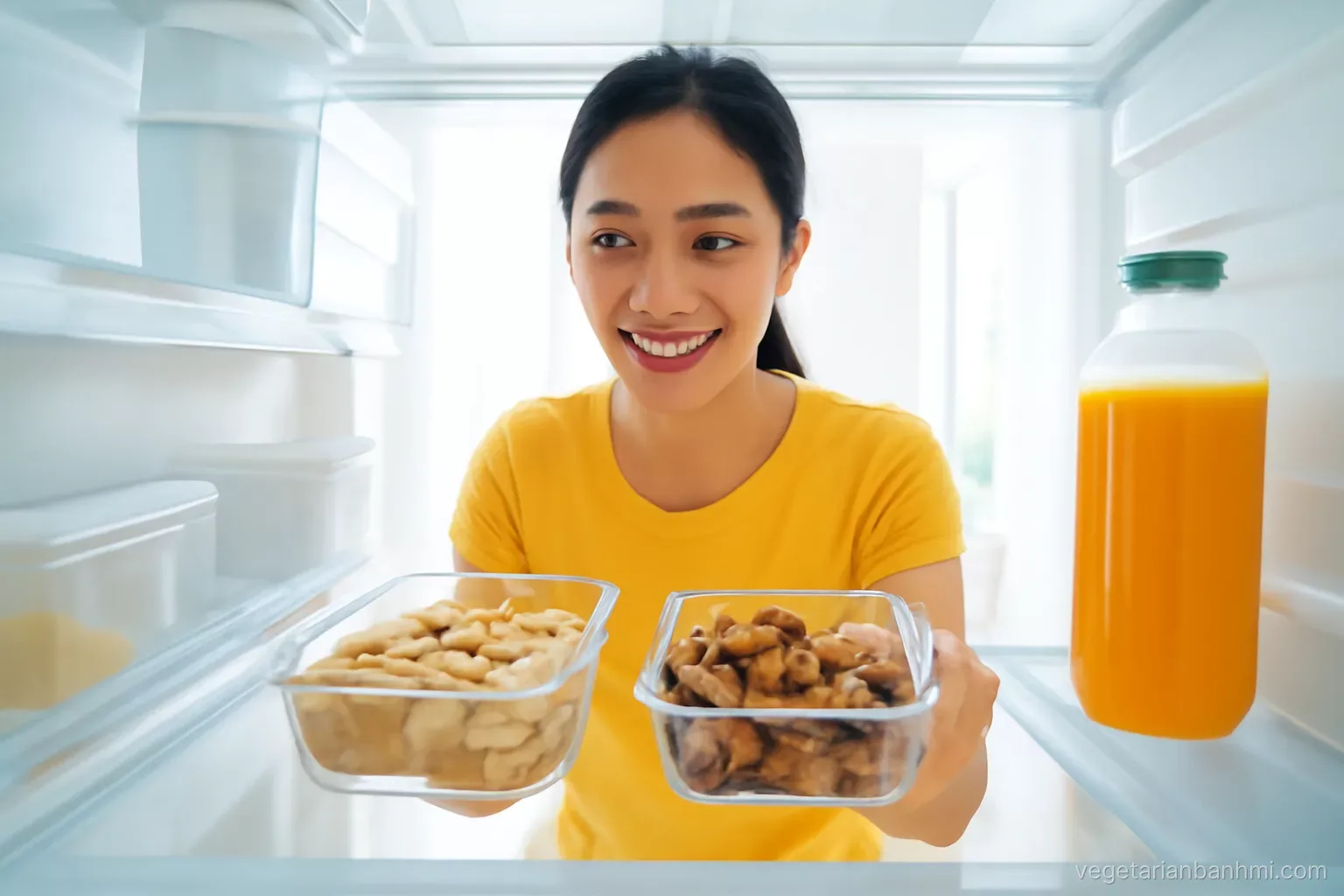
- Use an insulated, soft-sided lunch bag rather than a paper bag.
- Pack at least two cold sources, such as two frozen gel packs or a gel pack plus a frozen water bottle, as USDA recommends.
- Place the cold sources above and below the sandwich and the topping containers.
- Put the bag in a fridge at work or school if one is available, and keep it out of direct sun and hot cars.
- Throw out leftovers you carried around all day rather than bringing them home to eat later.
Cold air also helps the texture: a chilled filling releases less moisture than a warm one. If you prefer your tofu warm, carry it separately in a preheated insulated food jar, which keeps hot food at 60°C (140°F) or above if you preheat it with boiling water for a few minutes and fill it with steaming-hot food.
Three lunchbox setups
The office lunch
A whole re-crisped roll spread with mayo and pâté and filled with lemongrass tofu, wrapped in parchment. A small tub with squeezed pickles, cucumber strips and herbs, and a mini container of chili sauce. An insulated bag with two gel packs and a piece of fruit. If your office has a toaster oven, pack the roll unfilled and re-crisp it at lunch for 2–3 minutes.
The school lunch
Smaller rolls or a baguette cut into 10 cm (4 inch) pieces are easier for children to hold. Use mild fillings such as soy-glazed tofu or a mushroom-bean pâté, skip the chili, and pack the pickles in a separate compartment of a bento-style box. Check your school's food rules, as some limit nuts, so a cashew-based pâté may not be allowed.
The outdoor or hiking day
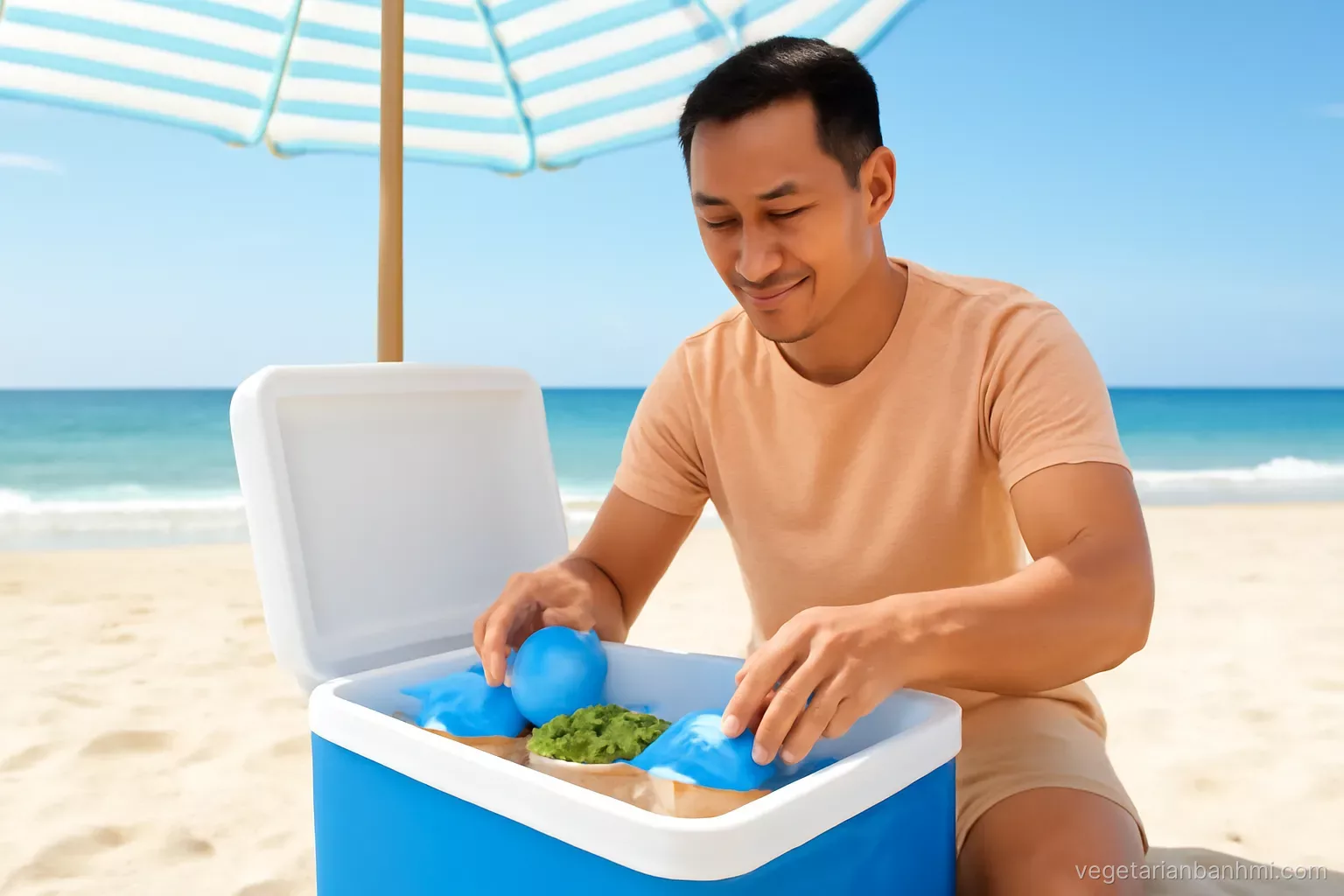
Heat is the challenge. Pack fillings in a separate cold container with a frozen water bottle that doubles as your drink later, and assemble at the trailhead or on the beach. Bread, pickles and whole vegetables tolerate warmth better than cooked fillings and mayo. Eat the perishable parts within an hour once it is hot outside. More on picnics in our guide to banh mi food safety in the meal prep and storage section, and for party-sized spreads see parties and gatherings.
Common packing mistakes
Adding the pickles in the morning. Even squeezed pickles soften the crumb over four hours. Keep them separate.
Packing a warm roll. Steam is water. Let toasted bread cool completely first.
One ice pack, no insulation. A single small pack in a thin bag warms quickly; use an insulated bag and two cold sources.
Plastic wrap only. It traps humidity against the crust. Paper first, then an outer layer if needed.
Sources
- USDA Food Safety and Inspection Service – fsis.usda.gov (Keeping bag lunches safe; Danger Zone)
- US Department of Agriculture – usda.gov (back-to-school lunch food safety guidance)
- FoodSafety.gov – foodsafety.gov
Frequently asked questions
How do I stop my banh mi from getting soggy?
Spread mayo or pâté on both cut sides, layer dry fillings next to the bread, and pack pickles, cucumber, herbs and sauces separately. Add them just before eating.
Can I make banh mi the night before for lunch?
You can prep the components the night before and assemble in the morning. If you fully assemble it the night before, use a generous fat barrier, keep wet toppings separate and refrigerate it overnight.
How long can a packed banh mi stay out of the fridge?
USDA advises no more than 2 hours for perishable food in the danger zone, or 1 hour above 32°C (90°F). With an insulated bag and two cold sources it can stay cold until lunch.
Should I wrap banh mi in plastic or paper?
Paper or parchment first, because it lets some moisture escape and keeps the crust crisper. Add foil or a reusable wrap on the outside if you need extra protection.
Is banh mi good for kids' school lunches?
Yes, with mild fillings, smaller pieces and pickles packed separately. Keep it cold with an insulated bag and check school rules on nuts if you use a nut-based pâté.
Crisp at Noon, Not Just at Breakfast
A fat barrier, a separate topping tub and a good insulated bag are all it takes to bring a banh mi to work that still crackles. If you are in Ho Chi Minh City and your lunch break is short, Bánh Mì XANH, a fully vegan banh mi chain with 5 central shops open 24/7, takes delivery orders online instead (the shop calls back to confirm).
Order Bánh Mì XANH for delivery · 24/7 hotline / Zalo +84 923 183 183