Short answer: For a vegan Lunar New Year (Tết) gathering of 12, serve banh mi as one dish among several: 9 rolls cut in half to make 18 halves (0.75 roll per guest), 36 crispy vegetarian spring rolls (3 each), about 3 litres of stuffed bitter melon soup (250 ml each), a platter of pickled vegetables and a fruit tray. Make the pickles and spring roll filling two days ahead, the soup the day before, and fry and assemble on the day. Tết 2027 falls on Saturday, 6 February.
Tết and the vegetarian table
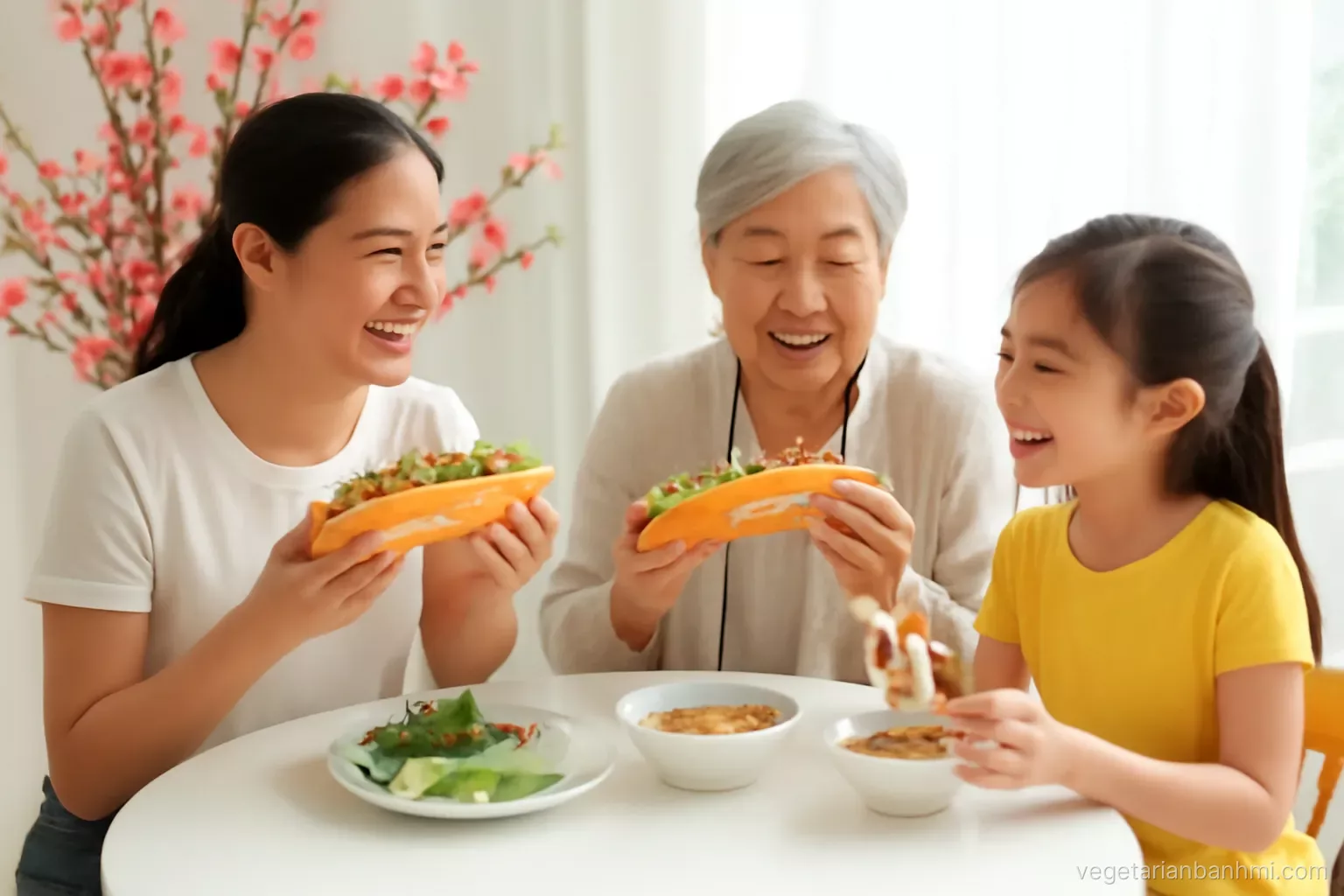
Tết Nguyên Đán, the Vietnamese Lunar New Year, is the most important holiday of the year, a time for family reunions, visits to relatives and food prepared days in advance. In 2027 the first day of Tết falls on Saturday, 6 February, with the eve (giao thừa) on the night of Friday, 5 February. Many families eat elaborate meat dishes over the holiday, but there is also a strong vegetarian thread: some families keep the first day of the year meat-free, as they do the first day of every lunar month, and pagoda visits are part of many people's New Year.
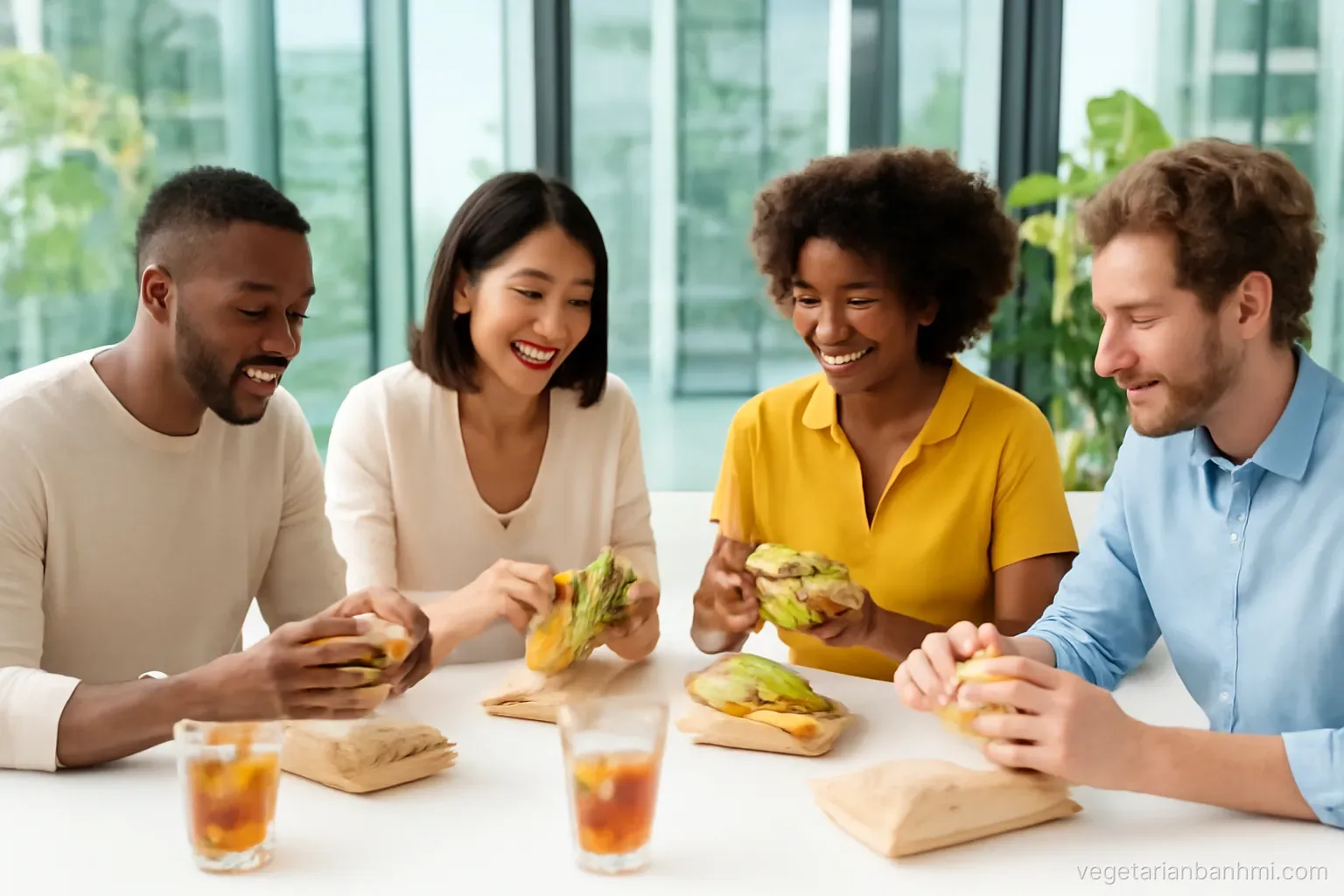
A banh mi is not a traditional centrepiece of the Tết feast, which revolves around sticky rice cakes, braised dishes and soups. But in modern homes, especially among younger hosts and overseas Vietnamese families, a platter of banh mi has become a relaxed way to feed visitors who drop in over several days. It pairs naturally with the holiday's pickled vegetables and spring rolls, and it can be made fully vegan without anyone missing anything.
The menu for 12
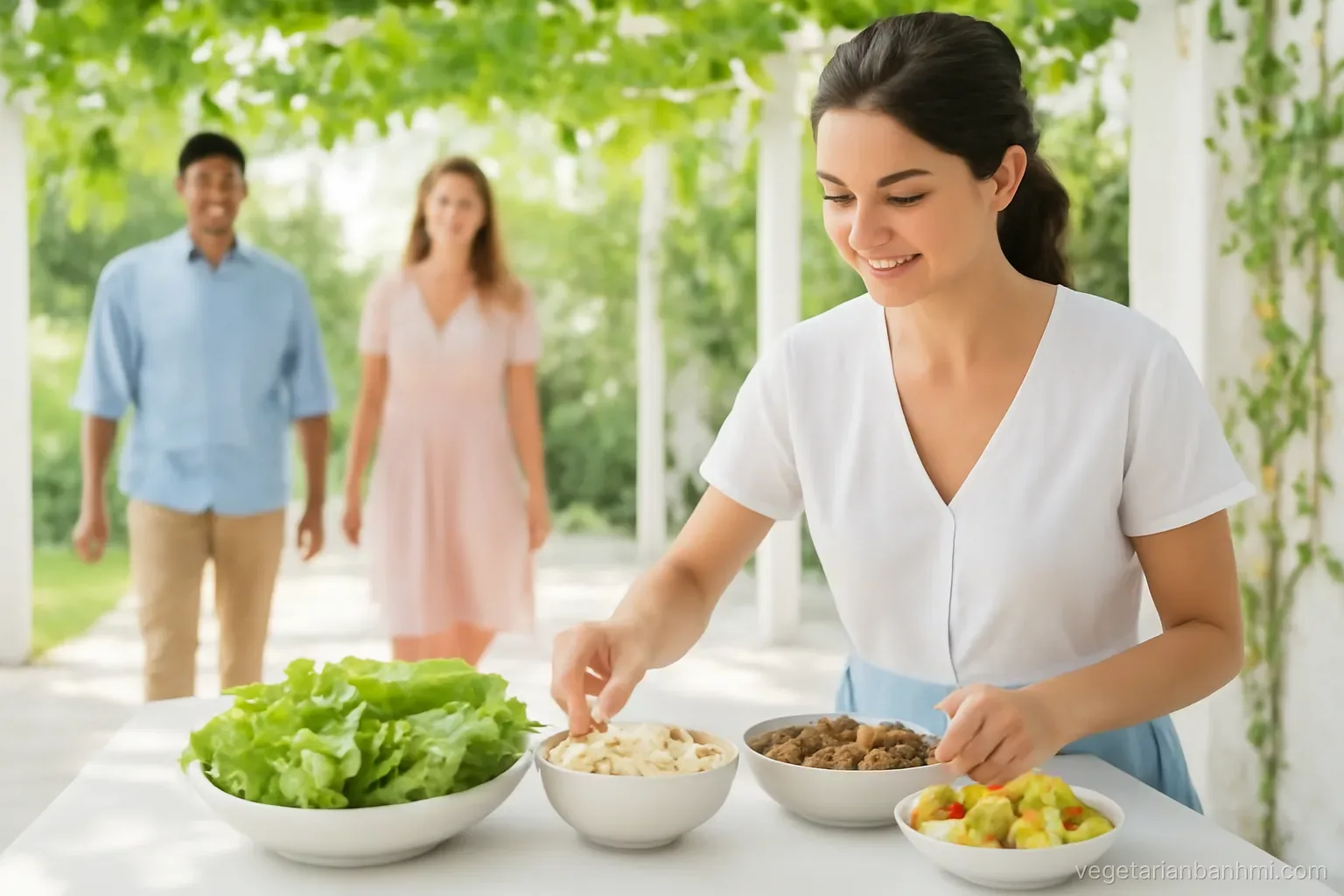
This menu balances one bread dish, one crisp fried dish, one soup and fresh, tangy sides, which is the rhythm of a Vietnamese family meal. Because banh mi is one of several dishes, we plan 0.75 rolls per guest instead of the 1.25 used when it is the main meal.
| Dish | Per guest | For 12 guests | Make ahead? |
|---|---|---|---|
| Vegan banh mi halves | 1.5 halves (0.75 roll) | 9 rolls → 18 halves | Components 1–2 days ahead |
| Crispy spring rolls, chả giò chay | 3 rolls | 36 rolls | Roll 1 day ahead, fry on the day |
| Stuffed bitter melon soup, canh khổ qua | 250 ml | About 3 litres | Day before, reheat |
| Pickled vegetables, dưa món or đồ chua | small side | One large jar | 2+ days ahead |
| Steamed jasmine rice | ¾ cup cooked | About 9 cups cooked | Cook on the day |
| Fresh fruit tray | a few pieces | 5 kinds of fruit | Cut on the day |
The banh mi: quantities for 18 halves
We use the same per-roll formula as our other party guides. For 9 full rolls (25 cm / 10 in each), you need:
- Firm tofu: 900 g raw (about 3 blocks of 400 g / 14 oz, with a little left over), pressed, marinated and baked.
- Carrot and daikon: 225 g each, cut into matchsticks and pickled in 225 ml water, 110 ml rice vinegar, 45 g sugar and about 5 g salt.
- Cucumber: 270 g, roughly one English cucumber, in spears.
- Cilantro: 36 g.
- Vegan mayo and vegan pâté: 135 g each, about 9 tablespoons each.
- Fresh chili: 27 g, served on the side.
For a festive touch, add a few slices of a vegetarian "pork roll" (chả lụa chay) if you can find a vegan one, checking the label for egg white. Assemble the full rolls, then cut each in half on a slight diagonal and arrange them on a platter cut-side up. Our vegan banh mi recipes give the full tofu marinade and method.
Crispy vegetarian spring rolls
Chả giò (called nem rán in the north) are a fixture of the Tết table. The vegetarian version is filled with taro or sweet potato, wood ear mushrooms, glass noodles, carrot and crumbled tofu. For 36 rolls, a workable filling is 300 g grated taro or sweet potato, 200 g grated carrot, 200 g crumbled firm tofu, 40 g dried glass noodles soaked and cut short, and 15 g dried wood ear mushrooms soaked and chopped, seasoned with soy sauce, pepper and a little sugar. That gives roughly 25 to 30 g of filling per roll.
Use rice paper wrappers or spring roll pastry, which is easier for beginners and is often vegan, though you should check the packet. Roll them the day before, lay them on a tray without touching, cover and refrigerate. On the day, fry at about 170 to 180 °C (340 to 355 °F) in batches until deep golden, about 6 to 8 minutes, or bake brushed with oil at 200 °C (400 °F) for 20 to 25 minutes, turning once. Serve with lettuce, herbs and a vegetarian dipping sauce of soy sauce, lime juice, sugar, garlic and chili.
Stuffed bitter melon soup
In southern Vietnam, canh khổ qua (bitter melon soup) is eaten at Tết partly for a play on words: khổ qua sounds like "hardship passes", a wish that the difficulties of the old year are over. The vegetarian version stuffs hollowed bitter melon with a filling of crumbled tofu, minced mushrooms and glass noodles, then simmers it in a clear vegetable broth.
For about 3 litres serving 12, use 4 medium bitter melons (around 800 g to 1 kg in total), cut into 4 cm (1½ in) sections and seeded. Fill them with 300 g crumbled tofu, 150 g finely chopped mushrooms and 30 g soaked glass noodles, seasoned with soy sauce and pepper. Simmer in 2.5 litres of vegetable stock for 25 to 30 minutes until the melon is tender. If you cannot find bitter melon at an Asian grocer, the same filling works in hollowed zucchini or courgette sections, simmered for 15 minutes; it loses the symbolism but keeps the comfort.
The cooking plan
- Three days before: shop, including an Asian grocery run for bitter melon, wood ear mushrooms, glass noodles and wrappers.
- Two days before: make the banh mi pickles and any dưa món. Make or buy vegan mayo and pâté. Prepare the spring roll filling and refrigerate.
- One day before: roll the spring rolls. Make the soup and refrigerate it. Press and marinate the tofu for the banh mi.
- Morning of: bake the banh mi tofu. Cut cucumber and chili. Cook rice. Prepare the fruit tray.
- One hour before: fry or bake the spring rolls. Reheat the soup gently. Re-crisp the bread at 200 °C (400 °F) for 3 to 5 minutes.
- Thirty minutes before: assemble and halve the banh mi. Set everything out family style.
The fruit tray and small touches
A Vietnamese family altar at Tết often holds a tray of five fruits, mâm ngũ quả, chosen for their colours and names, and the choice of fruits differs between north and south. For the table, a fruit platter of five kinds, such as pomelo, mandarins, mango, dragon fruit and pineapple, makes a cheerful dessert and is naturally vegan. Candied fruits and seeds (mứt), such as coconut ribbons and ginger, are traditional snacks offered to visitors.
Red and gold decorations, peach or apricot blossoms depending on the region, and lucky money envelopes (lì xì) for children complete the atmosphere. Keep the food simple enough that you can sit with your guests rather than stay in the kitchen; that is the point of the holiday.
For more ideas on soups and sides that round out a banh mi meal, see our sides, soups and salads section, and for keeping leftovers safe over a multi-day holiday, our meal prep and storage guides.
Sources
- Vietnam National Authority of Tourism – vietnam.travel (Tết traditions and food)
- USDA FoodData Central – fdc.nal.usda.gov (bitter melon, tofu and taro reference data)
- USDA Food Safety and Inspection Service – fsis.usda.gov (leftover storage)
Frequently asked questions
When is Lunar New Year 2027?
The first day of Tết 2027 is Saturday, 6 February 2027. New Year's Eve, giao thừa, is the night of Friday, 5 February.
Why do Vietnamese eat bitter melon soup at Tết?
In the south, khổ qua (bitter melon) sounds like "hardship passes", so the soup expresses a wish that the past year's difficulties are over. The vegetarian version is stuffed with tofu and mushrooms.
How many banh mi do I need when serving other dishes?
About 0.75 of a roll per guest. For 12 guests, that means 9 rolls cut in half, giving 18 halves.
Are spring roll wrappers vegan?
Rice paper is made from rice, water and salt and is usually vegan. Wheat-based spring roll pastry is often vegan too, but some brands contain egg, so check the label.
Can I make the Tết menu ahead?
Yes. Pickles and fillings keep for days, the soup reheats well and spring rolls can be rolled a day ahead. Only frying, re-crisping bread and assembling banh mi need to happen on the day.
A plant-based new year, at home or in Saigon
This menu brings a vegan Tết table together with a few days of prep. If you spend the holiday in Ho Chi Minh City, Bánh Mì XANH, a fully vegan banh mi chain, keeps its 5 central shops open 24/7 right through Tết.
Explore the Bánh Mì XANH menu · 24/7 hotline / Zalo +84 923 183 183