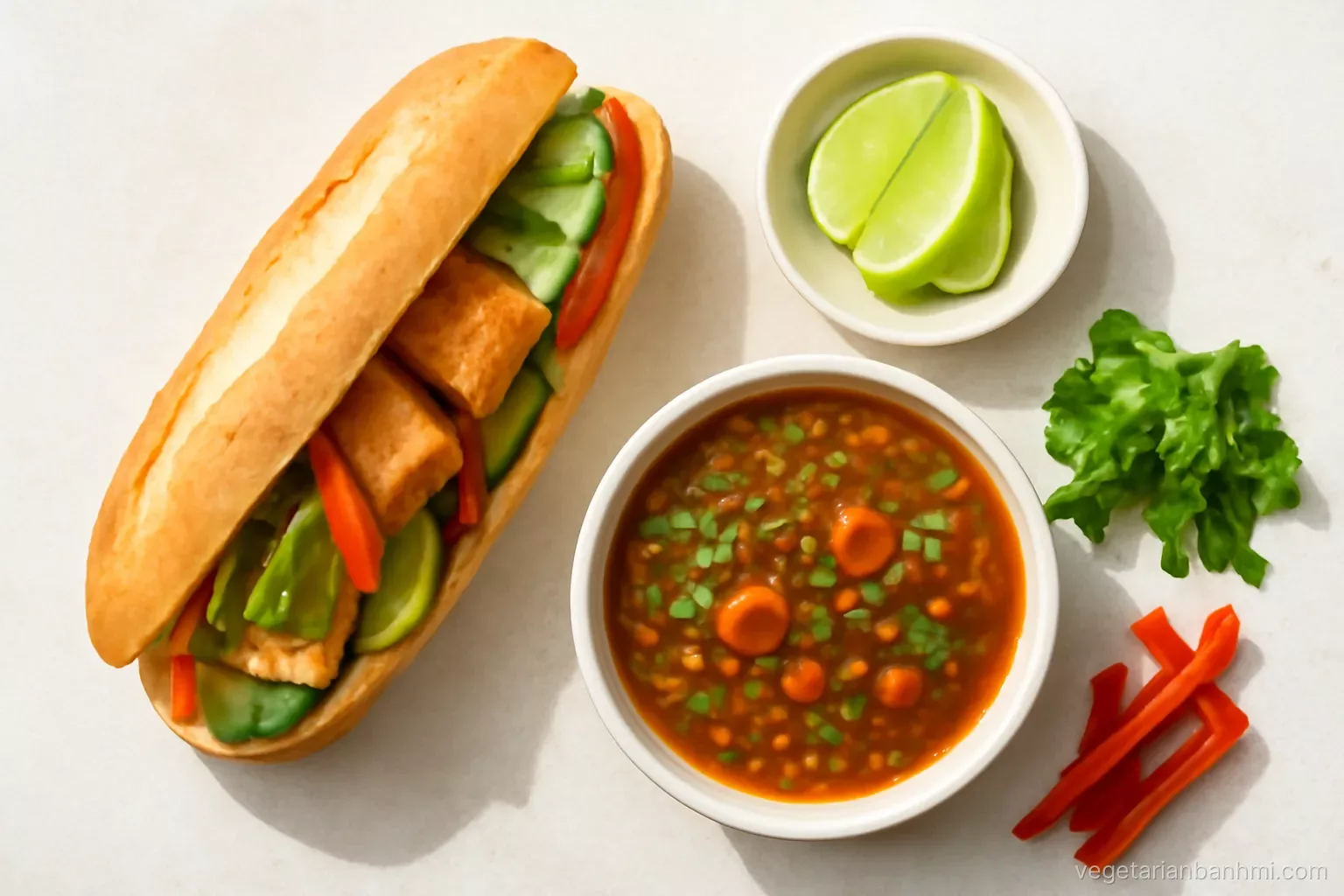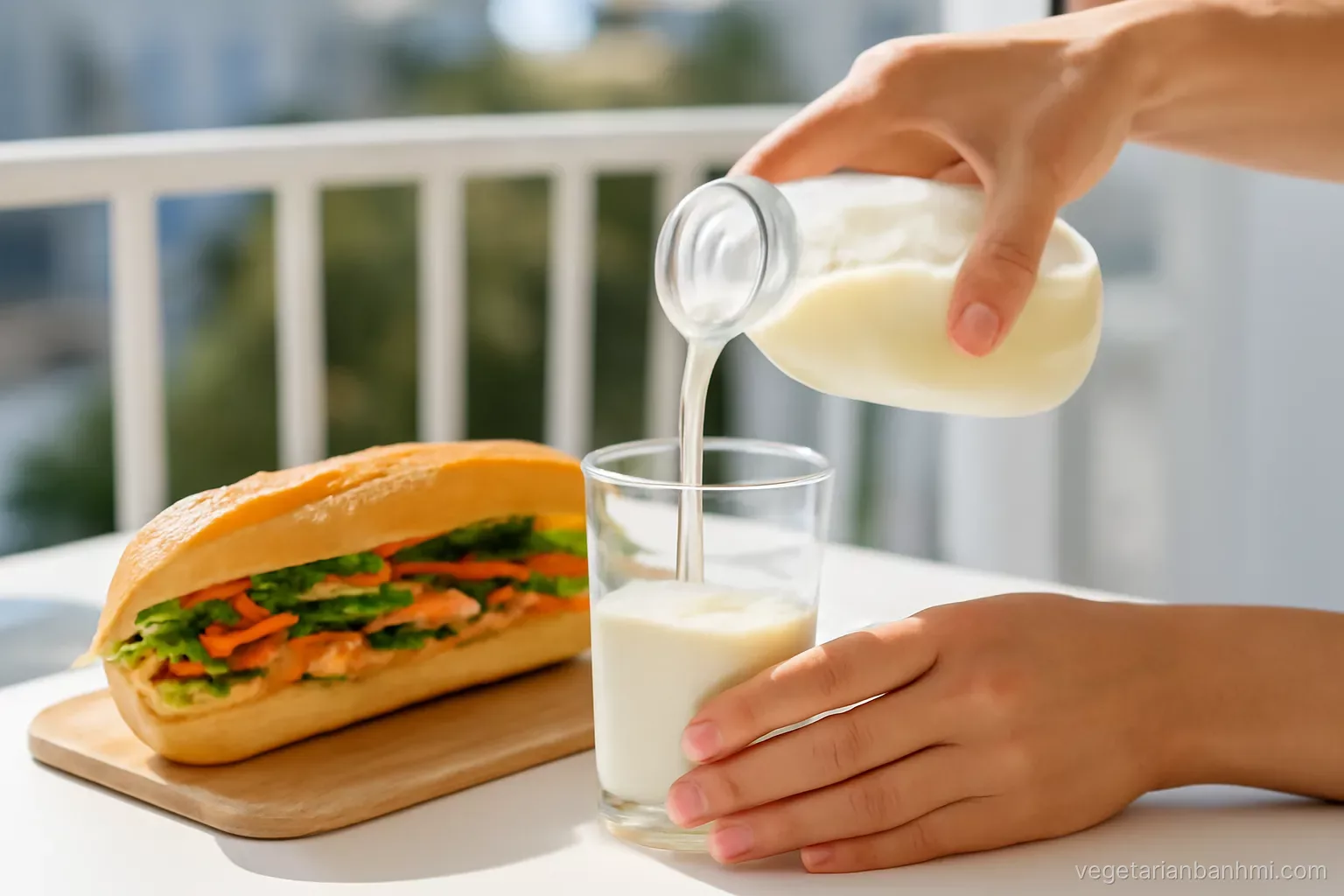
Short answer: A balanced vegan banh mi meal pairs a sandwich with a real protein filling (about 100 g tofu, tempeh or seitan) with extra vegetables on the side, a source of healthy fat and fruit or an unsweetened drink. A typical homemade sandwich lands somewhere around 500–650 kcal, so adding a big salad or a clear soup gives you volume and fiber without a heavy meal.
On its own, a banh mi is a wonderfully efficient piece of food: bread for energy, a filling for protein, pickles and herbs for freshness. Whether it adds up to a balanced meal depends on proportions. A sandwich that is mostly bread and mayo with a few strips of tofu leaves you hungry by mid-afternoon; one with a generous filling, lots of vegetables and a side salad keeps you going. This guide breaks the meal into parts, gives approximate calories and nutrients using USDA FoodData Central values written as "about", and offers three meal templates. It is general guidance, not a personal diet plan; people with diabetes, heart conditions, eating disorders or specific goals should work with a registered dietitian.
A simple framework for the whole meal
Rather than counting every gram, think of the meal in five parts. Each part has a job, and the goal is that none is missing or wildly oversized.
- Energy base: the roll. It provides carbohydrates and a surprising amount of protein.
- Protein: tofu, tempeh, seitan, beans or edamame, ideally around 100 g of the main filling.
- Vegetables: pickles, cucumber, herbs inside the sandwich, plus a side salad, greens or soup.
- Fat: mayo, pâté, nuts or avocado, in a measured amount that makes the meal satisfying.
- Drink or fruit: water, unsweetened tea, or a piece of fruit instead of a sweet drink when you want to keep sugar down.
The WHO recommends eating at least 400 g of fruit and vegetables a day and keeping free sugars below 10% of daily energy. A banh mi alone usually contains only 60–100 g of vegetables, so the side dish is where a meal can make up much of the difference.
Approximate calories and nutrients, component by component
These are estimates for one sandwich using common portions. Brands, oil quantity and bread size change the totals; use them to see proportions, not to count precisely.
| Component | Portion | Energy (about) | Protein (about) | Main contribution |
|---|---|---|---|---|
| Banh mi roll | 80 g | 210–230 kcal | 7–9 g | Carbohydrate, some fiber if whole wheat |
| Firm tofu, pan-fried | 100 g | 150–200 kcal | about 17 g | Protein, calcium if calcium-set |
| Vegan mayo | 15 g (1 tbsp) | 70–100 kcal | 0 g | Fat, richness |
| Mushroom or bean pâté | 30 g | 40–80 kcal | 1–4 g | Umami, some fiber |
| Pickles, cucumber, herbs | 80 g total | 20–35 kcal | under 1 g | Crunch, vitamins, freshness |
| Sandwich total | about 500–650 kcal | about 23–30 g |
Two observations. The roll and the mayo together can be close to half the calories, so portion of mayo matters more than people expect. And the vegetables inside the sandwich add very little energy, which is why piling them high is the cheapest way to add volume.
Three balanced meal templates
1. The everyday lunch (around 650–750 kcal)
A tofu banh mi with about 100 g filling and 1 tablespoon mayo, plus a cucumber, tomato and herb salad dressed with lime and a teaspoon of sesame oil, and a glass of unsweetened iced tea. This is the version most people can eat several times a week. The salad adds about 150–200 g of vegetables, getting you a good way toward the WHO's 400 g daily goal in one meal.
2. The light dinner (around 450–550 kcal)
Half a large banh mi, or one small roll, with tempeh and plenty of pickles, alongside a bowl of clear vegetable soup with tofu cubes, bok choy and mushrooms. Soup is filling for its calories, and Vietnamese-style clear broths with ginger and scallion pair naturally with banh mi. Browse sides, soups and salads for recipes.
3. The active-day meal (around 850–950 kcal)
A full banh mi with tofu and a bean pâté, plus a side of 100 g shelled edamame with chili salt, a banana or mango, and a nut-milk coffee. Protein lands somewhere around 35–40 g in total, useful after a long walk, a hike or a training session.
Fiber, fats and the bread question
White baguette is part of the banh mi experience, and an airy Vietnamese-style roll is relatively light. If you want more fiber, there are three straightforward routes: choose a whole-wheat or part-whole-wheat roll when you bake or buy, add legumes such as a bean pâté or edamame, and serve the sandwich with a vegetable-heavy side. Tempeh is also high in fiber, with about 8 g per 100 g in some USDA entries, far more than tofu.
For fats, the WHO advises shifting intake toward unsaturated fats and limiting saturated fats to less than 10% of energy. Most vegan banh mi fats are already unsaturated: neutral oils, nuts, sesame, avocado. The things to watch are portion size and repeated deep-frying. Pan-frying pressed tofu in a tablespoon of oil gives a crisp result without the oil load of deep-frying, and a homemade mayo lets you control both salt and quantity. Coconut-based spreads are high in saturated fat, so use them as an occasional flavor rather than a daily base.
Balance across the week, not just the plate
One sandwich does not need to be perfect. If you eat banh mi a few times a week, it is more useful to rotate fillings than to optimize a single one: tofu on Monday, tempeh midweek, a mushroom-and-tofu mix on Friday, with a bean pâté batch that covers several days. That rotation varies your protein sources, your fiber and your micronutrients without extra effort. Prepping components on the weekend helps too, because a ready tub of pickles and pre-washed herbs makes it far more likely that vegetables end up in the sandwich and on the side. Our meal prep and storage guides show how to do this safely.
When you are travelling in Vietnam, balance often comes naturally. Banh mi is commonly eaten as breakfast or a snack, and a typical day of vegetarian eating there also includes rice dishes with tofu and greens, noodle soups and lots of fresh fruit. Treat the sandwich as one part of that pattern rather than the whole day.
Common mistakes and quick fixes
Too little filling. A thin layer of tofu and a thick layer of mayo makes a sandwich that is calorie-dense but low in protein. Fix it by weighing the filling once and using about 100 g.
No vegetables beyond the garnish. The pickles and herbs are lovely but small. Add a side salad or soup.
Sweet drinks by default. A large sweetened bubble tea can rival the sandwich in calories. If sugar is something you are watching, have a smaller size, ask for less sugar, or choose unsweetened tea or coffee most days.
Treating every banh mi the same. Mushroom or jackfruit fillings are excellent but low in protein; when you choose them, pair the sandwich with edamame or a bean side. Our plant-based nutrition guides compare fillings in detail.
Sources
- World Health Organization – who.int (Healthy diet fact sheet)
- USDA FoodData Central – fdc.nal.usda.gov (bread, tofu, tempeh, edamame, vegetables)
- NIH Office of Dietary Supplements – ods.od.nih.gov (nutrient fact sheets)
Frequently asked questions
How many calories are in a vegan banh mi?
A typical homemade vegan banh mi with tofu and mayo is somewhere around 500–650 kcal, depending on bread size, oil and spreads. Large shop sandwiches can be more.
Is a vegan banh mi healthy?
It can be part of a balanced diet, especially with a protein-rich filling, lots of vegetables and moderate sauces. Adding a salad or soup and keeping drinks unsweetened makes it a well-rounded meal.
What should I eat with banh mi to make it a full meal?
A vegetable side such as a cucumber-herb salad or a clear tofu and greens soup, plus fruit or edamame if you need more energy or protein. This adds volume and fiber without much extra fat.
Can I make banh mi with whole-wheat bread?
Yes. The texture will be denser and less shattering than a classic airy roll, but you gain fiber. A part-whole-wheat roll is a good compromise.
How much mayo should I use?
About one tablespoon per sandwich gives richness without overwhelming the calories. A thin layer on both cut sides also protects the bread from getting soggy.
Make Your Banh Mi the Whole Meal
A generous filling, a crunchy side salad and a cold unsweetened drink turn a sandwich into a balanced lunch you can repeat all week. When you are in Ho Chi Minh City, Bánh Mì XANH, a fully vegan banh mi chain with 5 central shops open 24/7, pairs its banh mi with jasmine lime tea and nut-milk drinks if you want to taste the full combination.
Explore the Bánh Mì XANH menu · 24/7 hotline / Zalo +84 923 183 183