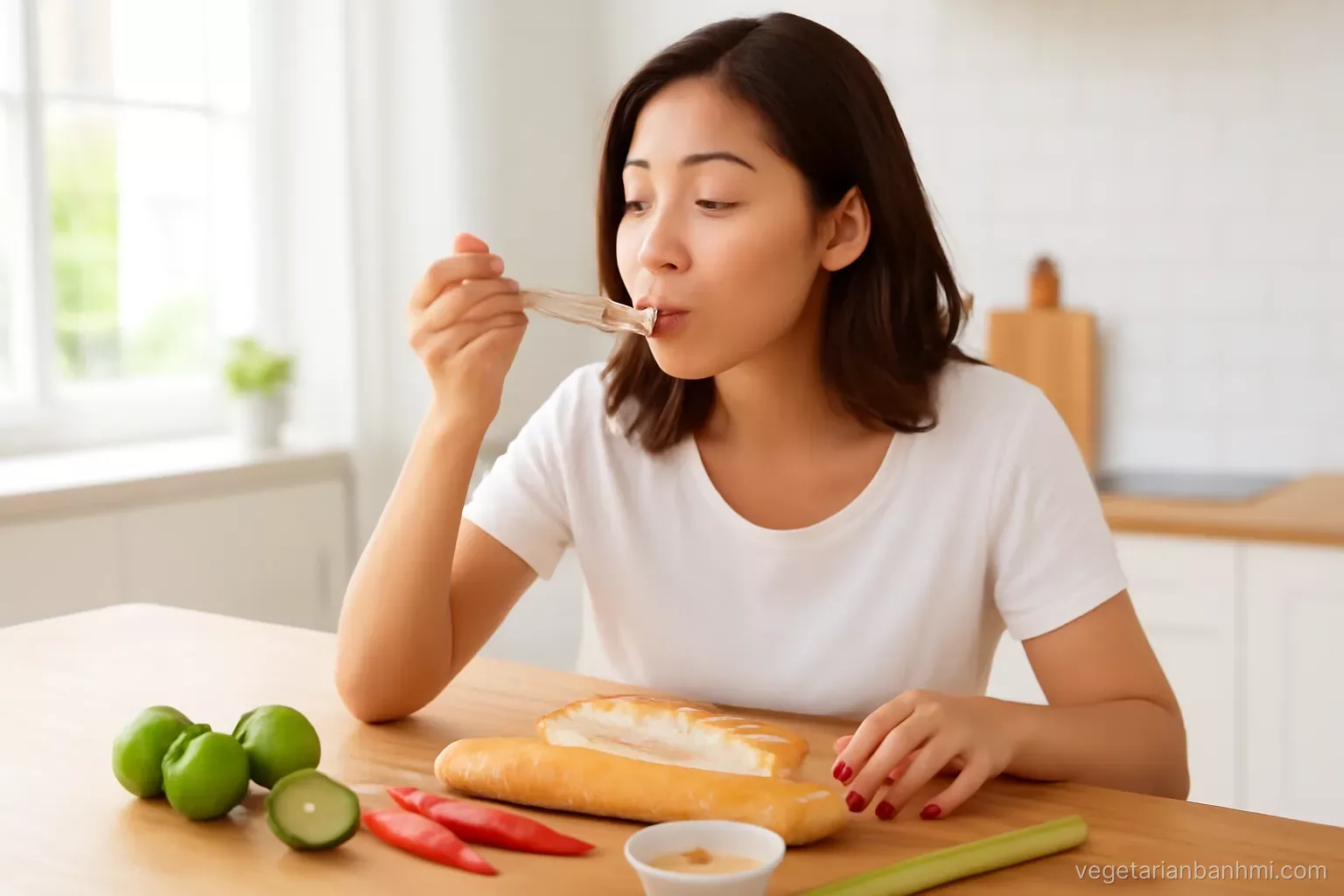
Short answer: A vegan banh mi can easily carry around 1,000–1,500 mg of sodium, mostly from the bread, soy sauce or liquid seasoning, salty vegan cold cuts and sauces. The World Health Organization recommends adults keep sodium under 2,000 mg a day (less than 5 g of salt). You can cut a large share by measuring soy sauce, using reduced-sodium versions, draining pickles and leaning on lime, chili, herbs and mushrooms for flavor.
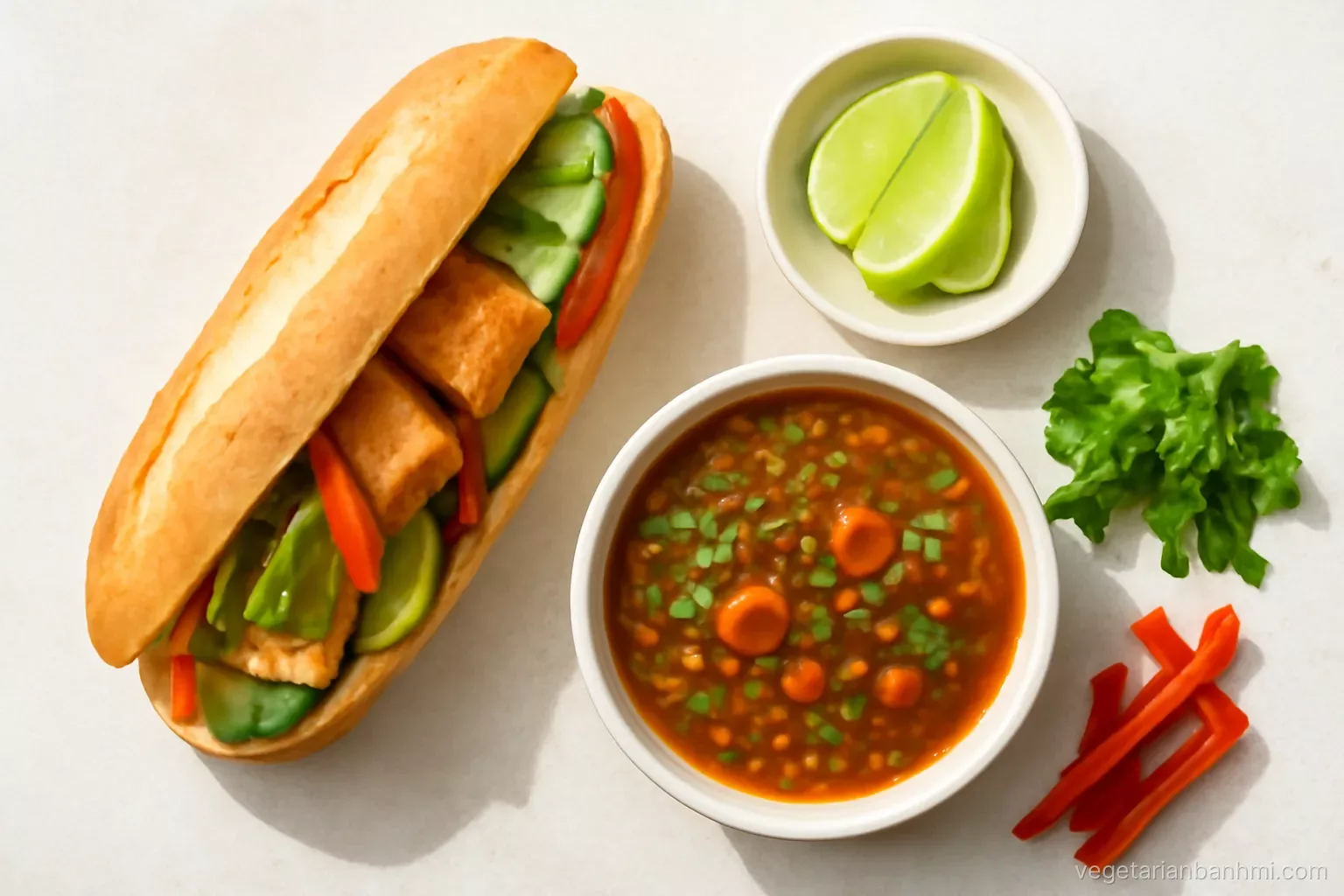
Banh mi is built on contrasts: crisp and soft, sweet and sour, fresh and savory. That savory note usually comes from salt in one form or another, whether it is a splash of soy sauce on the filling, a few drops of Maggi-style seasoning, a salty vegetarian ham, or the salt baked into the bread. None of that is a problem in itself. It becomes worth paying attention to if you eat banh mi often, if you are watching blood pressure on a doctor's advice, or if your other meals are also salty. This guide maps where the sodium comes from and how to keep the flavor while trimming the load. Figures are USDA FoodData Central values written as "about"; brands vary, so labels win.
The daily limit, in kitchen terms
The WHO recommends that adults consume less than 2,000 mg of sodium per day, which equals less than 5 g of salt, roughly one level teaspoon. That limit covers everything you eat in a day, including salt already in bread, sauces and packaged foods. In practice, many people around the world eat well above it. If you have high blood pressure, kidney disease or heart disease, your doctor may give you a different target; follow that rather than general advice.
Where sodium hides in a vegan banh mi
The table estimates sodium per sandwich for common components. Your numbers will vary with brands and portions, which is the whole point: once you know which parts carry the most, you know where a small change matters.
| Component | Typical amount | Sodium (about) | Easy adjustment |
|---|---|---|---|
| Baguette-style roll | 80 g | 400–500 mg | Choose a lighter roll; varies by bakery |
| Soy sauce on filling | 1 tbsp (16 g) | around 900 mg | Use 1–2 tsp, or reduced-sodium |
| Liquid seasoning (Maggi-style) | 1 tsp | several hundred mg | A few drops for aroma only |
| Vegetarian ham / cold cuts | 50 g | often 300–600 mg | Compare labels, or use plain tofu |
| Vegan mayo | 15 g | around 50–100 mg | Homemade lets you control salt |
| Pickled carrot and daikon, drained | 40 g | usually modest | Drain well; do not drizzle brine |
| Fresh herbs, cucumber, chili | a handful | almost none | Use more of these |
Add those up and it is easy to see how a sandwich reaches half or more of the daily limit. The bread is the part you control least; the seasoning is the part you control most.
Soy sauce, tamari and liquid seasoning
Regular soy sauce has around 900 mg of sodium per tablespoon in USDA data, and many tamari and liquid seasoning products are in a similar range per serving. Reduced-sodium soy sauces are commonly a third to a half lower, but check the label because "less sodium" is relative to each brand's own original. The trick for banh mi is that you need soy sauce mainly for depth, not for saltiness. Two habits make a big difference.
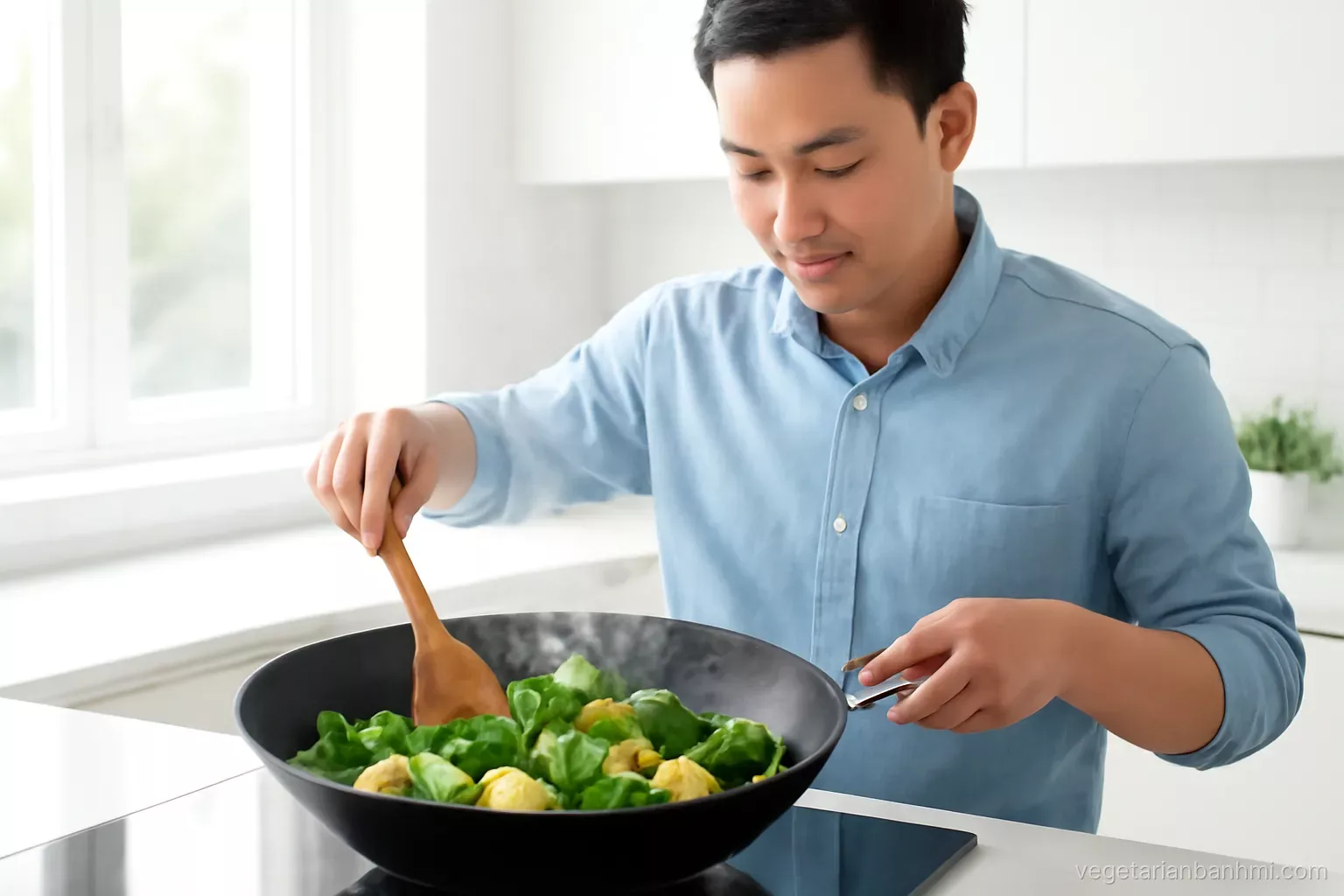
First, measure. Pouring from the bottle into a pan of tofu can easily mean two tablespoons. Using a measuring spoon, and building the marinade with lime, garlic, lemongrass, pepper and a little sugar, lets you get the same savory effect with 1–2 teaspoons per serving. Second, use umami from other sources. Sautéed mushrooms, especially shiitake, add deep savory flavor with very little sodium. Toasted sesame oil, black pepper and caramelized shallots do similar work. For sauce recipes and a lighter "Maggi-style" alternative, see our sauces and spreads section.
A lower-sodium lemongrass tofu marinade (for 4 sandwiches)
Press 400 g (14 oz) firm tofu for 20 minutes and cut it into 1 cm slabs. Whisk 4 teaspoons reduced-sodium soy sauce, 2 tablespoons lime juice, 1 finely minced lemongrass stalk (the tender lower third), 2 grated garlic cloves, 1 teaspoon sugar, 1/2 teaspoon black pepper and 1 tablespoon neutral oil. Marinate the tofu for 30 minutes to overnight in the fridge, then pan-fry over medium-high heat, about 175–190°C (350–375°F) pan surface, for 3–4 minutes per side until golden. Finish with a few drops of sesame oil and more lime. Compared with a typical marinade using 3–4 tablespoons of regular soy sauce for the same block, this uses a fraction of the sodium, and the lemongrass, pepper and lime keep it tasting bold.
Pickles: less salty than you think, if you drain them
Đồ chua (pickled carrot and daikon) is usually a quick vinegar pickle, with sugar doing more of the work than salt. Many recipes use salt only to draw water out of the shredded vegetables before rinsing. That means well-drained đồ chua is generally a modest sodium contributor compared with the bread or soy sauce. Where it adds up is when the brine goes into the sandwich along with the vegetables, or when a recipe uses a lot of salt and skips the rinse. Squeeze the pickles lightly before adding them; the bread stays crisper too. Our pickles and herbs guides give exact ratios.
Sugar is the other side of the pickle story. A quick pickle with a generous amount of sugar in the brine adds some free sugars, which the WHO recommends keeping below 10% of daily energy. Again, a drained portion of 30–40 g is modest; it is the habit of loading the sandwich with extra brine and sweet chili sauce that adds up.
Seven swaps that keep the flavor bold
- Measure soy sauce with a spoon, and try reduced-sodium for marinades.
- Add lime juice and zest at the end; acidity makes food taste brighter and saltier than it is.
- Build umami with mushrooms, especially a quick shiitake sauté in the filling or pâté.
- Use fresh chili and black pepper generously; heat and aroma distract from lower salt.
- Pile on herbs and cucumber, which add freshness and potassium with almost no sodium.
- Make vegan mayo at home, where you decide the salt.
- Pick one salty star per sandwich: vegan ham or a soy-glazed filling, not both plus extra seasoning.
The WHO also encourages eating more potassium-rich foods such as vegetables and fruit, which help balance sodium in the diet. A banh mi with plenty of cucumber, herbs and pickled vegetables, followed by fruit, is a step in that direction.
Eating out and store-bought fillings
When you buy banh mi rather than make it, you cannot measure the soy sauce, but you can still balance the day. If lunch was a salty sandwich, keep dinner lighter on sauces and add vegetables. When buying packaged vegan cold cuts or vegetarian ham, compare the sodium per 100 g on the labels; products vary a lot, and some are much saltier than plain tofu or tempeh. In Vietnam, street vendors often finish a sandwich with a splash of liquid seasoning and chili sauce; if you prefer less, you can simply ask for less sauce.
Sources
- World Health Organization – who.int (sodium reduction and healthy diet fact sheets)
- USDA FoodData Central – fdc.nal.usda.gov (soy sauce, French bread)
- US Food and Drug Administration – fda.gov (sodium in your diet)
Frequently asked questions
How much sodium is in a vegan banh mi?
It depends heavily on the bread, seasoning and filling, but around 1,000–1,500 mg is a realistic range for a typical sandwich. Homemade versions with measured soy sauce and plain tofu can come in noticeably lower.
What is the daily sodium limit?
The WHO recommends less than 2,000 mg of sodium per day for adults, equivalent to less than 5 g of salt. If you have a medical condition, follow your doctor's target.
Is reduced-sodium soy sauce worth it?
For marinades and sauces, yes, it is an easy way to cut sodium with little change in flavor. It is still salty, so measure it rather than pouring freely.
Are banh mi pickles very salty?
Quick đồ chua is mainly vinegar and sugar, so well-drained pickles add only modest sodium. The brine adds more, so squeeze the vegetables lightly before adding them to the sandwich.
How can I make banh mi taste good with less salt?
Lean on lime, chili, black pepper, fresh herbs and mushrooms for flavor. Acidity and umami make food taste fuller, so you need less soy sauce to get the same satisfaction.
Big Flavor, Smarter Seasoning
Measure the soy sauce, squeeze the lime and let herbs and mushrooms carry the savory side; your homemade banh mi will taste brighter, not blander. If you are in Ho Chi Minh City, Bánh Mì XANH, a fully vegan banh mi chain with 5 central shops open 24/7, is a good place to taste the balance a well-made vegan banh mi aims for.
Explore the Bánh Mì XANH menu · 24/7 hotline / Zalo +84 923 183 183