Short answer: You can meet calcium needs without dairy by leaning on calcium-set tofu, fortified plant milks, low-oxalate greens such as bok choy and kale, and sesame or almonds. Adults aged 19–50 need about 1,000 mg a day according to the NIH Office of Dietary Supplements. The single most useful habit is reading tofu and plant-milk labels, because calcium content varies several-fold between brands.
Dairy is the default calcium source in many Western diets, so people going vegan often worry about it. The good news is that a plant-based kitchen, especially one built around tofu and Asian greens, has strong options. The less obvious part is that not all plant calcium behaves the same: some vegetables are rich in calcium on paper but release little of it, while others are absorbed well. This guide walks through the numbers, using USDA FoodData Central and NIH figures written as "about", and shows how calcium fits into a bánh mì chay (vegetarian banh mi) meal. It is general information; if you have osteoporosis, a kidney condition, are pregnant, or are planning a diet for a child, speak with a doctor or registered dietitian.
How much calcium do you need?
The NIH Office of Dietary Supplements lists the Recommended Dietary Allowance for calcium at about 1,000 mg per day for adults aged 19–50 and for men aged 51–70, and about 1,200 mg per day for women over 50 and men over 70. Teenagers need more, about 1,300 mg. Calcium works alongside vitamin D, which helps the body absorb it; the RDA for vitamin D is about 15 mcg (600 IU) for most adults and 20 mcg (800 IU) after age 70. Vitamin D comes from sunlight, a few foods, fortified products and supplements, and many people, vegan or not, fall short, so it is worth discussing with a doctor.
Calcium in plant foods: the numbers
The table below lists realistic portions. Notice how widely tofu varies: the coagulant used to set the soy milk determines most of its calcium. Tofu made with calcium sulfate can be very high, while tofu set with nigari (magnesium chloride) alone has much less.
| Food | Portion | Calcium (about) | Absorption note |
|---|---|---|---|
| Firm tofu, calcium sulfate set | 100 g | several hundred mg; USDA lists roughly 680 mg for one entry | Well absorbed; check the label |
| Tofu set with nigari only | 100 g | often under 200 mg | Still a good protein source |
| Fortified soy milk | 240 ml (1 cup) | commonly around 300 mg | Shake the carton; calcium settles |
| Bok choy, cooked | 170 g (1 cup) | about 160 mg | Low oxalate, absorbed well |
| Kale, cooked | 130 g (1 cup) | about 175 mg | Low oxalate, absorbed well |
| Tahini | 15 g (1 tbsp) | about 60 mg | Good in sauces and dressings |
| Almonds | 28 g (1 oz) | about 75 mg | Also adds vitamin E |
| Spinach, cooked | 90 g (1/2 cup) | about 120 mg on paper | High oxalate, poorly absorbed |
Spinach is the classic trap. It contains plenty of calcium, but oxalates bind most of it, so the NIH Office of Dietary Supplements notes that the body absorbs only a small share. Spinach is still a great vegetable for folate, vitamin K and other nutrients; just do not count it as your calcium plan.
Reading tofu and plant-milk labels
Because tofu varies so much, the ingredient list is worth a look before you buy. In English-language markets look for "calcium sulfate" among the ingredients; in Asian grocery stores you may also see tofu set with a combination of calcium sulfate and nigari. The nutrition panel will show calcium as milligrams or as a percentage of the Daily Value. In the United States the Daily Value for calcium is 1,300 mg, so a tofu listing 30% DV per serving provides around 390 mg.
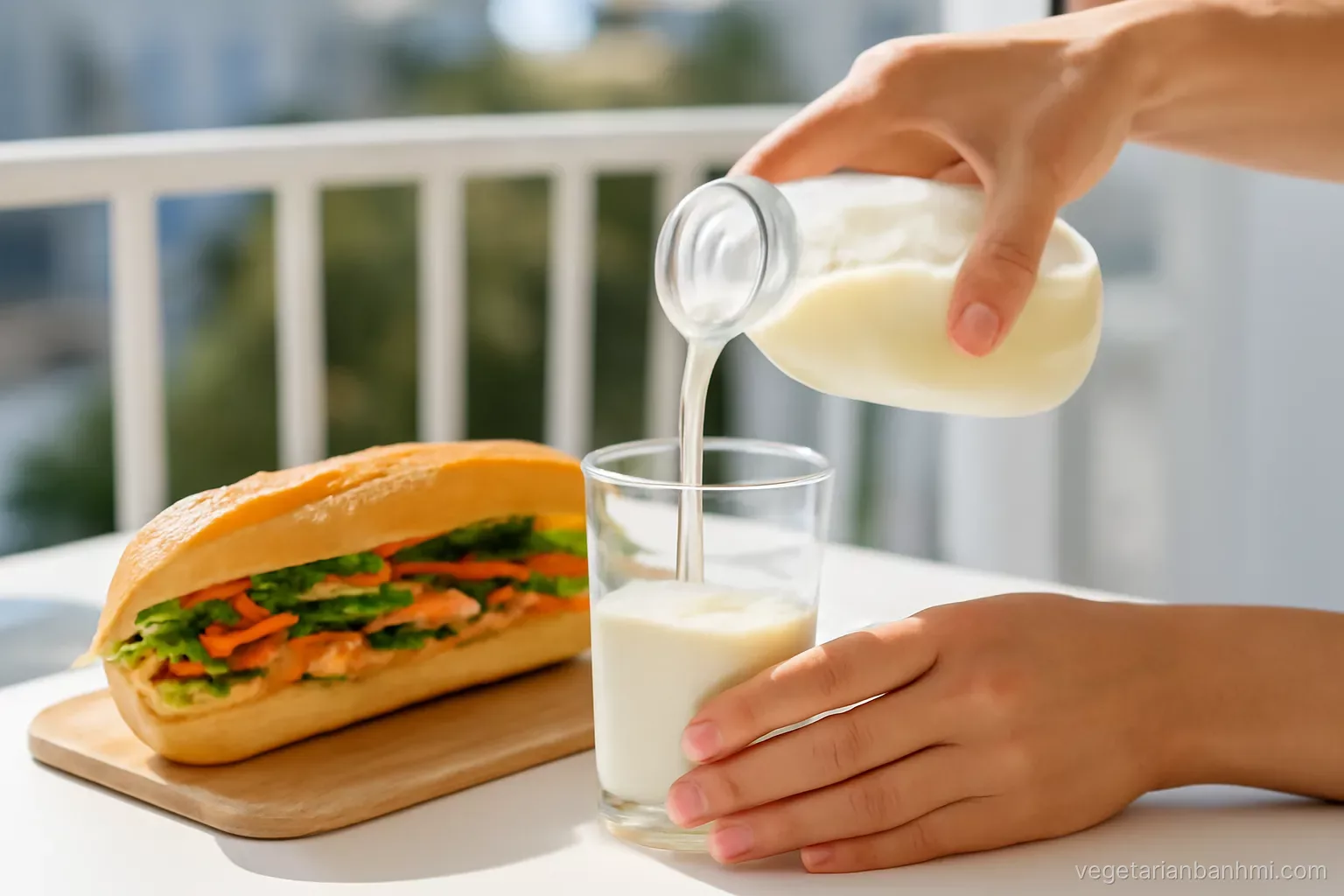
For plant milks, check three things: that the label says "fortified" or lists calcium carbonate or tricalcium phosphate; the calcium per serving; and whether vitamin D and B12 are also added. Homemade soy or nut milks, and many fresh soy milks sold at Vietnamese markets, are not fortified. They are delicious, but treat them as a drink, not a calcium source. Also shake fortified cartons well, since the added calcium can settle at the bottom.
Putting calcium into a banh mi meal
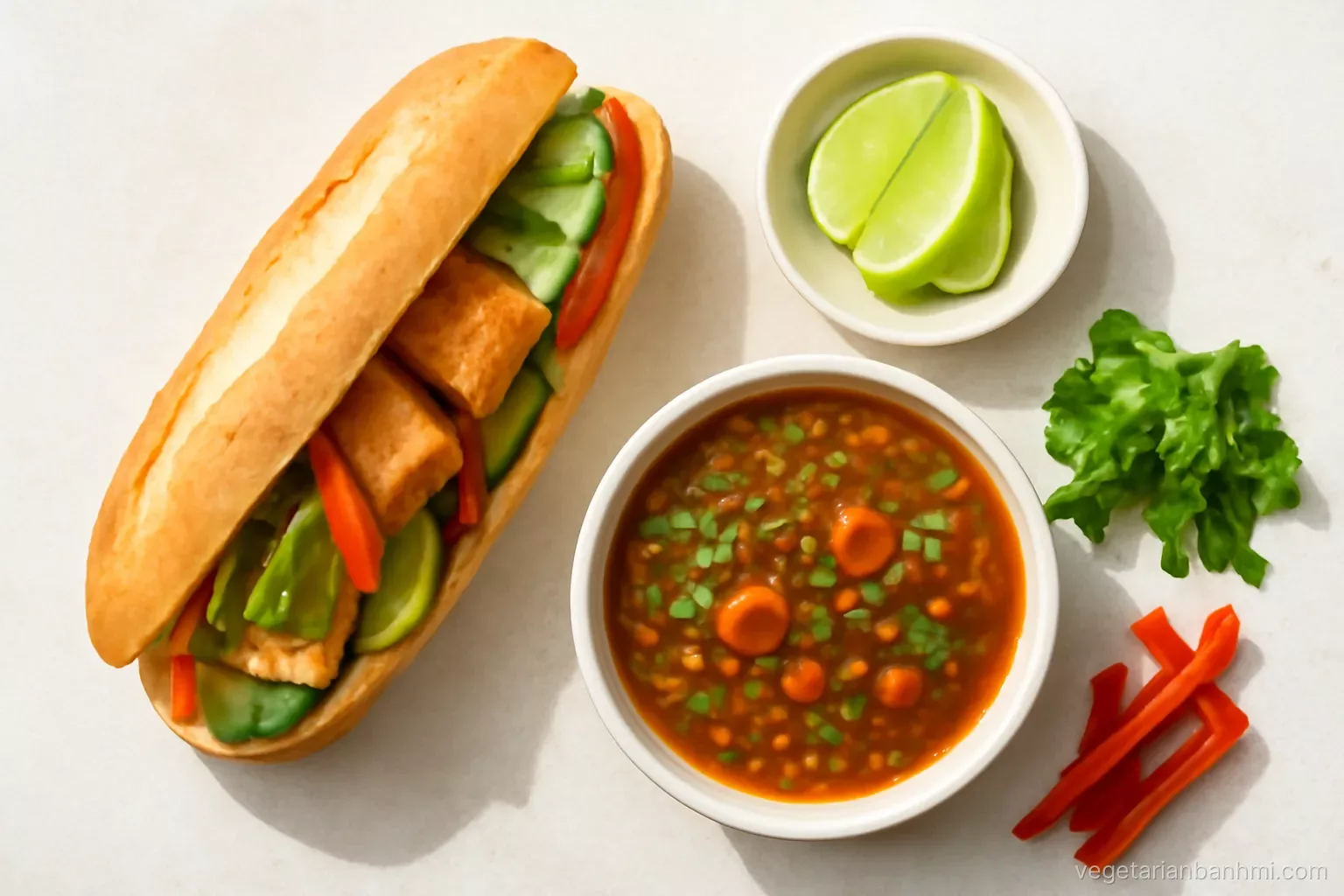
Banh mi is not a calcium-heavy dish by default, but a few choices change that significantly. The biggest lever is the tofu. Swapping a mushroom filling for 100 g of calcium-set tofu can add several hundred milligrams in one sandwich. The second lever is the spread: a tahini-based sauce or a vegan mayo made with fortified soy milk adds a little more. The third lever is the side dish. Stir-fried bok choy with garlic, or a bowl of tofu and greens soup, turns a sandwich into a meal that covers a good share of the day.
A simple example meal, with approximate values that depend on your brands:
- Banh mi with 100 g calcium-set firm tofu (a few hundred mg, check label)
- 1 tablespoon tahini-lime sauce in place of half the mayo (about 60 mg)
- Side of 1 cup stir-fried bok choy (about 160 mg)
- Iced coffee made with 120 ml fortified soy milk (about 150 mg)
Depending on the tofu, that meal can land somewhere around 500–900 mg, a large share of a 1,000 mg day. For filling methods see plant-based fillings, and for the tahini or soy-milk sauces, sauces and spreads.
A quick tahini-lime sauce
Whisk 60 g (1/4 cup) tahini with 2 tablespoons lime juice, 1 teaspoon soy sauce, 1 teaspoon maple syrup or sugar, a small grated garlic clove, and 3–4 tablespoons cold water until it is pourable. It keeps for several days in the fridge in a closed jar and works as a banh mi spread, a dressing for greens or a dip for spring rolls.
Things that affect calcium absorption
The body absorbs calcium best in amounts of around 500 mg or less at a time, according to the NIH Office of Dietary Supplements, so spreading calcium-rich foods across meals is more effective than loading it into one. Vitamin D status matters, as mentioned. Very high sodium intake increases calcium loss in urine, which is one more reason to keep soy sauce and salty seasonings moderate. Oxalates (spinach, beet greens) and to a lesser extent phytates (whole grains, beans) reduce absorption from the same foods that contain them.
Supplements are a personal decision to make with a professional. Calcium supplements can interact with some medicines and with iron absorption, and more is not better; there is an upper limit, and the NIH notes that high supplement intakes have been associated with kidney stones in some people.
Common mistakes
Counting spinach as your main calcium source is the first. The second is assuming all tofu is equal; it is not, and the difference between brands can be several hundred milligrams per 100 g. The third is drinking unfortified or homemade plant milk while believing it replaces dairy calcium. The fourth is forgetting vitamin D entirely. And the fifth is packing all calcium into a single supplement dose rather than spreading food sources through the day. Fix those five and a vegan diet can cover calcium comfortably for most people. More on other nutrients to plan for is in our plant-based nutrition section.
Sources
- NIH Office of Dietary Supplements – ods.od.nih.gov (Calcium and Vitamin D fact sheets)
- USDA FoodData Central – fdc.nal.usda.gov (tofu, bok choy, kale, tahini, almonds, spinach)
- US Food and Drug Administration – fda.gov (Daily Values on nutrition labels)
Frequently asked questions
Is tofu a good source of calcium?
It can be excellent if it is made with calcium sulfate, which can mean several hundred milligrams per 100 g. Tofu set only with nigari has much less. Check the ingredient list and nutrition panel.
How much calcium do vegans need?
The same as anyone else: about 1,000 mg a day for adults 19–50, and about 1,200 mg for women over 50 and men over 70, per the NIH Office of Dietary Supplements. Teenagers need about 1,300 mg.
Why is spinach not a good calcium source?
Spinach is high in oxalates, which bind calcium and make most of it unavailable. Low-oxalate greens such as bok choy and kale are absorbed much better.
Is Vietnamese fresh soy milk fortified?
Fresh soy milk sold at markets and homemade soy milk are usually not fortified, so they contain far less calcium than fortified cartons. Enjoy them, but do not count them as a dairy replacement for calcium.
Do I need a calcium supplement on a vegan diet?
Many people can meet their needs with food, especially calcium-set tofu and fortified milks. Whether you need a supplement depends on your diet and health, so ask a doctor or registered dietitian.
Tofu First, Greens on the Side
A calcium-set tofu banh mi with a side of bok choy is one of the easiest dairy-free calcium meals you can make at home. If you are in Ho Chi Minh City, try a tofu banh mi at Bánh Mì XANH, a fully vegan banh mi chain with 5 central shops open 24/7, then come home and build your own version.
Find a Bánh Mì XANH shop near you · 24/7 hotline / Zalo +84 923 183 183