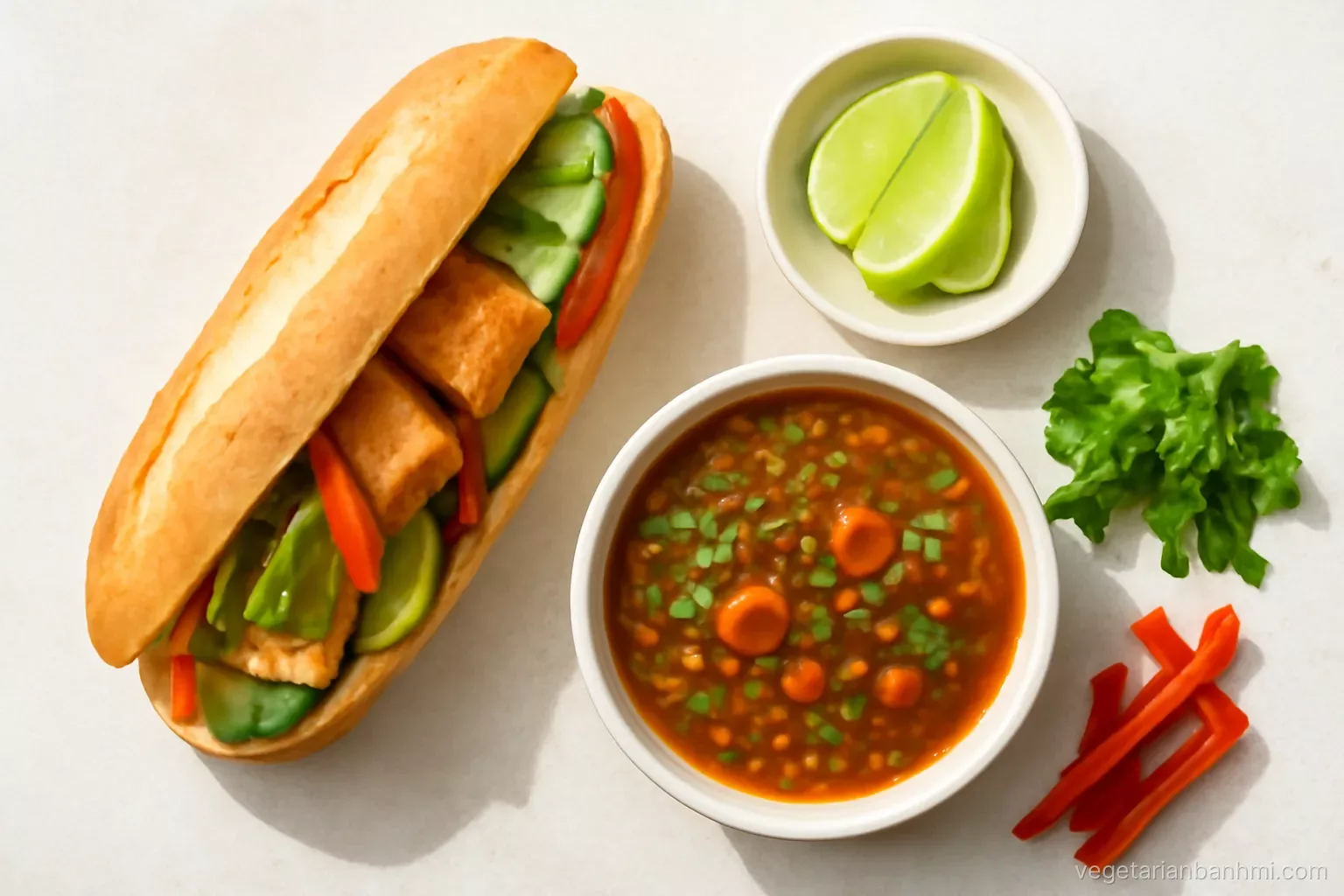
Short answer: Plant foods contain non-heme iron, which the body absorbs less efficiently than the iron in meat. The NIH Office of Dietary Supplements notes that recommended intakes for vegetarians are about 1.8 times higher for that reason. You can help absorption by pairing iron-rich foods such as tofu, tempeh, lentils and greens with vitamin C from lime, peppers, tomatoes and fresh herbs, and by drinking tea or coffee between meals rather than with them.
Iron is one of the nutrients most often mentioned when people switch to plant-based eating, and also one of the most misunderstood. Vegetarian diets are not automatically low in iron; foods like tofu, tempeh, lentils, chickpeas and pumpkin seeds carry respectable amounts. The issue is absorption. This guide explains how plant iron behaves in the body and shows how a well-built bánh mì chay (vegetarian banh mi) and the dishes around it can work in your favor. It is general information, not medical advice: if you suspect low iron, have heavy periods, are pregnant, or are considering supplements, see a doctor first, since too much iron can also cause harm.
Heme vs non-heme iron in plain terms
Dietary iron comes in two forms. Heme iron, found in meat, poultry and fish, is absorbed fairly readily. Non-heme iron, found in plants, fortified foods and also in animal foods, is absorbed less efficiently and is more sensitive to what else you eat at the same meal. Some substances enhance non-heme iron absorption, most notably vitamin C. Others reduce it, including phytates in whole grains and legumes, polyphenols in tea and coffee, and calcium when taken in large amounts at the same time.
Because of the lower absorption, the NIH Office of Dietary Supplements states that the recommended intakes for vegetarians are 1.8 times higher than for people who eat meat. For adult women aged 19–50, the general RDA is about 18 mg per day, and for adult men and women over 50 about 8 mg; the vegetarian figures are higher accordingly. These are population guidelines. Your own needs depend on your age, sex, menstruation, pregnancy and health, which is why a blood test and professional advice beat guesswork.
Iron in common banh mi ingredients
The table uses USDA FoodData Central values rounded to "about". Iron content in tofu varies by coagulant and brand, so check your package. Portions are realistic amounts you might eat in a sandwich or side dish.
| Food | Typical portion | Iron (about) | Role in a banh mi meal |
|---|---|---|---|
| Firm tofu | 100 g | 2–3 mg | Main filling |
| Tempeh | 90 g | 2–2.5 mg | Main filling |
| Lentils, cooked | 150 g (3/4 cup) | about 5 mg | Soup or bean pâté |
| Chickpeas, cooked | 100 g | about 3 mg | Pâté or side salad |
| Pumpkin seeds, roasted | 15 g (1 tbsp) | about 1 mg | Crunchy topping |
| White bread / baguette | 80 g roll | 2–3 mg | Often fortified, varies by country |
| Spinach, cooked | 90 g (1/2 cup) | about 3 mg | Side greens |
Note the bread line. In countries where wheat flour is enriched with iron, such as the United States, a white roll can contribute a meaningful share. In other countries flour may not be enriched, so do not assume.
Vitamin C: the banh mi advantage
Here is where banh mi shines. The classic sandwich already includes several vitamin C sources: fresh chili, cucumber, herbs, and often a squeeze of lime in the sauce or marinade. Pickled carrot and daikon contribute a little too, though pickling and storage reduce vitamin C over time. You can strengthen the effect deliberately with a few changes that also taste good.
- Add strips of raw red bell pepper, which has well over 100 mg of vitamin C per 100 g according to USDA data, for crunch and color.
- Squeeze fresh lime into the tofu marinade and again over the filling just before closing the sandwich.
- Use a generous handful of fresh herbs, such as cilantro, mint and Thai basil, which add vitamin C and flavor at the same time.
- Serve the banh mi with a tomato-based soup or a fresh fruit such as guava, papaya or orange.
- Add sliced tomato inside the sandwich when it is in season.
For herb pairings and pickling ratios, our pickles and herbs section goes deeper, and if you want soups that pair with banh mi, browse sides, soups and salads.
Timing tea and coffee
Vietnamese food culture loves a banh mi with iced coffee or tea, and we love it too. Polyphenols in tea and coffee can reduce non-heme iron absorption when consumed with the meal. If iron is a concern for you, a simple adjustment is to enjoy your coffee or tea an hour or so before or after eating rather than alongside it. If iron is not a concern, there is no need to give up a favorite pairing; this is about balance, not rules.
Calcium supplements taken with an iron-rich meal can also reduce absorption. Calcium from food in normal amounts is less of a concern, but if you take a calcium supplement, ask your doctor or pharmacist about timing.
Building an iron-friendly banh mi day
As an example, not a prescription, an iron-aware day built around banh mi might look like this. Breakfast: fortified cereal or oats with pumpkin seeds and an orange, coffee later in the morning. Lunch: a tofu banh mi with bean or lentil pâté, red pepper strips, lime-dressed herbs and chili. Afternoon: a handful of roasted chickpeas. Dinner: a lentil and tomato soup with greens, or a tofu stir-fry with bok choy and a squeeze of lime. Spread across the day, legumes, tofu and greens add up, and each meal includes a vitamin C source.
Cooking methods help too. Soaking and cooking dried beans and lentils reduces phytates somewhat, and fermented soy like tempeh may have lower phytate levels than unfermented soybeans. Cooking in cast iron can add small amounts of iron to food, especially acidic dishes, though the amount is variable.
Portion size is the other lever people forget. A sandwich with a token amount of tofu cannot carry much iron no matter how much lime you squeeze over it, so give the main filling real weight, around 100 g of tofu or tempeh per roll. If you make a bean or lentil pâté, spread it thickly enough to taste, about 30–40 g per sandwich, rather than as a thin smear. And think in meals rather than single foods: the banh mi plus a lentil soup or a salad with chickpeas and pumpkin seeds will almost always beat the sandwich on its own. None of this requires special products; it is the same pantry you already use for Vietnamese-style cooking, arranged a little more deliberately.
Common mistakes
The first mistake is self-prescribing iron supplements because you feel tired. Fatigue has many causes, and excess iron can be harmful; a blood test is the right first step. The second is filling the sandwich with low-iron fillings like jackfruit and assuming the "meaty" texture means meat-like nutrition. The third is having strong tea with every meal while also worrying about iron. The fourth is overlooking legumes: a lentil soup or bean pâté alongside the banh mi often adds more iron than any garnish. If you want to know which other nutrients plant-based eaters should watch, our plant-based nutrition section covers B12, calcium and more.
Sources
- NIH Office of Dietary Supplements – ods.od.nih.gov (Iron fact sheet)
- USDA FoodData Central – fdc.nal.usda.gov (tofu, tempeh, legumes, peppers)
- World Health Organization – who.int (anaemia and nutrition information)
Frequently asked questions
Do vegetarians need more iron than meat eaters?
Yes, according to the NIH Office of Dietary Supplements, recommended intakes for vegetarians are about 1.8 times higher because plant iron is absorbed less efficiently. Individual needs vary, so ask a doctor if you are unsure.
What should I eat with tofu to absorb more iron?
Foods rich in vitamin C, such as lime juice, red bell pepper, tomatoes, chili and fresh herbs. Banh mi already includes several of these, so adding pepper strips and a squeeze of lime is an easy upgrade.
Does coffee with banh mi block iron?
Polyphenols in coffee and tea can reduce non-heme iron absorption when consumed with a meal. If iron is a concern, enjoy your drink an hour or so apart from eating.
Is tofu high in iron?
Firm tofu provides about 2–3 mg per 100 g in USDA data, depending on the brand and coagulant. It is a useful contributor, especially combined with legumes and greens elsewhere in the day.
Should I take an iron supplement on a vegan diet?
Not without advice. Iron supplements can cause side effects and too much iron is harmful. Talk to a doctor, who may suggest a blood test before deciding.
Squeeze the Lime, Stack the Tofu
Iron-smart eating is mostly about good pairings, and banh mi already gets a lot of them right: tofu, chili, herbs and lime in one bite. If you are in Ho Chi Minh City, taste how it is done at Bánh Mì XANH, a fully vegan banh mi chain with 5 central shops open 24/7, from the spicy tofu sandwich to the mixed tofu-and-mushroom one.
Visit Bánh Mì XANH · 24/7 hotline / Zalo +84 923 183 183