Short answer: Vitamin B12 is the one nutrient a fully vegan diet cannot reliably get from unfortified plant foods, so vegans need fortified foods or a supplement. Adults need about 2.4 micrograms a day according to the NIH Office of Dietary Supplements. Fermented foods like tempeh and seaweeds are not dependable sources. Ask a doctor or registered dietitian about testing and the right supplement for you.
Most of what makes a good vegan banh mi is easy to get right: crisp bread, tofu or mushrooms with real flavor, bright đồ chua (pickled carrot and daikon), fresh herbs. Nutritionally, plant-based eating covers a lot of ground too, with plenty of fiber, folate, vitamin C and potassium. Vitamin B12 is the exception that every vegan, and many vegetarians who eat few eggs or dairy, should understand. It is not complicated, but it is not optional either. This guide explains what B12 does, how much you need, which foods actually supply it, and how to fit fortified options naturally into a banh mi kitchen.
What vitamin B12 does and why vegans are different
Vitamin B12 is needed for healthy nerve function, for making red blood cells and for making DNA. It is produced by microorganisms, not by plants or animals themselves. Animal foods contain B12 because animals accumulate it, which is why meat, fish, eggs and dairy are the main natural sources in most diets. Plants do not need B12 and do not make it, so a diet without any animal products has no reliable natural source.
Your body stores B12 in the liver, sometimes for several years. That is a double-edged fact: it means a deficiency may take a long time to appear after changing your diet, so people often feel fine for a while and assume they are covered. When low B12 does develop, signs can include tiredness, weakness, numbness or tingling in the hands and feet, and problems with memory or mood, according to the NIH Office of Dietary Supplements. These symptoms have many possible causes, so do not self-diagnose; a doctor can test your levels.
How much B12 do you need?
The NIH Office of Dietary Supplements lists the Recommended Dietary Allowance at about 2.4 mcg per day for adults, rising slightly in pregnancy (about 2.6 mcg) and breastfeeding (about 2.8 mcg). Those numbers are small, but the way your body absorbs B12 matters. Absorption is most efficient in small amounts at a time, which is why supplement doses printed on labels are often far higher than the RDA. The right form and dose for you is a question for a healthcare professional, especially if you are pregnant, older, taking medicines that affect absorption, or have a digestive condition.
| Group | RDA per day (about) | Practical note |
|---|---|---|
| Adults 19+ | 2.4 mcg | Vegans need fortified foods or a supplement |
| Pregnancy | 2.6 mcg | Discuss supplements with your doctor or midwife |
| Breastfeeding | 2.8 mcg | The baby relies on the parent's B12 intake |
| Children | Varies by age, under 2.4 mcg | Plan vegan diets for children with a professional |
| Adults over 50 | 2.4 mcg | Guidance often favors fortified foods or supplements |
The NIH Office of Dietary Supplements notes that adults over 50 should get most of their B12 from fortified foods or supplements regardless of diet, because absorption from food tends to decline with age. That is a useful reminder that B12 planning is not only a vegan topic.
Foods that do and do not supply B12
This is where myths cause real trouble. Several plant foods are repeatedly described online as "B12 sources" when the evidence does not support relying on them. Here is the practical breakdown.
- Fortified plant milks: many soy, oat and almond milks have B12 added. Amounts differ by brand and country, so read the nutrition panel rather than assuming.
- Fortified nutritional yeast: some brands are fortified with B12, others are not. Unfortified nutritional yeast contains little or none.
- Fortified breakfast cereals and some meat alternatives: a number of products are fortified; again, the label is the only reliable guide.
- Tempeh, miso, fermented vegetables: not dependable. Any B12 present varies with the bacteria involved and may include inactive forms.
- Seaweed such as nori and spirulina: not dependable. Some contain compounds that look like B12 in tests but may not work as the vitamin in humans.
- Mushrooms: some dried shiitake contain small amounts, but not enough to count on.
The common thread: for vegans, B12 comes from fortification and supplements, not from clever ingredient choices. That is no failing of the diet; fortification is how many populations get vitamins like iodine and vitamin D too.
Fitting fortified foods into a banh mi kitchen
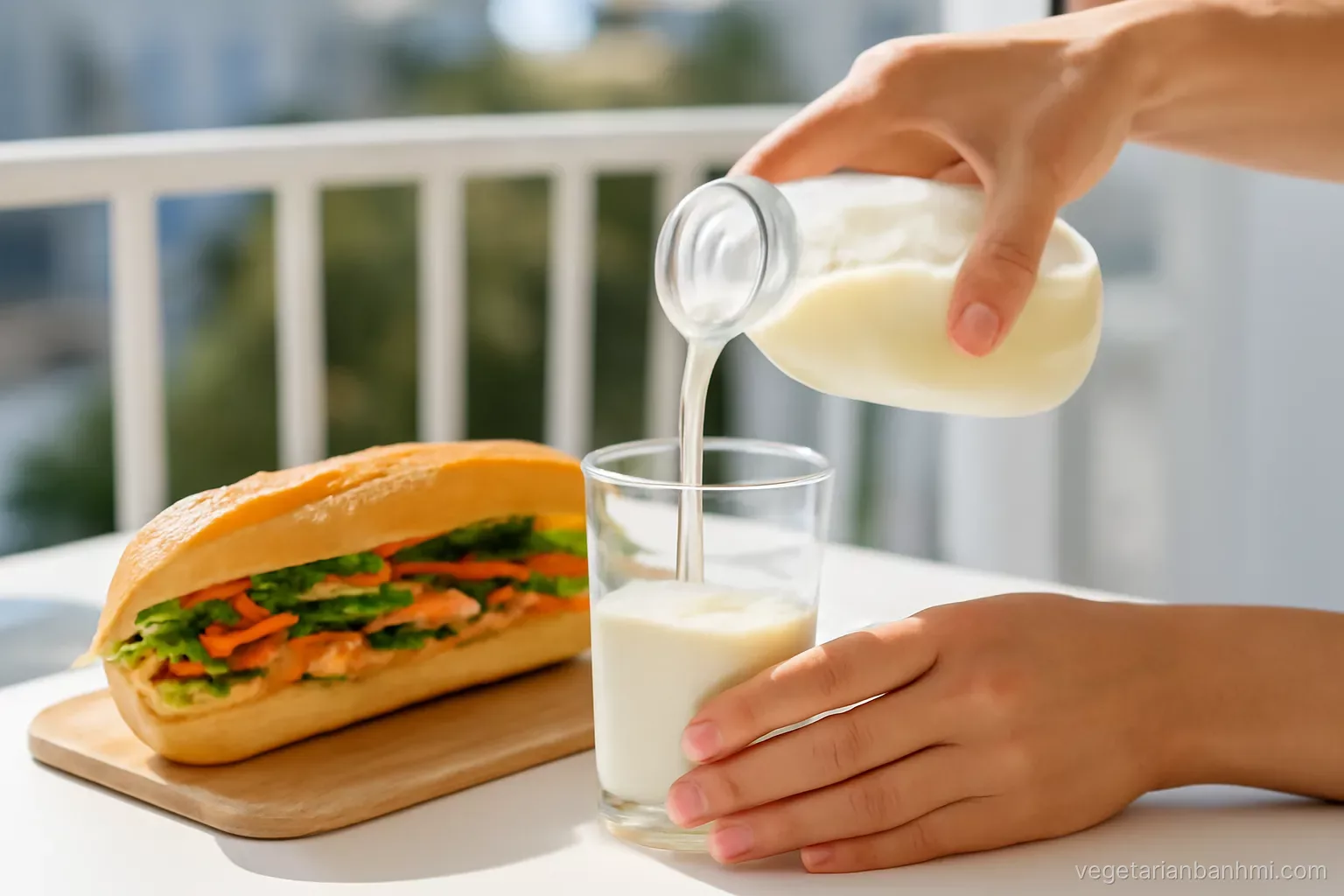
The nice thing about banh mi cooking is that several fortified foods slot in without changing the flavor. If your soy milk is fortified, you can use it in three places: a glass alongside breakfast, the base of a soy-milk vegan mayo, and the nut-milk style iced coffee that pairs so well with banh mi. A soy-milk mayo uses about 120 ml (1/2 cup) unsweetened soy milk blended with 240 ml (1 cup) neutral oil, 1 tablespoon lime juice or rice vinegar and salt, so a serving of a tablespoon or two contains only a small share of the milk. That makes the mayo a minor contributor; the glass of milk is where most of the B12 comes from.
Fortified nutritional yeast is another easy fit. Stir 1–2 tablespoons into a mushroom or bean pâté along with sautéed shallot, soy sauce and pepper; it deepens the savory flavor in a way that suits banh mi. Check that your brand is fortified, and remember that a pâté is eaten in small amounts per sandwich. For pâté and mayo recipes, see our sauces and spreads section.
A sample day might look like this, as an example only: fortified soy milk with breakfast, a tofu banh mi with nutritional-yeast pâté at lunch, and fortified cereal or a B12 supplement as agreed with your doctor. Do not try to add up micrograms from memory; use the labels on your actual products.
Supplements: what to ask a professional
Many vegans choose a supplement because it is simpler and more consistent than tracking fortified foods. B12 supplements come in several forms, most commonly cyanocobalamin and methylcobalamin, and in daily or weekly dosing patterns. We are not going to recommend a dose, because the right choice depends on your age, health, medicines and blood test results. Useful questions to bring to a doctor or registered dietitian include whether you should test your B12 status, which form and schedule suit you, and whether any medicines you take, such as some diabetes or acid-reflux medicines, affect absorption.
If you are planning a vegan diet for a child, are pregnant or breastfeeding, or have symptoms that worry you, get professional advice rather than relying on general articles, including this one.
Common mistakes with B12
The first is assuming you are covered because you feel well. Body stores can hide a gradual decline. The second is trusting a "natural source" claim on a blog or product page without a nutrition label to back it up; tempeh and spirulina are the usual examples. The third is buying nutritional yeast for B12 without checking that it is fortified. The fourth is the opposite error: worrying so much about B12 that you overlook other nutrients worth planning for on a vegan diet, such as iron, calcium, vitamin D, iodine, zinc and omega-3 fats. B12 is the non-negotiable one, but a balanced plan looks at the whole picture. Our plant-based nutrition guides cover the others one by one.
Sources
- NIH Office of Dietary Supplements – ods.od.nih.gov (Vitamin B12 fact sheet)
- USDA FoodData Central – fdc.nal.usda.gov (fortified foods and plant milks)
- World Health Organization – who.int (healthy diet guidance)
Frequently asked questions
Can vegans get enough B12 from food alone?
Only from fortified foods. Unfortified plant foods are not reliable sources, so vegans need fortified products such as some plant milks, cereals and nutritional yeasts, or a supplement. A doctor or dietitian can help you decide which approach suits you.
Does tempeh contain vitamin B12?
It may contain small and variable amounts depending on the bacteria involved in fermentation, but it is not dependable. Tempeh is excellent for protein and fiber in a banh mi; just do not count on it for B12.
How much B12 do adults need each day?
The NIH Office of Dietary Supplements lists about 2.4 micrograms per day for adults, about 2.6 in pregnancy and 2.8 while breastfeeding. Supplement doses are often higher because absorption varies.
Is nutritional yeast a good B12 source?
Only if the label says it is fortified with B12. Unfortified nutritional yeast contains little or none. Fortified versions are a tasty way to add B12 to vegan pâté or sauces.
Do vegetarians who eat eggs and dairy need to worry?
Eggs and dairy contain B12, so lacto-ovo vegetarians usually have more options, but intake can still be low if you eat them rarely. Adults over 50 are advised to get most B12 from fortified foods or supplements regardless of diet.
Eat Vegan Banh Mi, Plan the Nutrients
A well-built vegan banh mi covers protein, fiber and fresh vegetables; a fortified milk or a supplement agreed with your doctor covers B12. If you are in Ho Chi Minh City, Bánh Mì XANH, a fully vegan banh mi chain with 5 central shops open 24/7, also has a guide to the nutrients plant-based eaters should keep an eye on.
Read the Bánh Mì XANH nutrient guide · 24/7 hotline / Zalo +84 923 183 183