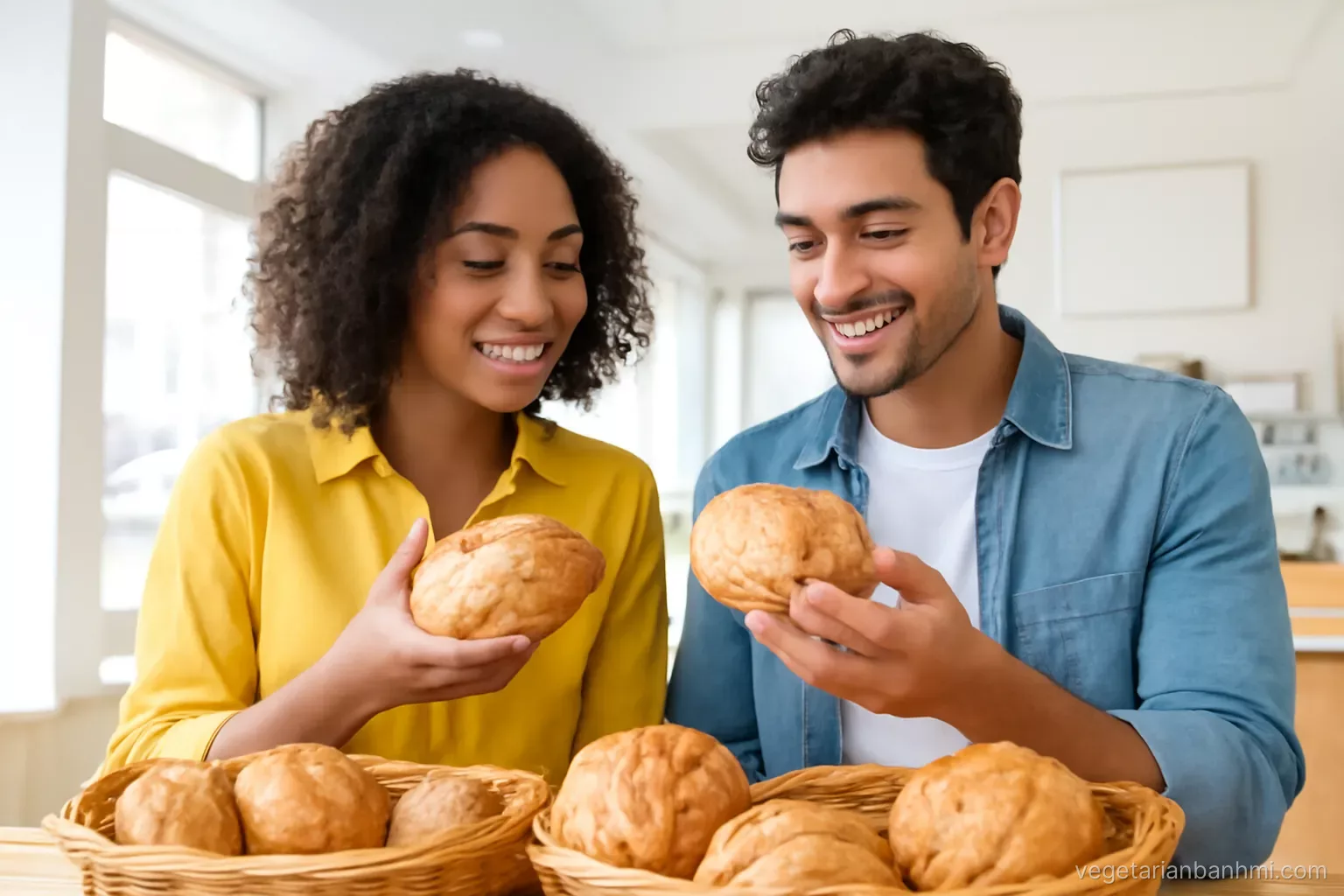
Short answer: The best store-bought bread for banh mi is a light, inexpensive roll with a thin crust and soft, fine crumb. A Vietnamese bakery is ideal; otherwise Mexican bolillos, Portuguese papo-seco rolls, Italian rosetta rolls, part-baked supermarket baguettes and simple French demi-baguettes all work well. Avoid chewy sourdough, ciabatta and soft sub rolls, check the label for milk or egg if you are vegan, and always re-crisp before filling.
What you are looking for on the shelf
Most of us outside Vietnam cannot bake every time we want a sandwich, and that is fine. Plenty of ordinary bakery products come close to a true bánh mì roll if you know what to look for. Cookbook author Andrea Nguyen, who has written extensively about banh mi, notes that suitable bread is cheap and that a pricey rustic or sourdough loaf is a poor fit. In other words, look down the price ladder, not up.
Pick up the roll and judge it with your hands. It should feel light for its size, with a crust that crackles when squeezed and springs back slightly. Tap the bottom: a hollow sound is a good sign. Look at a cut loaf if there is one on display. A fine, even, white crumb is what you want; big glossy holes signal a chewy, high-hydration bread that will let sauce drip through. Finally, size matters. A roll around 20–25 cm long and 6–8 cm wide makes one sandwich; anything much bigger becomes mostly bread.
A quick checklist
- Light weight for its size, roughly 60–100 g for a single-serve roll
- Thin crust that crackles rather than a thick, leathery or very dark one
- Fine, cottony crumb without large irregular holes
- Mild flavour, not sour or heavily seeded
- No milk, butter, egg or L-cysteine on the label if you eat vegan
- Baked the same day, or part-baked so you finish it at home
Country by country
Availability changes by city and season, so treat this as a starting map rather than a guarantee. In every country, the first move is to search for a Vietnamese bakery or Vietnamese grocery nearby; many sell fresh rolls by the piece or by the bag, often early in the morning.
| Country / region | Best options | Good fallback | Skip |
|---|---|---|---|
| United States | Vietnamese bakeries in areas with large Vietnamese communities, such as Southern California, Houston, San Jose and Northern Virginia | Bolillos from Mexican panaderías and supermarkets; supermarket demi-baguettes | Soft sub rolls and hoagie rolls, often enriched with milk or sugar |
| Canada | Vietnamese bakeries in Toronto, Montreal, Vancouver and Calgary | Portuguese buns (papo-seco) from Portuguese bakeries | Soft "French" sandwich buns |
| Mexico and Latin America | Bolillo or telera rolls | Pan francés where sold | Sweet pan dulce |
| United Kingdom and Ireland | Vietnamese bakeries in parts of London, Manchester and Birmingham | Supermarket part-baked baguettes or petits pains | Sourdough baguettes and bloomers |
| France | Asian bakeries in large cities | An ordinary light baguette or ficelle, cut into lengths | Baguette de tradition if you want a soft bite; viennoise rolls, which contain milk |
| Germany, Austria, Netherlands | Vietnamese and Asian groceries in larger cities | Baguettebrötchen, the small white baguette rolls sold in supermarkets | Dense whole-grain or seeded Brötchen |
| Italy | Asian bakeries in Milan and Rome | Rosetta or michetta, hollow crisp rolls | Ciabatta and focaccia |
| Portugal | Papo-seco rolls, widely sold | Supermarket baguette | Broa (cornbread) |
| Australia and New Zealand | Vietnamese bakeries, common in suburbs of Sydney, Melbourne, Brisbane and Adelaide | Supermarket white bread rolls or bake-at-home baguettes | Sourdough and Turkish bread |
| Japan and Korea | Bakery "French bread" rolls | Small baguettes from chain bakeries | Milk bread and shokupan |
Why bolillos, papo-secos and rosettas work so well
These three are cousins of the banh mi roll in spirit. A Mexican bolillo is a small, oval white roll with a thin crisp crust and a soft centre, inexpensive and sold almost everywhere in Mexico and in many US supermarkets; many banh mi fans recommend it as the closest everyday substitute. The Portuguese papo-seco is a small crusty roll with a split down the middle and a light interior, and Portuguese bakeries abroad, notably in Canada, sell them by the dozen. The Italian rosetta (called michetta in Milan) is famous for being almost hollow inside with a crisp shell. Because they are hollow, add a little more filling or a smear of mushroom pâté so the sandwich does not feel empty.
All three are shorter and rounder than a banh mi roll, so split them horizontally, leaving a hinge, and arrange the fillings in an even layer rather than a tall pile.
Making a supermarket baguette behave like banh mi bread
A standard supermarket baguette, especially the part-baked kind you finish at home, is the most widely available option. It is usually larger, longer and a little chewier than a Vietnamese roll, but a few tricks close the gap:
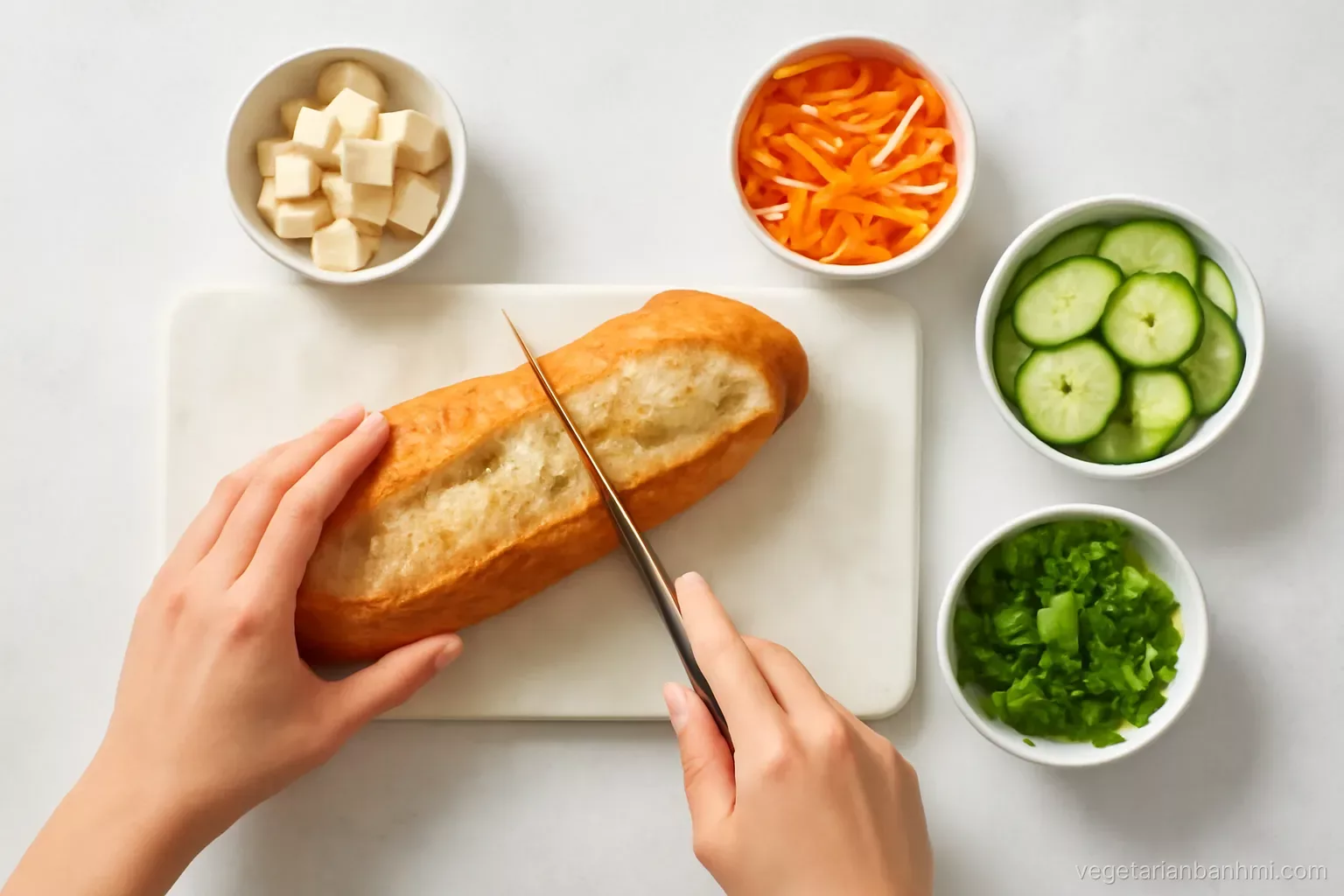
- Cut it into 20–22 cm lengths. A full baguette typically makes two or three sandwiches.
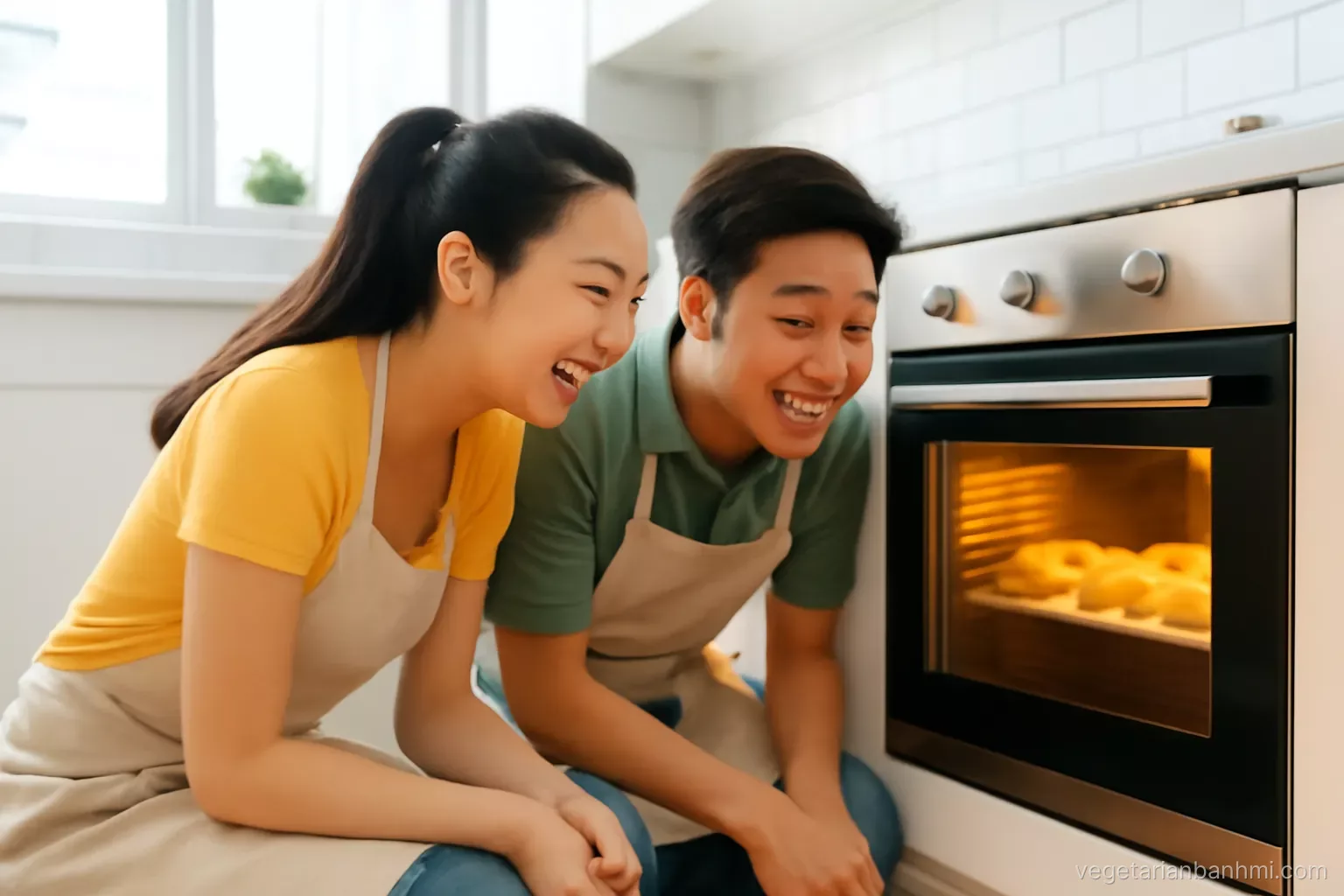
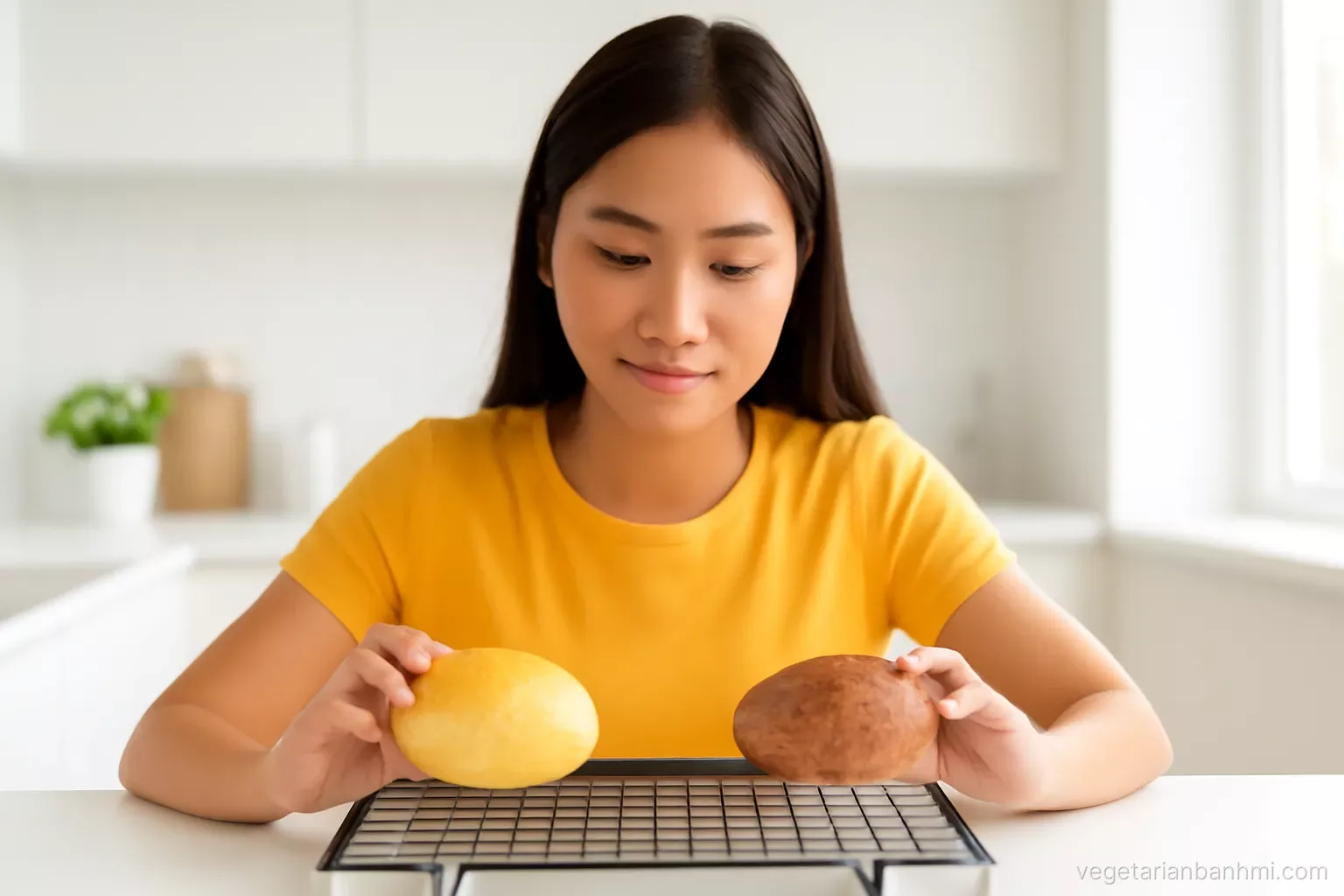
- Bake part-baked bread fully, then rest it. Follow the packet temperature, usually around 200–220°C (390–430°F) for 6–10 minutes, let it cool 10 minutes, then re-crisp briefly just before filling. The double heating thins the crust.
- Scoop some crumb. Pull out about a third of the soft crumb from the top half. This lightens the bite and leaves room for fillings without the sandwich splitting.
- Mist and heat. If the loaf is a day old, mist the crust lightly with water and heat at 200°C (400°F) for 4–5 minutes. The steam softens the inside while the outside crisps again.
We go deeper into splitting, scooping and toasting in other articles in The Bread section.
Reading labels if you eat vegan
Lean, crusty rolls are often vegan: flour, water, yeast, salt and sometimes a little sugar, oil or flour treatment agent. Softer products are where animal ingredients creep in. Watch for milk, skimmed milk powder, whey, buttermilk, butter, egg, and in some countries L-cysteine (sometimes listed as E920), which can come from animal sources. Bakery glazes are another trap: some rolls are brushed with egg for shine. If a bakery has no label, ask. Vietnamese bakery rolls are typically lean, but recipes vary, so a quick question is worth it.
Gluten-free shoppers face a harder task. Gluten-free baguettes exist in many supermarkets, but they tend to be dense and crumbly. Toast them well and use a generous layer of sauce to compensate.
What to avoid and why
Sourdough baguettes taste great on their own, but the tang competes with lime, pickles and herbs and the crust is often thick. Ciabatta has big holes and a chewy, floury crust, so sauces leak and the bite is tough. Sub and hoagie rolls are soft all the way through; they never crackle and turn soggy fast under pickles. Brioche and milk bread are sweet, rich and usually contain butter or egg. Seeded and whole-grain loaves are filling and nutritious, but their dense crumb and nutty flavour change the sandwich into something else; fine for a weekday lunch, not for a classic banh mi.
Freshness and storage
Thin-crusted rolls go soft quickly. Buy them the day you plan to eat them, store in a paper bag, never in the fridge, which stales bread faster, and re-crisp before filling. If you find a good source, buy extra and freeze them the same day, wrapped individually in foil inside a freezer bag. They reheat from frozen at 200°C (400°F) in 8–10 minutes. With bread sorted, head to our vegan banh mi recipes for fillings that make the most of it.
Sources
- Viet World Kitchen (Andrea Nguyen) – vietworldkitchen.com, guidance on choosing affordable, light rolls for banh mi
- King Arthur Baking – kingarthurbaking.com, on bread staling and storage
- Food Standards Agency (UK) – food.gov.uk, guidance on food labelling and E numbers
Frequently asked questions
What is the closest supermarket substitute for banh mi bread?
In North America, bolillo rolls and light demi-baguettes are the closest everyday options. In Europe, part-baked baguettes, German Baguettebrötchen, Portuguese papo-secos and Italian rosetta rolls work well. Always re-crisp before filling.
Can I use ciabatta or sourdough for banh mi?
You can, but the result is chewier and the big holes let sauces leak. Sourdough tang also competes with the pickles and herbs. If that is all you have, slice it thinner, scoop out some crumb and toast it well.
Where can I buy real banh mi bread outside Vietnam?
Vietnamese bakeries and Vietnamese grocery stores are the best bet, especially in cities with large Vietnamese communities in the US, Canada, Australia, France, the UK and Germany. Many sell rolls by the piece early in the day, and some sell bags of rolls to take home.
Are supermarket baguettes vegan?
Many lean baguettes are, but not all. Check for milk, milk powder, whey, butter, egg and L-cysteine (E920) on the label, and ask in-store bakeries whether the rolls are glazed with egg or butter.
Should I freeze store-bought rolls?
Yes, if you will not eat them the same day. Freeze them within hours of buying, wrapped individually, for up to a month, and reheat from frozen at 200°C (400°F) for 8–10 minutes. Refrigerating bread makes it stale faster.
Good Bread Is Halfway to a Great Banh Mi
Find the right roll at your local bakery, pair it with the fillings and pickles from our guides, and you will be eating very good banh mi at home. When you are in Ho Chi Minh City, compare it with the real thing at Bánh Mì XANH, a fully vegan banh mi chain with 5 central shops open 24/7.
Explore the Bánh Mì XANH menu · 24/7 hotline / Zalo +84 923 183 183