Short answer: If cilantro tastes like soap to you, swap it for flat-leaf parsley with a little lime zest, Thai basil, mint, celery leaves or spring onion greens; each keeps the fresh, green lift that cilantro gives a banh mi. In Vietnam, say không ngò (no cilantro) when you order, or không rau mùi in the north. Avoid culantro and Vietnamese coriander too, since many cilantro-averse people dislike them as well.
Why some people taste soap
Cilantro divides people more sharply than almost any other herb. Fans describe it as bright, citrusy and fresh; others get a strong taste of soap, bugs or metal. Much of that soapy note comes from a group of aroma compounds called aldehydes, some of which also occur in soaps and lotions. People differ in how strongly they perceive these compounds, and a 2012 genetic study using data from tens of thousands of volunteers linked cilantro dislike to variation near a cluster of smell-receptor genes, including one called OR6A2. Genes are only part of the story; familiarity and food culture play a role too, and published surveys report very different rates of dislike across populations.
The practical takeaway: if cilantro tastes like soap to you, it is not a matter of being fussy, and there is no need to force it. A banh mi without cilantro can still be excellent, as long as you replace the job cilantro does rather than simply leaving a gap.
Does cooking or chopping help?
Partly. The aroma compounds behind the soapy taste are volatile, so cooked cilantro, stirred into a hot soup or a stir-fry at the end, tastes noticeably milder than raw sprigs. Some cooks also report that finely chopping or blending cilantro into a sauce, such as a herb chutney, makes it less soapy than whole leaves, possibly because crushing changes the aroma profile. Results vary from person to person, and none of this helps much in a banh mi, where herbs are eaten raw and whole. If you are curious, try a teaspoon of finely blended cilantro mixed into vegan mayo; if it still tastes like soap, move on to the swaps below without guilt.
What cilantro does in a banh mi
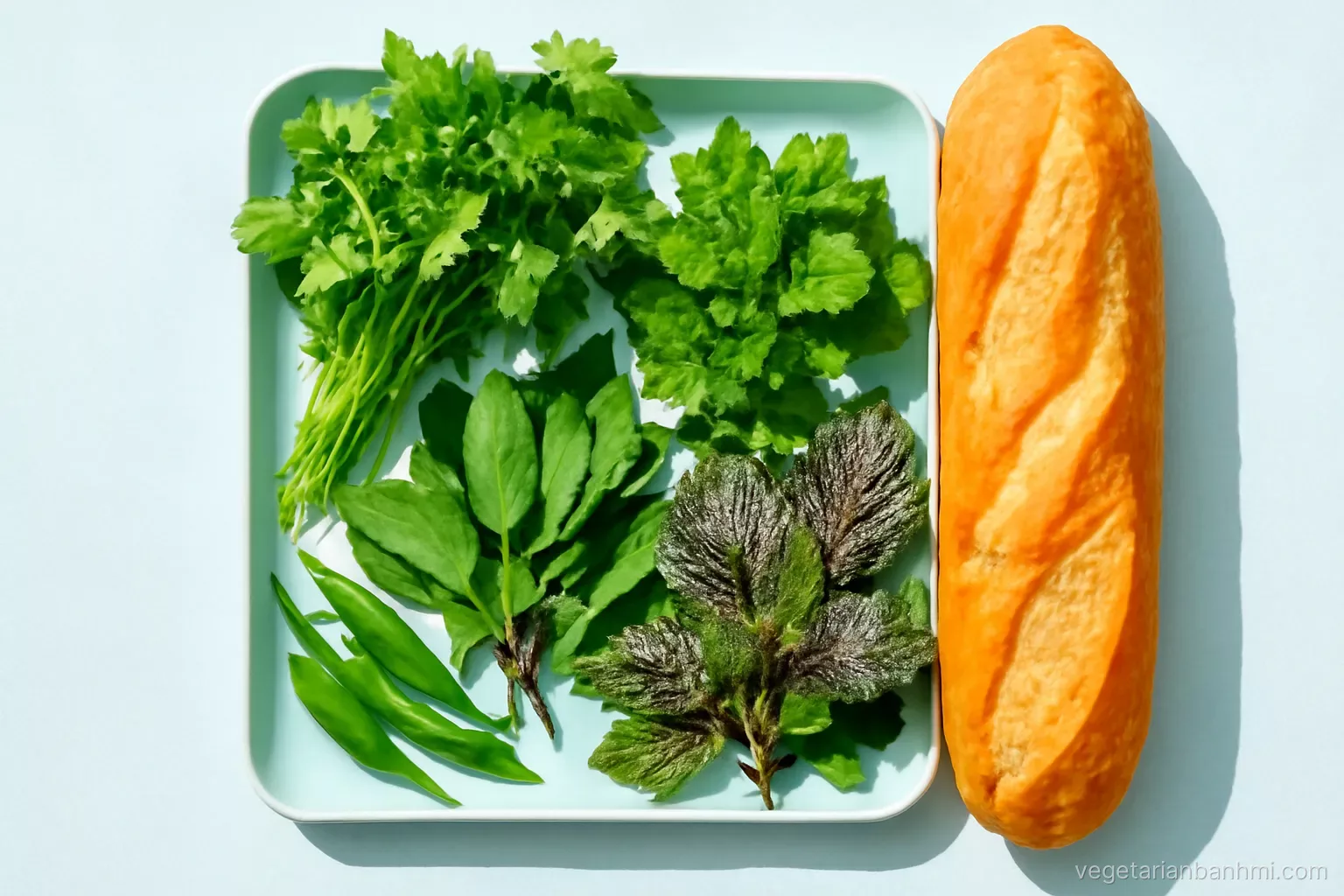
To choose a good swap, think about what you are replacing. Cilantro in banh mi brings three things: a sharp green aroma that cuts through rich mayo and pâté; a juicy, tender crunch from its stems; and a faintly citrusy note that links the pickles to the filling. A good substitute covers at least two of these. Parsley and lime zest cover aroma and citrus. Celery leaves cover aroma and crunch. Thai basil adds a different but equally bold aroma. Combining two swaps usually beats one.
Eight swaps that work
| Swap | What it brings | Amount per sandwich | Best with |
|---|---|---|---|
| Flat-leaf parsley + lime zest | Clean green aroma, citrus lift | 5 sprigs + a pinch of zest | Any filling; the safest all-rounder |
| Thai basil | Anise, sweet spice | 5 to 6 leaves | Lemongrass tofu, jackfruit |
| Mint | Cool, fresh | 4 to 6 leaves | Fried tofu, spicy fillings |
| Celery leaves (pale inner ones) | Savory, slightly bitter crunch | A small handful | Mushroom pâté, seitan |
| Spring onion greens | Mild onion, juicy | 1 long strip, split | Everything; very traditional |
| Dill | Fresh, slightly sweet | 2 to 3 fronds | Tofu and chickpea-flour "egg" |
| Watercress or pea shoots | Peppery or sweet crunch | A small handful | Rich, heavy fillings |
| Perilla or shiso | Herbal, faint cinnamon and mint | 2 to 3 leaves | Grilled mushrooms |
Dill is not a random choice: it is common in northern Vietnamese dishes such as the turmeric fish of Hanoi, so it fits the cuisine better than you might think. In a vegan version, it is excellent with turmeric-marinated tofu.
Herbs to avoid if you dislike cilantro
Two Vietnamese herbs catch cilantro-haters by surprise. Culantro (ngò gai, sawtooth herb) is a different plant, but it smells and tastes like an amplified cilantro, thanks to related aroma compounds. Vietnamese coriander (rau răm) is peppery and distinct, yet many people who dislike cilantro find it soapy as well. Coriander seed, by contrast, tastes completely different from the leaf, warm and citrusy, and most cilantro-averse people enjoy it. A pinch of toasted, crushed coriander seed in a tofu marinade can be a pleasant compromise.
How to order banh mi without cilantro in Vietnam
Most street vendors add cilantro by default, often along with other greens, so say it before they start building the sandwich. These short phrases work everywhere and vendors hear them constantly:
- Không ngò (khom-ngaw): no cilantro. Used in the south, including Ho Chi Minh City.
- Không rau mùi (khom-zow-moo-ee in the north): no cilantro, used in Hanoi and northern Vietnam.
- Không rau: no herbs or greens at all, if you want to be safe.
- Cho thêm dưa leo: extra cucumber, a good way to replace the freshness.
Pronunciation does not need to be perfect; pointing at the herb tub while shaking your head works too. If you are vegetarian or vegan, combine it with ordering tips from our vegan banh mi in Vietnam guides.
Building a cilantro-free banh mi at home
Here is a combination we like for four sandwiches. Spread vegan mayo on warm bread, add lemongrass tofu, then top each sandwich with 40 g (1 1/2 oz) of drained pickled carrot and daikon, two cucumber spears, a long strip of spring onion, five sprigs of flat-leaf parsley tossed with the finely grated zest of half a lime, and four leaves of mint. Finish with chili sauce and a few drops of soy-based seasoning. You get the brightness, crunch and aroma without a trace of soap.
For a bolder version, swap the parsley for six leaves of Thai basil, and add a few rings of pickled red onion for a sharper edge. Recipes for the pickles live in our pickles and herbs category, and full sandwich builds are in vegan banh mi recipes.
Prep tips for the swaps
- Wash herbs under running water without soap, as the FDA advises for fresh produce, then dry them completely. Wet greens make the bread soggy.
- Use parsley leaves and only the thin upper stems; the thick stems are fibrous.
- Grate lime zest just before using; the oils fade within an hour.
- Tear basil and mint rather than chopping, to limit bruising and blackening.
Hosting guests with mixed tastes
When you make banh mi for a group, assume at least someone at the table dislikes cilantro. The simplest fix is to keep herbs off the sandwiches entirely and serve them on a platter: cilantro in one pile, parsley, mint and Thai basil in others. Guests add their own. No labels are needed; just tell people which pile is cilantro. This also keeps herbs fresher, since they are not sitting on warm fillings, and it saves washing a lot of herbs that nobody eats.
If you are prepping sandwiches ahead for lunchboxes, leave all herbs out and pack them in a small container with a dry paper towel. Add them at lunchtime. Herbs on a sandwich that has sat for hours wilt and turn dark regardless of which herb you choose.
Sources
- Eriksson et al., "A genetic variant near olfactory receptor genes influences cilantro preference", Flavour journal (2012) – flavourjournal.biomedcentral.com
- US Food and Drug Administration – fda.gov (washing fresh produce)
- USDA FoodData Central – fdc.nal.usda.gov (nutrient data for parsley, cilantro and mint)
Frequently asked questions
Why does cilantro taste like soap?
Cilantro contains aldehydes, aroma compounds also found in some soaps. People perceive them differently, partly because of genetic variation in smell receptors, so some taste fresh citrus while others taste soap.
What is the best single substitute for cilantro in banh mi?
Flat-leaf parsley with a little lime zest is the most versatile. It gives the same fresh, green lift with a hint of citrus, without the soapy compounds.
How do I say "no cilantro" in Vietnamese?
Say "không ngò" in the south, including Ho Chi Minh City, or "không rau mùi" in the north. "Không rau" means no herbs or greens at all.
Is culantro a good cilantro substitute?
Not for cilantro-haters. Culantro tastes like a stronger version of cilantro, so if cilantro tastes like soap to you, culantro probably will too.
Can you learn to like cilantro?
Some people report that repeated exposure softens their dislike, but there is no guarantee. There is no need to force it, since many good swaps exist.
Your Banh Mi, Your Herbs
With the right swaps, a cilantro-free vegan banh mi tastes just as bright and fresh as the classic. When you are in Ho Chi Minh City, try Bánh Mì XANH, a fully vegan banh mi chain with 5 central shops open 24/7, and if cilantro is not for you, ask the staff about the fresh herbs before they build your sandwich.
Order from Bánh Mì XANH · 24/7 hotline / Zalo +84 923 183 183