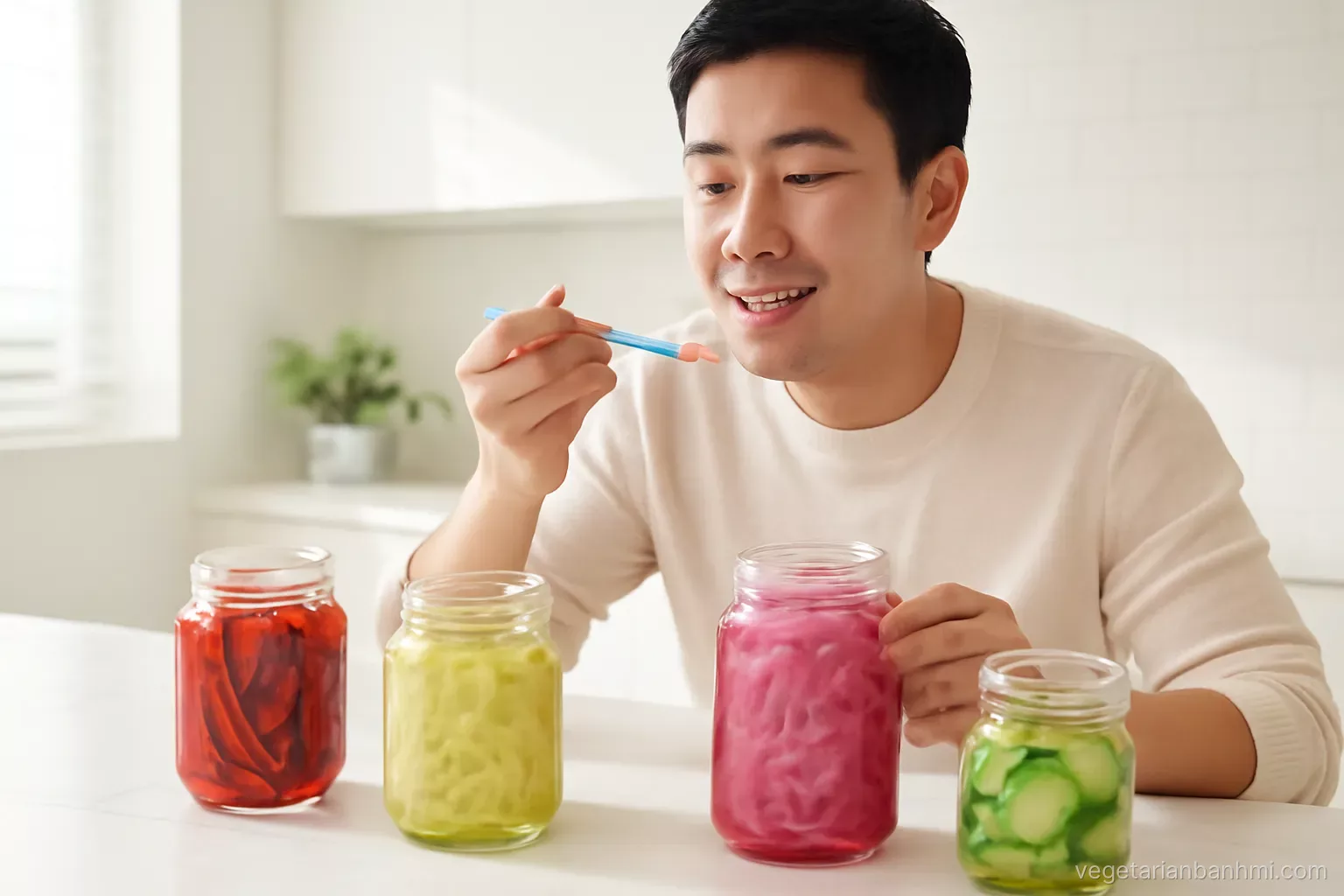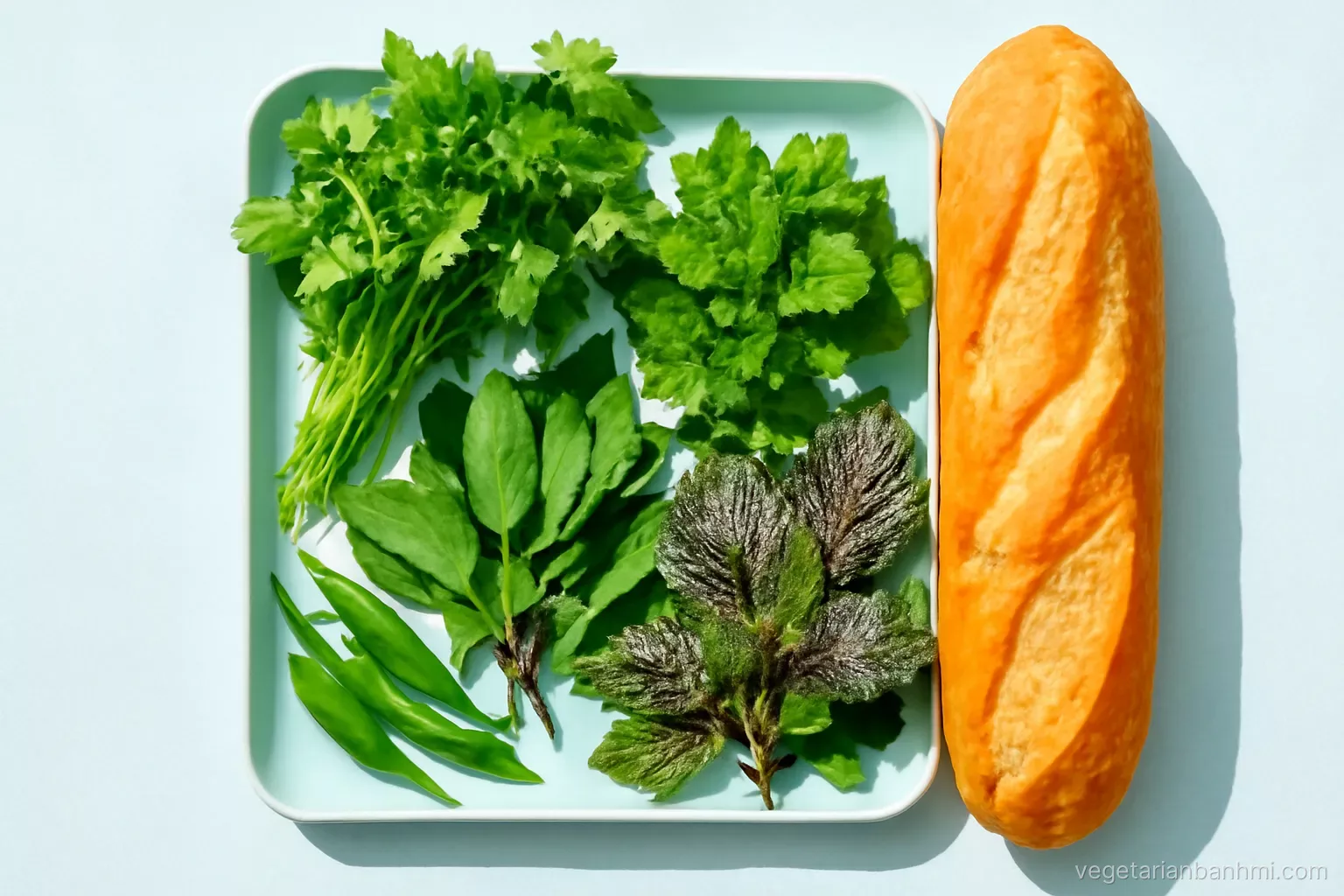
Short answer: For classic đồ chua (Vietnamese pickled carrot and daikon), cut 600 g (1.3 lb) of vegetables into matchsticks, massage them with salt and sugar, rinse, then cover with a brine of 240 ml (1 cup) warm water, 180 ml (3/4 cup) vinegar, 100 g (1/2 cup) sugar and 1 teaspoon salt. They are edible after an hour, best after a day, and keep up to three weeks in the fridge.
Why đồ chua makes the sandwich
If mayo is the foundation of banh mi, đồ chua (literally "sour things") is its voice. The sweet-sour crunch of carrot and daikon cuts through rich spreads and fried tofu, cools down chili, and gives every bite that snap people remember. In Vietnam it is sold by the bag in markets and made in big jars at home, and every banh mi stall has a tub of it. The ratio below is a balanced, slightly sweet southern style that suits vegan fillings especially well, because plant-based proteins tend to need more contrast than pork.
The good news for cooks abroad: carrots are sold everywhere, daikon is easy to find in Asian grocers and many supermarkets, and the brine uses pantry staples. Once you have made it once, it becomes a fifteen-minute weekly habit, and you can slot it into the full sandwich builds in our vegan banh mi recipes.
Ingredients
Makes one 1-liter (1-quart) jar, enough for about 15 to 20 sandwiches.
- 300 g (about 2 medium) carrots
- 300 g (a 15 cm / 6 inch piece) daikon radish
- 1 teaspoon (6 g) fine salt and 2 teaspoons (8 g) sugar, for the massage
- 240 ml (1 cup) warm water, around 40 to 50°C (105 to 120°F), not boiling
- 180 ml (3/4 cup) distilled white vinegar or plain rice vinegar, 5% acidity
- 100 g (1/2 cup) sugar
- 1 teaspoon (6 g) fine salt
Use plain vinegar. "Seasoned" rice vinegar already contains sugar and salt and will throw off the balance. Apple cider vinegar works but adds a fruity flavor and slightly browner color.
Brine ratios for different tastes
| Style | Water | Vinegar (5%) | Sugar | Salt | Character |
|---|---|---|---|---|---|
| Saigon sweet (this recipe) | 240 ml (1 cup) | 180 ml (3/4 cup) | 100 g (1/2 cup) | 6 g (1 tsp) | Sweet first, gentle tang |
| Balanced tangy | 180 ml (3/4 cup) | 240 ml (1 cup) | 75 g (6 tbsp) | 6 g (1 tsp) | Sharper, keeps a little longer in quality |
| Lower sugar | 200 ml (scant 1 cup) | 200 ml (scant 1 cup) | 40 g (3 tbsp) | 8 g (1 1/3 tsp) | Savory-sour, good with very sweet fillings |
These brines are for refrigerator pickles only. Safety here comes mainly from cold storage and a short shelf life, not from a tested canning process. If you want shelf-stable jars, follow a tested recipe from the National Center for Home Food Preservation, which typically requires more vinegar and a boiling-water process.
Step by step
- Peel and cut. Peel the carrot and daikon. Cut them into matchsticks about 5 mm (1/4 inch) thick and 6 to 7 cm (2 1/2 inches) long, roughly the length of your finger. A julienne peeler or mandoline is fast; a sharp knife gives the chunkier, rustic sticks many vendors use. Avoid the fine shreds of a box grater, which go limp within hours.
- Massage. Put the sticks in a bowl, sprinkle with the 1 teaspoon salt and 2 teaspoons sugar, and knead gently for 2 to 3 minutes. Leave for 10 to 15 minutes. Water will pool in the bowl.
- Check the bend. A daikon stick should bend into a gentle U without snapping. This is the vendors' test: the vegetables stay crunchy but stop being woody, and they absorb the brine faster.
- Rinse and drain. Rinse well under cold water to remove excess salt and squeeze lightly in your hands. Drain for a few minutes.
- Make the brine. Stir the sugar and salt into the warm water until dissolved, then add the vinegar. Warm water dissolves the sugar quickly; boiling brine would soften the vegetables.
- Pack and cover. Pack the vegetables into a clean glass jar and pour over the brine until completely submerged. Leave about 1 cm (1/2 inch) of headspace. Close the lid.
- Wait and chill. Leave at room temperature for up to 1 hour, then refrigerate. They taste good after an hour and best from day one to day five.
The daikon smell, and other common problems
Open a jar of pickled daikon after a day or two and you may get a strong, sulfurous smell, a bit like cabbage or a stale fridge. It is normal: daikon, like other radishes and members of the cabbage family, contains sulfur compounds that are released as it breaks down in the brine. It is not a sign of spoilage on its own, and the pickles taste far milder than they smell. Open the jar for a minute before serving, use a jar with a good seal, and keep it away from butter or tofu in the fridge, which absorb odors.
Pickles are soft and soggy. The sticks were cut too thin, the brine was boiling hot, or the jar is more than two weeks old. Cut thicker and use warm brine.
Too sweet or too sour. Pickles keep absorbing brine for a few days, so taste on day two before adjusting. Then shift toward one of the other ratios in the table for the next batch.
Cloudy brine with bubbles. A low-vinegar brine left warm can begin to ferment. If it smells clean and sour, it is fermenting rather than rotting, but for quick pickles we treat this as a sign the batch has run its course, so throw it out and make a fresh jar. Discard immediately if you see mold, sliminess, or smell anything rotten.
Storage and food safety
Quick pickles are a refrigerated food. Keep the jar at or below 4°C (40°F), always use clean utensils, and keep the vegetables under the brine. University extension services commonly advise eating refrigerator pickles within a few weeks; we use three weeks as an upper limit, and texture is best in the first ten days. Do not top up an old jar with new vegetables; start a fresh batch.
When you make sandwiches for later, drain the pickles well before adding them, since brine dripping onto the bread is the main reason packed banh mi turn soggy. Our meal prep and storage guides cover packing pickles separately for lunchboxes, and the two-hour rule for sandwiches left out at room temperature.
Swaps when you cannot find daikon
- Kohlrabi: the closest texture; sweet, crisp and mild. Use the same weight.
- Jicama: stays very crunchy, slightly sweet; no sulfur smell at all.
- Red radishes: slice thinly rather than into sticks; they turn the brine pink.
- Turnip or white cabbage core: acceptable; turnip has a stronger flavor.
- All carrot: perfectly fine and very common at home. Add a few cucumber spears to the sandwich for freshness.
Want to go further than the classic? Our pickles and herbs section covers fermented pickles, pickled chilies and the herbs that go on top.
A note on nutrition
The vegetables themselves are low in calories; USDA FoodData Central lists raw carrots at about 41 kcal per 100 g and daikon at under 20 kcal per 100 g. Most of the calories in đồ chua come from the sugar you can see dissolved in the brine, and only part of it ends up on the vegetables. A typical banh mi portion of 30 to 40 g of drained pickles adds very little, which is part of why the sandwich feels lighter than it looks.
Sources
- National Center for Home Food Preservation – nchfp.uga.edu (pickling, vinegar acidity and tested canning recipes)
- USDA Food Safety and Inspection Service – fsis.usda.gov (refrigerator temperature and two-hour rule)
- USDA FoodData Central – fdc.nal.usda.gov (carrot and daikon nutrient data)
Frequently asked questions
How long do đồ chua pickles last?
We recommend eating them within three weeks, kept at or below 4°C (40°F) and fully covered by brine. They are crunchiest in the first ten days.
Why do my pickles smell so strong?
Daikon releases sulfur compounds as it pickles, which smell strong in a closed jar. It is normal and fades once the jar is open; mold, slime or a rotten smell, on the other hand, mean the batch should go.
Can I reuse the pickling brine?
We do not recommend it for a new batch, because it is diluted by water from the first vegetables and carries their bacteria. Use leftover brine within a few days in salad dressings instead.
Do I have to salt the vegetables first?
It is optional but worth it. Salting draws out water so the pickles stay crisp, bend instead of snapping, and absorb flavor faster.
Can I use less sugar?
Yes. Try the lower-sugar ratio in the table. The pickles will be more sour and savory, which works well with sweet glazed tofu.
Crunch at Home, Crunch in Saigon
A jar of đồ chua in your fridge means a great vegan banh mi is never more than five minutes away. And if you are in Ho Chi Minh City, taste how a fully vegan chain builds its banh mi at Bánh Mì XANH, with 5 central shops open 24/7.
Discover Bánh Mì XANH · 24/7 hotline / Zalo +84 923 183 183