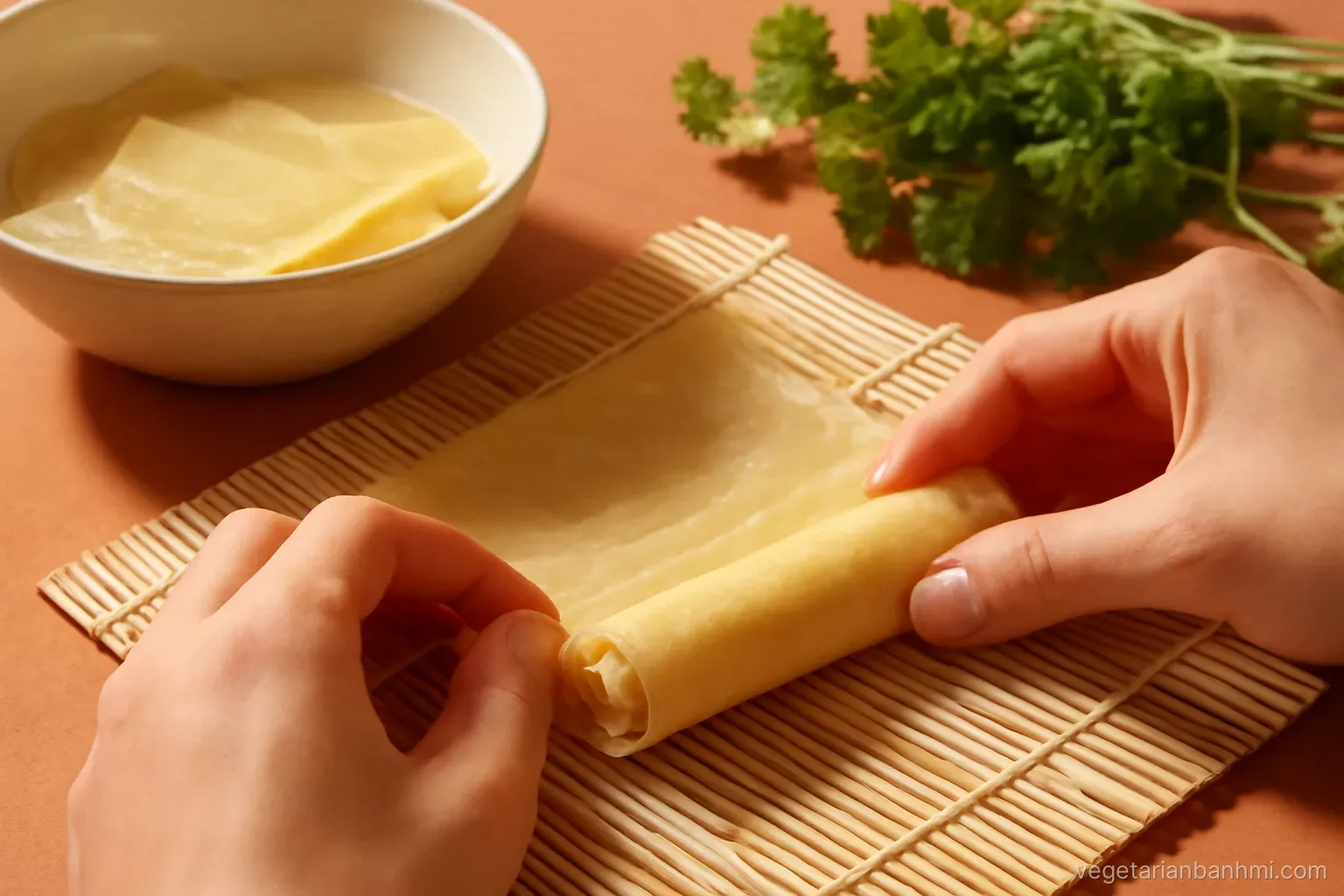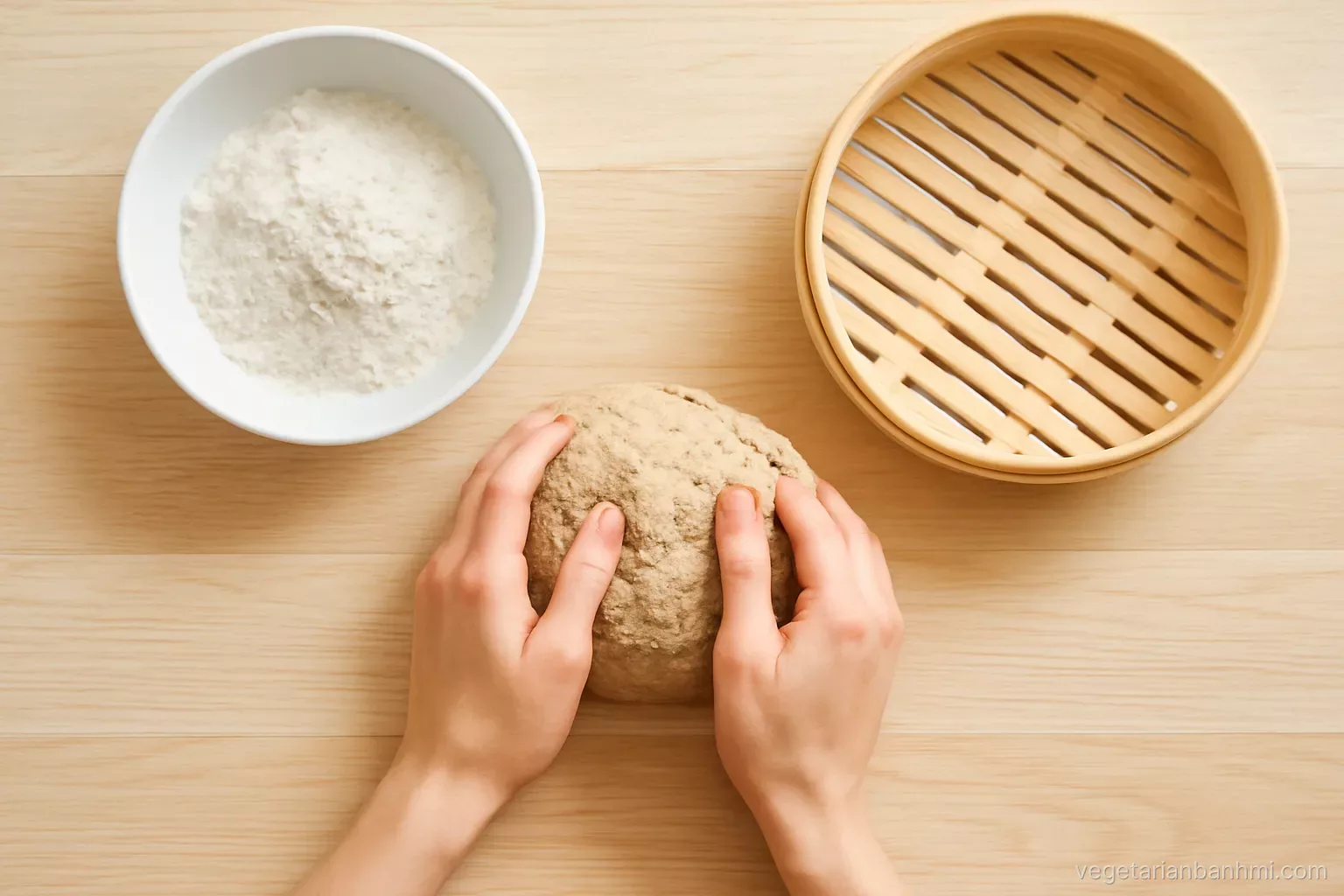
Short answer: Steam or simmer tempeh for 10–15 minutes before anything else; it softens the cake, mellows bitterness and helps it absorb flavor. Then slice it into thin planks for sandwiches or crumble it for a loose filling, marinate briefly, and pan-fry, bake or air fry until golden. Finish with a glaze or a squeeze of lime. Tempeh holds its shape better than tofu and brings about 20 g protein per 100 g.
Tempeh is a fermented soybean cake from Indonesia, especially Java, made by inoculating cooked soybeans with a Rhizopus mold culture that binds them into a firm, sliceable block. It is not part of traditional Vietnamese cooking, where tofu, wheat gluten and mushrooms dominate, but it is a natural fit for a modern bánh mì chay (vegetarian banh mi): firm, nutty, chewy and good at holding a sticky glaze. Because it is sold widely in North America, Europe and Australia, it is often easier to find than good fresh tofu. This guide covers how to buy it, prepare it and cook it in several ways, so it works in your sandwiches every time.
Buying and checking tempeh
Most tempeh is sold refrigerated in vacuum-sealed packs of around 200–250 g (7–8 oz); some is sold frozen. Pasteurized tempeh is the most common and has a long fridge life. Unpasteurized fresh tempeh, from small producers, has a more pronounced flavor and must be cooked thoroughly before eating. Read the label for the bean or grain: classic tempeh is pure soybeans, while some brands mix in rice, barley, millet or flax.
A good block is firm and compact, covered in white mycelium with the beans clearly visible. Gray or black patches, often near air holes, are normal: they are where the culture has begun to produce spores. Mild mushroom or yeasty smells are normal too. Discard tempeh that is slimy, has pink, yellow or green fuzzy mold, or smells strongly of ammonia or rot. Unopened, keep it refrigerated until the date on the pack; once opened, wrap it and use it within about five days, or freeze it for up to three months.
Why steaming comes first
Tempeh straight from the package is dense and can taste slightly bitter, especially some soy brands. Ten to fifteen minutes of steaming or gentle simmering does three things: it softens the texture so it is less dry and crumbly, it reduces bitterness, and it opens up the cake so marinades soak in rather than sitting on the surface. Steam the whole block in a basket over boiling water, or simmer it in a shallow pan of water or broth. Simmering in a seasoned broth (water with soy sauce, garlic and a slice of ginger) adds flavor at the same time. Pat dry before slicing.
Frozen tempeh can go straight into the steamer; add 5 minutes. Pre-marinated or smoked tempeh can skip this step, though a short steam still improves the texture.
Slices, triangles or crumbles
How you cut tempeh changes the eating experience in a sandwich.
- Thin planks (5 mm): cut the block in half crosswise, then horizontally into slices. The best choice for banh mi: lots of surface for browning and glaze, easy to bite.
- Thick slabs (1 cm): meatier and more substantial, good if you like a dense filling; marinate longer.
- Triangles or cubes: better for bowls and skewers; they tend to fall out of bread.
- Crumbles: grate or crumble steamed tempeh with your fingers and fry it like ground meat with aromatics. Excellent for a loose, savory banh mi filling that soaks up sauce, held in place by a layer of pâté or mayo.
Five ways to cook it
| Method | Temperature and time | Oil | Result |
|---|---|---|---|
| Pan-fry | Medium-high, 2–3 min per side | 2–3 tbsp per batch | Golden, crisp edges, tender center |
| Glaze in pan | Fry first, then 2–4 min with sauce on medium | As above | Sticky, caramelized |
| Bake | 200°C (400°F), 20–25 min, flip halfway | 1–2 tbsp, brushed | Even, chewy, hands-off |
| Air fry | 200°C (400°F), 8–10 min, shake twice | 1 tbsp | Very crisp, slightly dry |
| Crumble and stir-fry | Medium-high, 6–8 min | 2 tbsp | Browned, savory "mince" |
Tempeh browns faster than tofu because it contains less water, so stay at the stove. If you marinate it in a sweet sauce, cook at medium heat or wipe off excess marinade before frying, then add the rest as a glaze at the end.
Marinades and flavor pairings
Tempeh's nutty, earthy flavor pairs best with bold seasonings that balance salty, sweet and sour. After steaming, 20–30 minutes in a marinade is enough; overnight gives a deeper flavor. Try these combinations for banh mi, each for about 225 g (8 oz) tempeh:
- Soy-lime-chili caramel: 2 tablespoons soy sauce, 1 tablespoon brown sugar, 1 tablespoon lime juice, 1 minced garlic clove, 1 minced chili.
- Lemongrass and turmeric: 2 tablespoons minced lemongrass, 1/2 teaspoon turmeric, 1 tablespoon soy sauce, 1 teaspoon sugar, 1 tablespoon oil.
- Five-spice "roast" style: 1 tablespoon hoisin, 1 tablespoon soy sauce, 1/4 teaspoon five-spice, 1 teaspoon sesame oil.
- Peanut-satay: 1 tablespoon peanut butter, 1 tablespoon soy sauce, 1 teaspoon sugar, lime juice and water to loosen; brush on during the last minutes.
For a complete, tested tempeh sandwich with timings and toppings, see the caramelized tempeh banh mi in our vegan banh mi recipes. Pickles do a lot of work against tempeh's richness, so make plenty; our pickles and herbs section has the ratios.
A crumbled tempeh filling, step by step
Crumbled tempeh is the quickest way to get tempeh into a banh mi and the most forgiving for beginners, because there are no slices to break or burn. It is also a good way to stretch one block across four sandwiches. For 4 sandwiches you need 225 g (8 oz) tempeh, 2 tablespoons oil, 1 minced shallot, 2 minced garlic cloves, 1 tablespoon minced lemongrass (optional), 1 1/2 tablespoons soy sauce, 2 teaspoons sugar, 1/2 teaspoon black pepper and 2 tablespoons water.
- Steam the tempeh for 10 minutes, let it cool for a minute, then crumble it with your fingers into pieces the size of peas.
- Heat the oil in a wide pan over medium-high heat. Add the crumbles in an even layer and leave them for 2–3 minutes until browned underneath, then stir and repeat until most pieces are golden, about 6–8 minutes in total.
- Add the shallot, garlic and lemongrass and stir for 1 minute until fragrant.
- Mix the soy sauce, sugar, pepper and water, pour over and stir until absorbed and slightly sticky, about 1 minute.
- Finish with a squeeze of lime and a handful of chopped cilantro or scallions.
Spread the bread with pâté or vegan mayo first; the spread acts as glue that keeps the crumbles from tumbling out. Then add cucumber, the warm tempeh, pickles, herbs and chili. Leftover crumbles keep 3–4 days in the fridge and are excellent in lettuce cups or over rice.
Tempeh vs tofu in a banh mi
Both are soy foods, but they behave differently. Tofu is made from soy milk curdled into a soft or firm block; tempeh is made from whole fermented soybeans. USDA FoodData Central lists tempeh at about 192 kcal and about 20 g protein per 100 g, compared with about 144 kcal and about 17 g protein for firm tofu made with calcium sulfate. Tempeh also contains more fiber, since the whole bean is kept, while calcium-set tofu contains much more calcium. In a sandwich, tempeh gives a chewier, nuttier, more substantial bite and needs less pressing; tofu gives a creamier interior and a crisp shell. Many cooks keep both in the fridge and choose by mood. For more comparisons of plant proteins per sandwich, see our plant-based nutrition section.
Sources
- USDA FoodData Central – fdc.nal.usda.gov (tempeh; tofu, firm, prepared with calcium sulfate)
- Soyfoods Association of North America – soyfoods.org (tempeh and soy foods)
- USDA Food Safety and Inspection Service – fsis.usda.gov (refrigerated and frozen storage)
Frequently asked questions
Can I eat tempeh without cooking it?
Pasteurized tempeh is technically cooked, but it tastes much better heated, and unpasteurized tempeh must be cooked thoroughly. For sandwiches, always steam and then fry, bake or air fry it.
Are black spots on tempeh safe?
Small gray or black patches are usually spores from the same culture that makes tempeh and are normal. Discard tempeh with pink, yellow or green fuzzy mold, a slimy surface or a strong ammonia smell.
Do I need to steam tempeh every time?
It is not essential, but it improves texture and flavor noticeably, particularly with soy tempeh. If you are short of time, simmer slices for 5 minutes in seasoned water as a shortcut.
Is tempeh gluten-free?
Pure soybean tempeh is naturally gluten-free, but multigrain versions may contain barley or wheat, and some are made in facilities that handle gluten. Check the label if you need to avoid gluten.
Can I freeze cooked tempeh?
Yes. Cool cooked slices quickly, freeze them flat in a bag, and use within about 2 months. Reheat in a hot pan or air fryer for the best texture.
Tempeh at home, tofu and mushrooms in Saigon
Steam, slice and glaze, and tempeh becomes a reliable, high-protein banh mi filling wherever you live. In Ho Chi Minh City, see how a fully vegan chain builds banh mi from tofu, mushrooms and grain-based cold cuts at Bánh Mì XANH, with 5 central shops open 24/7.
Explore the Bánh Mì XANH menu · 24/7 hotline / Zalo +84 923 183 183