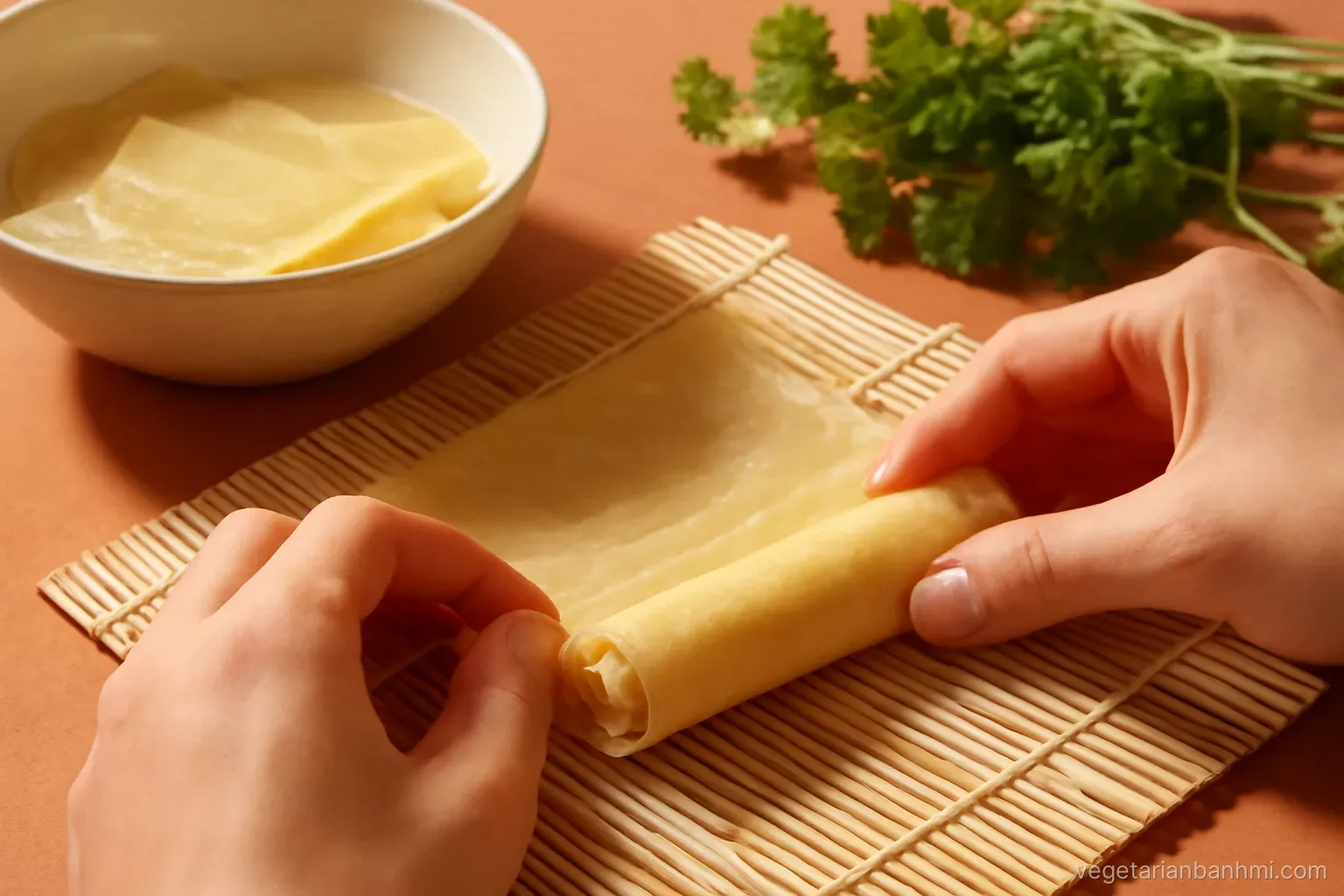
Short answer: Tofu skin is the film that forms on heated soy milk, sold fresh, frozen or dried as sheets and sticks. For banh mi, soak dried sheets in warm water for 5–10 minutes until pliable, then either brush them with seasoning, roll them tightly in foil and steam for 30 minutes to make a sliceable, gluten-free "cold cut", or cut them into strips and pan-fry until crisp. Sticks soak longer, 2–4 hours, and shred well into a chewy, chicken-like filling.
Tofu skin is known in Vietnamese as tàu hũ ky in the south and váng đậu in the north; in Japanese it is yuba, and in Chinese groceries it is often labeled bean curd sheet, bean curd skin or bean curd stick. It is made by gently heating soy milk in wide, shallow pans and lifting off the thin film that forms on the surface, layer after layer. In Vietnamese vegetarian cooking it is everywhere: rolled around fillings and fried, layered into vegetarian versions of chả (pork roll), simmered in stews and shredded to mimic meat. For banh mi, it offers something tofu and seitan cannot quite match: thin, chewy layers that slice beautifully, with no wheat.
The forms of tofu skin and how to prepare each
| Form | What it looks like | Preparation | Best banh mi use |
|---|---|---|---|
| Dried sheets | Brittle, pale yellow, large rounds or rectangles | Soak 5–10 min in warm water until pliable | Steamed rolls for slicing, wraps |
| Fresh or frozen sheets | Soft, flexible, folded in packs | Thaw if frozen; use directly | Rolls, crispy strips, layered logs |
| Dried sticks | Long, wrinkled, folded rods | Soak 2–4 hours or overnight in cold water | Shredded "chicken", braised pieces |
| Fried tofu skin rolls | Golden, crisp, often in the frozen aisle | Pan-fry or bake from frozen | Sliced into sandwiches as is |
| Knotted or rolled skin | Small knots or compressed rolls | Simmer 15–20 min in broth | Braised fillings, side dishes |
Dried sheets break easily, so handle them gently before soaking. If they crack, do not worry: broken pieces can be layered inside a roll, and nobody will see them once it is sliced.
Method 1: A steamed tofu skin roll for slicing
This roll makes a gluten-free alternative to wheat-based vegan cold cuts, similar in spirit to the vegetarian chả made in many Vietnamese vegetarian kitchens. Ingredients for a roll serving 4 sandwiches: about 150 g dried tofu skin sheets (or 300 g fresh), 3 tablespoons soy sauce, 1 tablespoon neutral oil, 1 teaspoon sugar, 1 teaspoon mushroom seasoning or 1/2 teaspoon salt, 1/2 teaspoon white pepper, 1 teaspoon garlic powder and 3 tablespoons water.
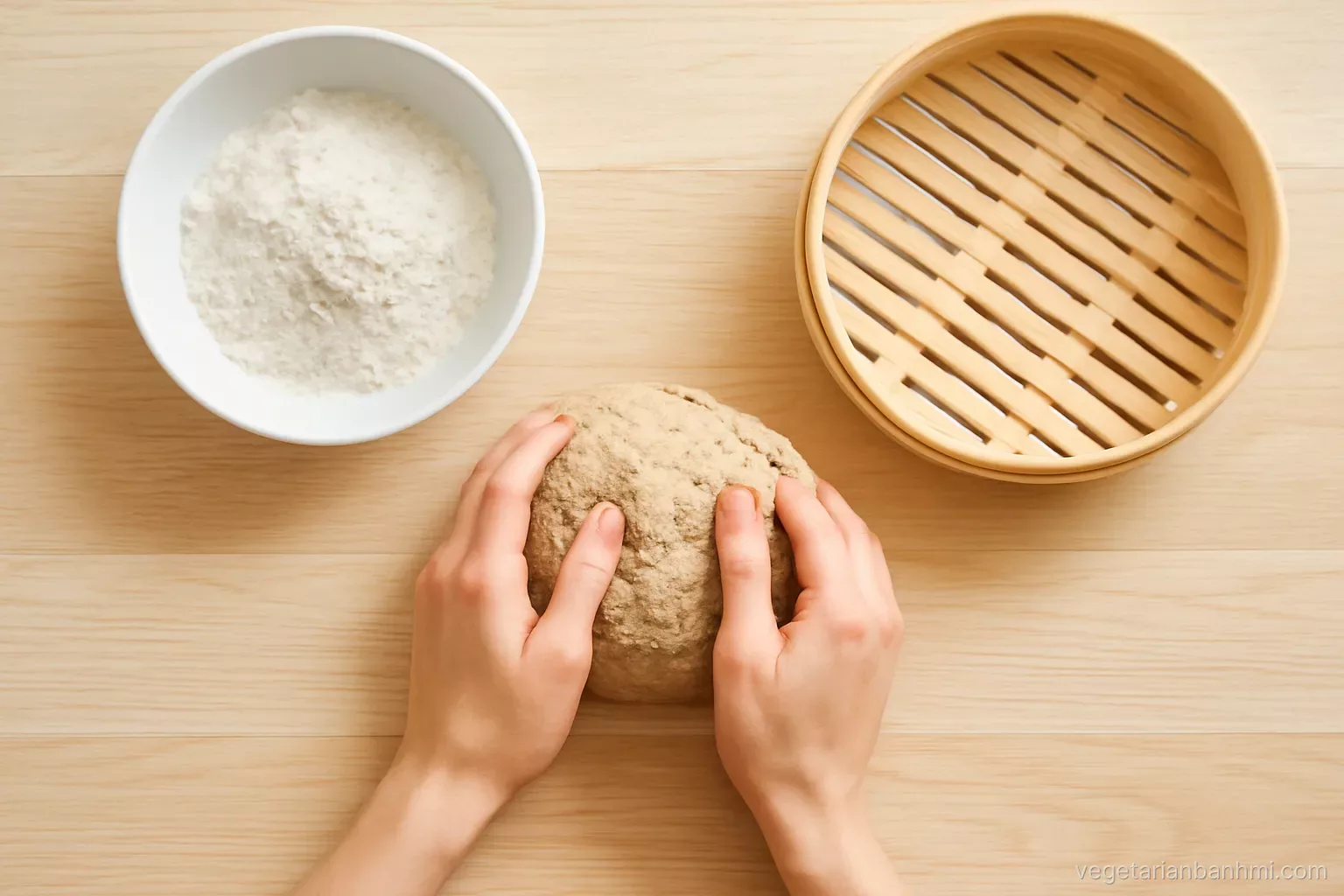
- Soak dried sheets in warm water for 5–10 minutes until soft, then drain and gently squeeze. Fresh sheets need no soaking.
- Whisk the seasoning ingredients together.
- Lay a sheet of foil on the counter, place a tofu skin sheet on it, brush lightly with the seasoning, and stack the next sheet on top. Repeat until all sheets are used, tearing pieces to fill gaps.
- Starting from one long edge, roll the stack as tightly as possible into a log about 5 cm (2 inches) wide. Wrap tightly in the foil and twist the ends. For extra compression, tie with kitchen string or wrap in a clean cloth before foiling.
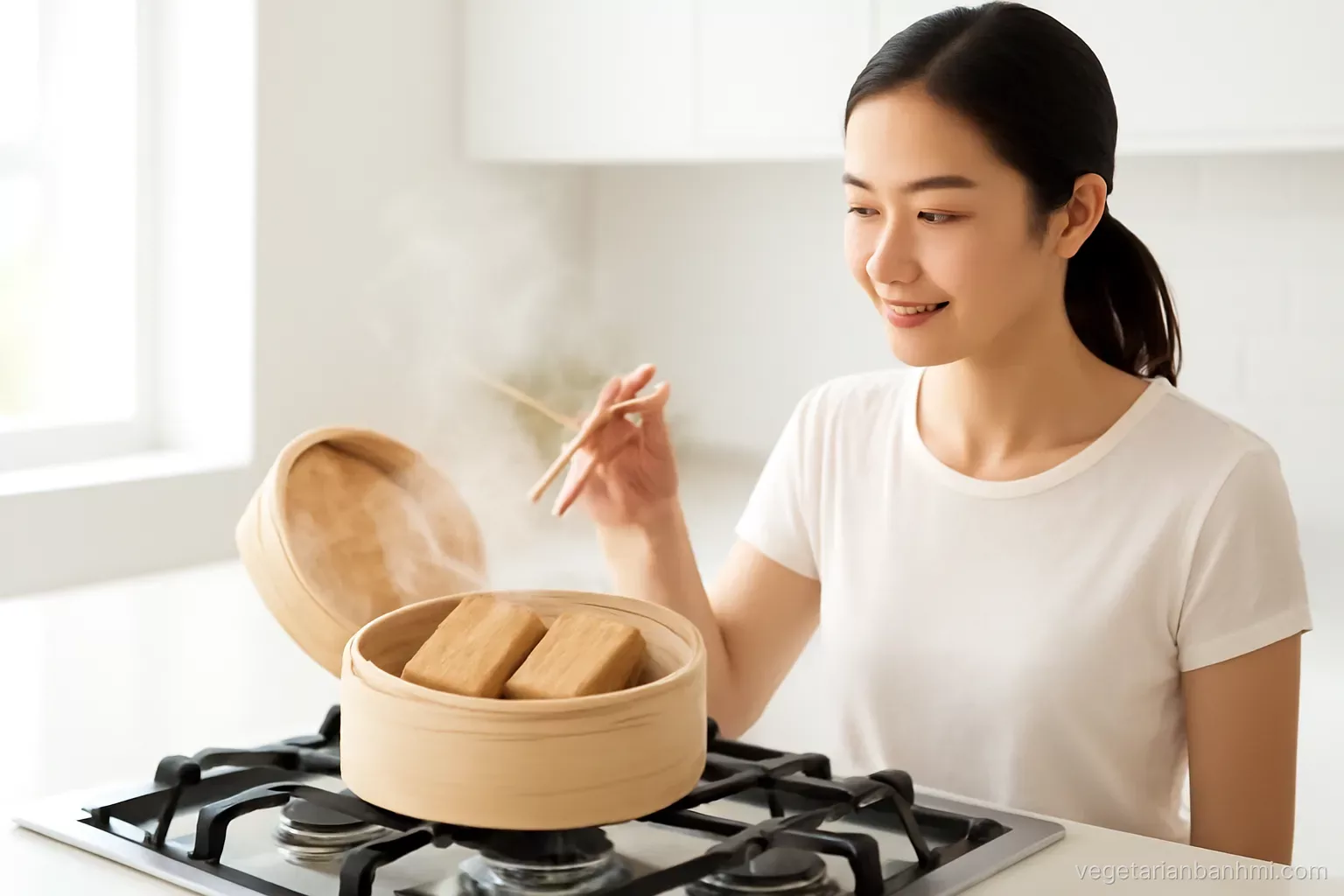
- Steam for 30 minutes over boiling water.
- Cool, then refrigerate for at least 4 hours or overnight, ideally under a light weight such as a small cutting board. Chilling sets the layers.
- Slice 3–5 mm thick. Use cold, or sear the slices for 30–60 seconds per side for crisp edges.
Adding a teaspoon of beet juice gives a pink "ham" color; a few drops of liquid smoke or a pinch of five-spice changes the character. The layers are what make this work: each slice shows fine, meat-like striations and has a tender chew.
Method 2: Crispy fried strips
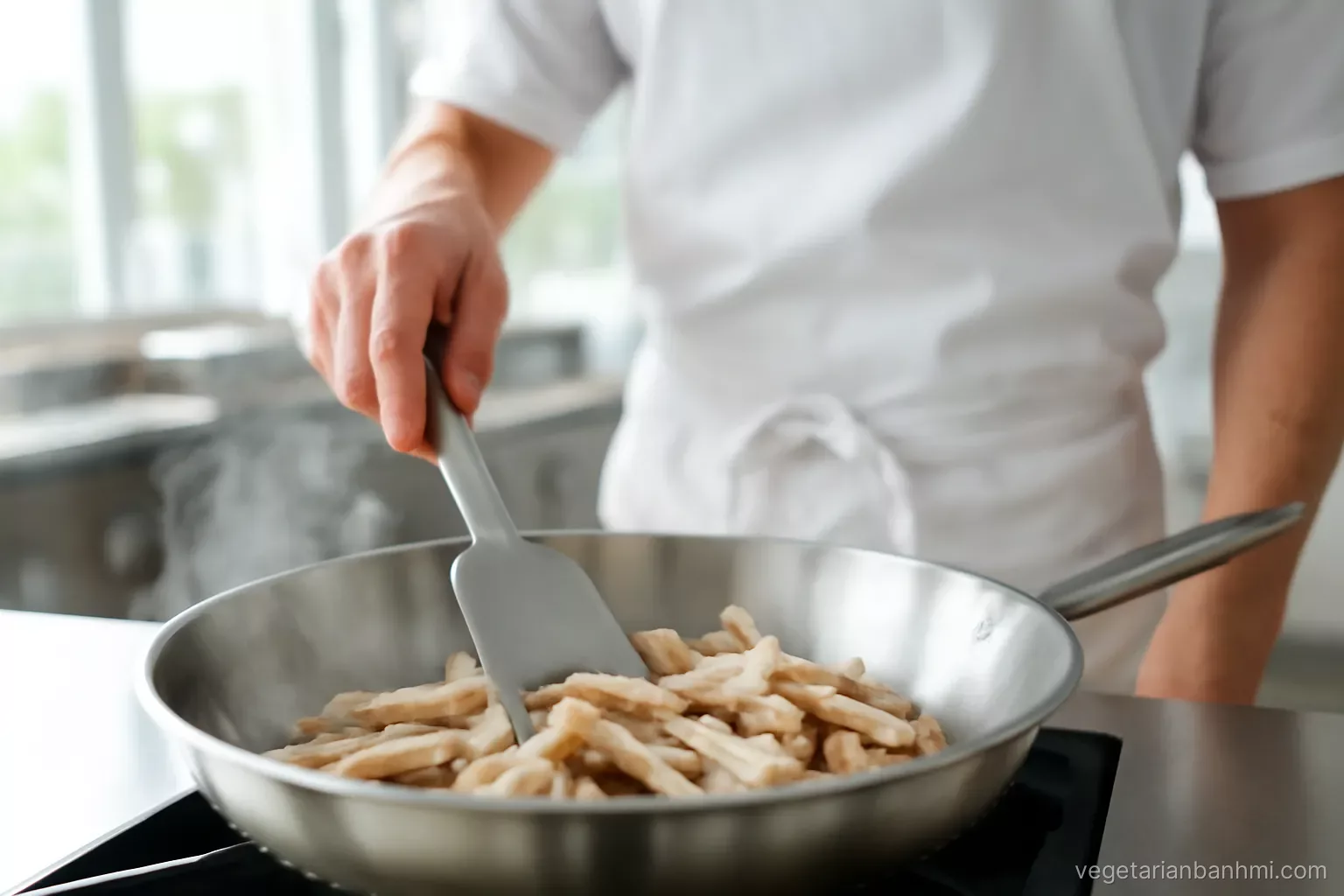
For crunch, cut soaked or fresh tofu skin into strips 2 cm wide and 8–10 cm long. Toss them with 1 tablespoon soy sauce, a pinch of sugar and black pepper, and let them sit 10 minutes. Heat 3–4 tablespoons oil in a frying pan over medium heat and fry the strips in batches for 2–3 minutes per side until golden and crisp; tofu skin browns quickly, so turn them often. Drain on a rack. Alternatively, brush with oil and air fry at 190°C (375°F) for 6–8 minutes, shaking halfway.
Crispy strips are best eaten within an hour. In a banh mi, lay them over a layer of pâté or mayo, then top with pickles and herbs right before eating so they stay crunchy. A drizzle of chili sauce or a sprinkle of fried lemongrass makes them even better.
Method 3: Shredded tofu skin sticks
Soaked tofu skin sticks have a stringy, layered texture that resembles shredded chicken when torn. After soaking until fully soft with no hard core, squeeze them, then tear them lengthwise into thin shreds. Simmer the shreds for 10 minutes in a broth of 250 ml (1 cup) water, 1 tablespoon soy sauce and a slice of ginger, drain and squeeze again. Then pan-fry in 2 tablespoons oil with minced garlic, lemongrass and chili for 5–6 minutes until lightly browned, and season with soy sauce, a little sugar and pepper. This makes a juicy, savory filling that works hot or at room temperature.
Buying, storage and nutrition notes
Look for dried tofu skin at Chinese, Vietnamese, Japanese and other Asian grocers; check the ingredients list, which should be soybeans and water, sometimes with salt. Fresh and frozen tofu skin is sold in the freezer or chilled section. Store dried tofu skin in a cool, dry cupboard in an airtight bag; it keeps for months but can go stale or rancid over time, so smell it before use. Fresh tofu skin should be used within a few days, and frozen sheets can be kept for several months. The steamed roll keeps 4–5 days in the fridge and freezes well, sliced, for up to 2 months.
A note on cost and where to shop: dried tofu skin is usually inexpensive, and one packet often makes two or three rolls, so it is worth buying a couple of packs if you find a good brand. Sheets from different producers vary in thickness and in how easily they tear; thin, even, pale sheets give the neatest rolls. If your grocer only has sticks, use them for the shredded method and save the rolled log for when you find sheets.
Because tofu skin is concentrated from soy milk, dried sheets are much more protein-dense per gram than tofu. We could not find a standard tofu skin entry in USDA FoodData Central to quote, and values vary considerably between brands and between dried and fresh products, so read the nutrition label on your pack. As a guide, it is a soy food, so many people use it like tofu in planning their meals. For a broader look at plant proteins in banh mi, see our plant-based nutrition section, and for complete sandwiches built on fillings like this one, browse our vegan banh mi recipes.
Why tofu skin is worth learning
Tofu skin is the quiet workhorse of Vietnamese vegetarian food. It costs little, keeps in the cupboard, and offers textures from crisp to tender, layered to shredded. For people who avoid gluten, it is one of the best ways to get the sliced, deli-style layers that make a cold cut banh mi so satisfying. And because it absorbs seasoning so well, the same packet can become a peppery "pork roll", lemongrass-chili crisps or soft shreds in a ginger broth. Start with the steamed roll; once you have seen how the layers set, the other forms are easy.
Sources
- USDA FoodData Central – fdc.nal.usda.gov (soy foods; no standard tofu skin entry found)
- Soyfoods Association of North America – soyfoods.org (soy foods overview)
- USDA Food Safety and Inspection Service – fsis.usda.gov (refrigerated and frozen storage)
Frequently asked questions
What is the difference between tofu skin and tofu?
Tofu is made by curdling soy milk into a block. Tofu skin is the film that forms on the surface of heated soy milk, lifted off in thin sheets. It has a chewier, layered texture and is more concentrated.
Is tofu skin gluten-free?
Plain tofu skin made from soybeans and water is naturally gluten-free. Some flavored or fried products contain wheat-based soy sauce or other additions, so check the label. Use tamari in your seasoning to keep the recipe gluten-free.
Why are my dried sheets breaking?
Dried tofu skin is brittle and cracks when dry or when soaked too long in hot water. Soak in warm, not boiling, water and handle gently. Broken pieces can still be layered into a roll.
What is tàu hũ ky?
It is the southern Vietnamese name for tofu skin; in northern Vietnam it is called váng đậu. It is widely used in vegetarian cooking for rolls, braises and meat-like dishes.
Can I use tofu skin in place of seitan?
Yes, especially for cold cuts and shredded fillings. It gives a similar sliceable or stringy texture without wheat, which makes it a good choice for gluten-free banh mi.
Layered, sliceable and fully vegan
Tofu skin opens a whole new range of banh mi fillings, from steamed rolls to crisp strips. If you are travelling through Ho Chi Minh City, see how vegan banh mi is done at Bánh Mì XANH, a fully vegan chain with 5 central shops open 24/7, near Bến Thành Market and beyond.
Explore the Bánh Mì XANH menu · 24/7 hotline / Zalo +84 923 183 183