Short answer: Seitan is cooked wheat gluten. Mix vital wheat gluten with seasoned liquid at roughly 1 part gluten to 1 part liquid by weight, knead only 1–3 minutes, then cook it gently. Steaming in a tight foil wrap gives dense, smooth slices for cold cuts; a gentle simmer below boiling gives tender, chewy chunks; baking gives firm, meaty strips. Boiling hard is what makes seitan spongy.
Wheat gluten has a long history in East Asian Buddhist cooking, and Vietnam is no exception. In Vietnamese, it is called mì căn, and you will find it in vegetarian restaurants simmered in lemongrass and chili, braised in soy, or shredded and fried as a stand-in for meat. It also underpins many of the vegan "cold cuts" used in modern bánh mì chay (vegetarian banh mi). Seitan is cheap, protein-rich and endlessly adaptable, but texture problems put many home cooks off: spongy, brainy, rubbery or bread-like results are common. Almost all of them have a simple cause.
Two ways to make the dough
Vital wheat gluten (fast and consistent)
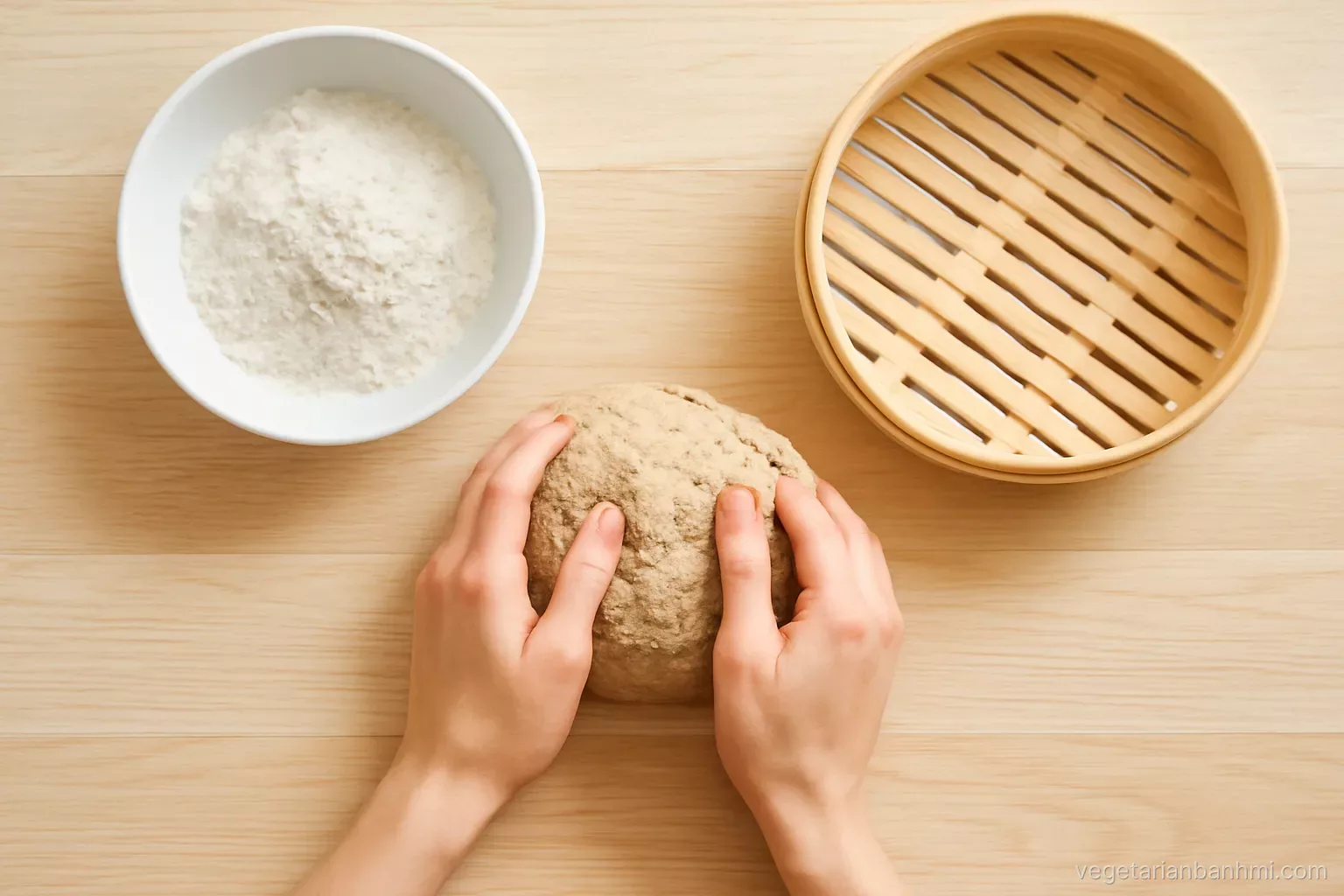
Vital wheat gluten is a flour-like powder of nearly pure gluten, sold in health food stores, supermarkets and online. Mix it with a seasoned liquid and it forms an elastic dough within seconds. A good starting ratio for 4 servings: 150 g (1 1/4 cups) vital wheat gluten, 25 g (3 tablespoons) chickpea flour or plain flour, and 160–170 ml (about 2/3 cup) liquid made of water or stock, 2 tablespoons soy sauce, 1 tablespoon oil and seasonings. The chickpea flour softens the texture; replacing part of the liquid with blended tofu or cooked beans makes it softer still.
Washed flour (the traditional way)
This is how mì căn was traditionally made, and it needs only bread flour and water. Knead 500 g high-protein bread flour with about 300 ml water into a firm dough, rest it 30–60 minutes covered in water, then knead and rinse it repeatedly in bowls of water. The starch washes out as a milky liquid, and after 10–15 changes you are left with a stretchy, stringy mass of gluten, roughly 150–200 g. It takes about an hour and gives a chewier, more layered texture. It is satisfying to try once, but vital wheat gluten is more practical for weekly cooking.
Kneading and resting: less is more
Gluten develops its elastic network as you knead. For bread you want a lot of that; for seitan, a little goes a long way. With vital wheat gluten, mix until no dry flour remains and then knead 1–3 minutes. Stop when the dough feels springy and holds together. Kneading for 10 minutes produces seitan so elastic that it bounces like a rubber ball. Resting the dough for 10–15 minutes before shaping relaxes it, so it holds whatever shape you give it instead of snapping back.
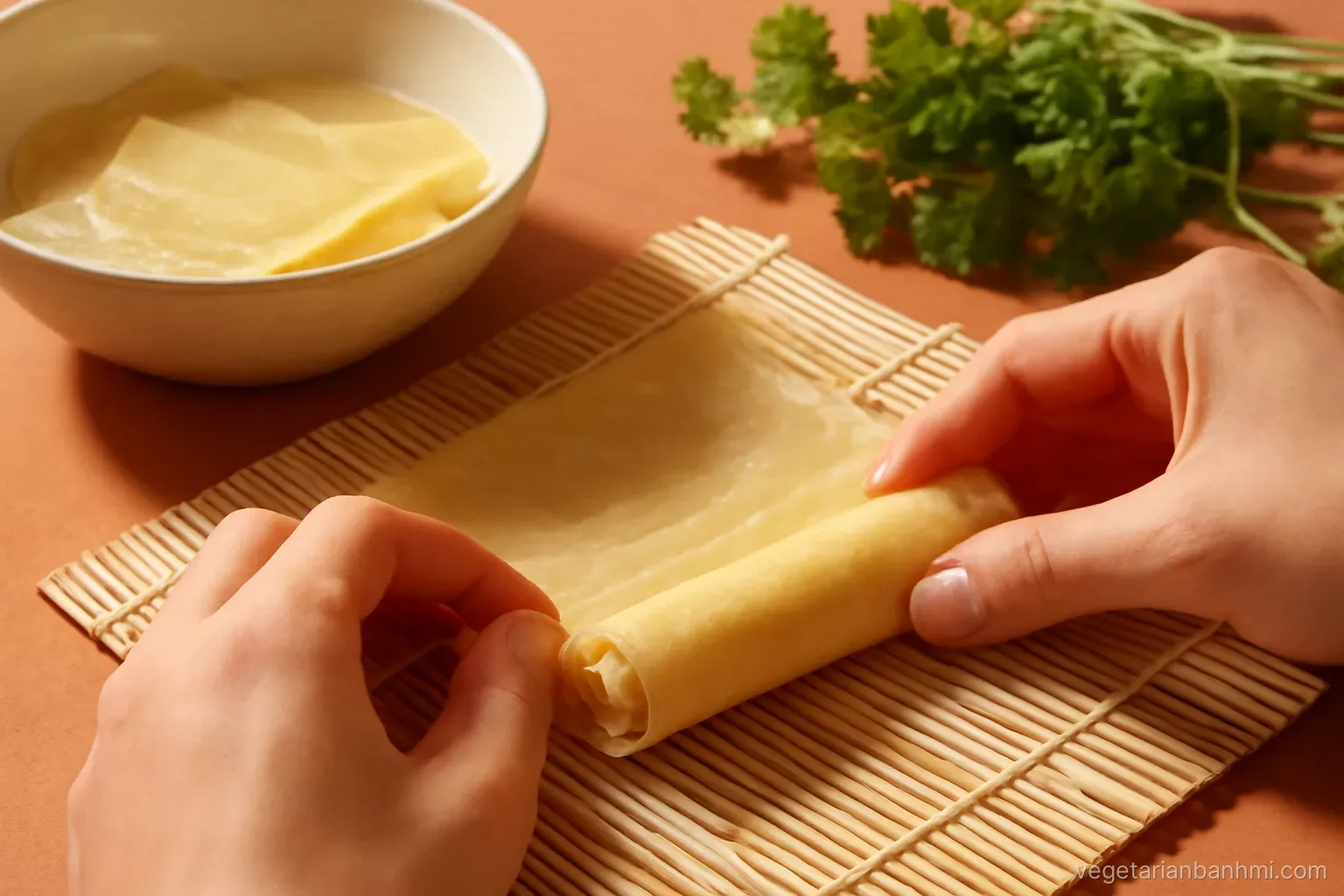
Shape matters too. For cold cuts, roll a tight log. For chunks and strips, pat the dough into a slab 2 cm thick and cut it into pieces before cooking; they will swell, so leave room. Twisting or braiding strips of dough before cooking creates a stringier, more fibrous texture.
Simmer, steam or bake: which to choose
| Method | How | Time | Texture | Best banh mi use |
|---|---|---|---|---|
| Gentle simmer | Pieces in barely bubbling seasoned broth, lid ajar | 45–60 min | Tender, juicy, slightly open | Chunks for frying and glazing |
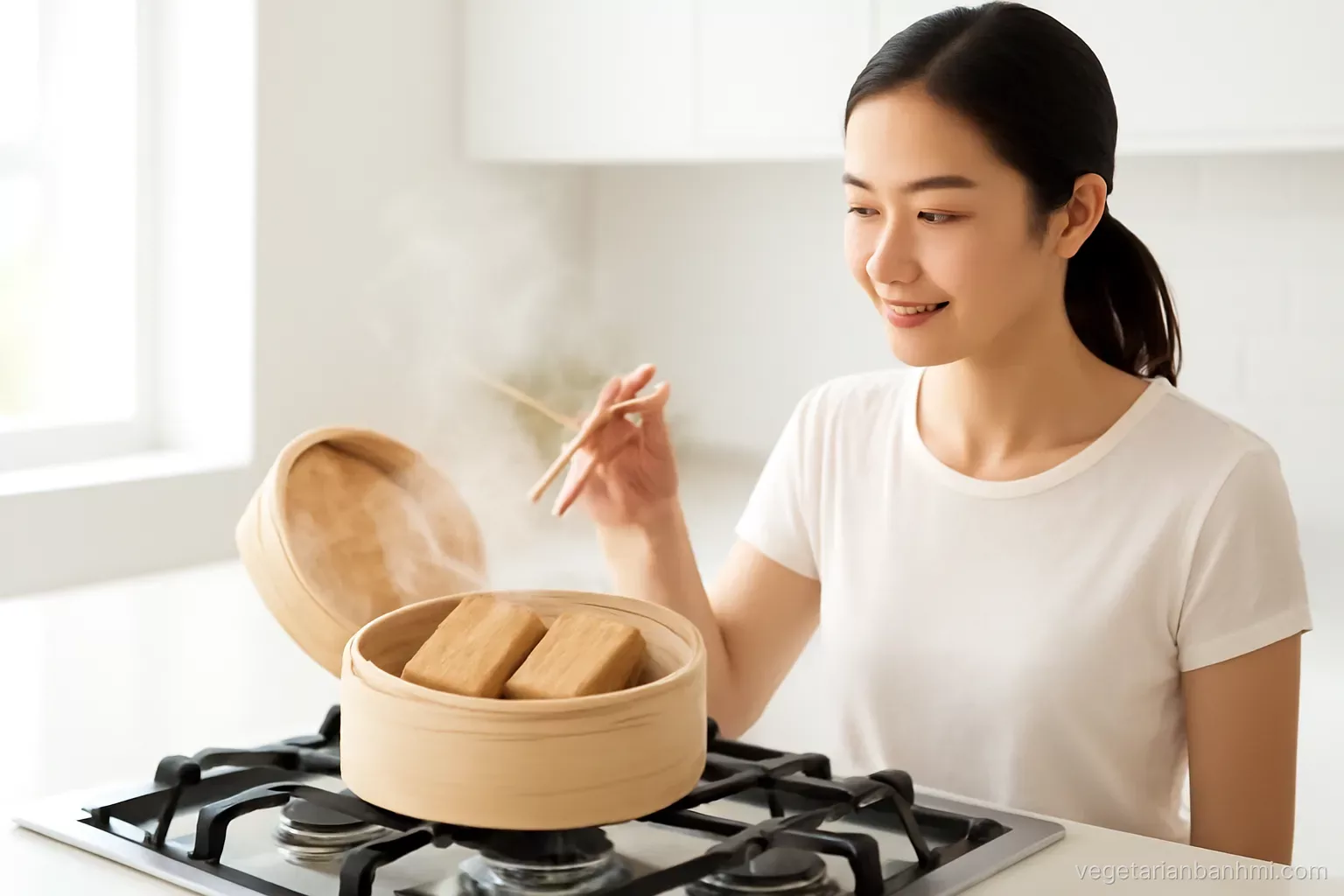
| Steam in foil | Tight log or slab wrapped in foil, over boiling water | 45–75 min | Dense, smooth, sliceable | Cold cuts, "chả lụa" style rolls |
| Bake in foil | Wrapped log at 160°C (325°F) | 75–90 min | Firm, compact, slightly dry | Thin deli slices |
| Bake unwrapped / braise | Slab in a dish with broth, covered, then uncovered | 60 min at 180°C (350°F) | Meaty, chewy, browned edges | Strips for grilled-style fillings |
| Pressure cook | Wrapped log on trivet with 250 ml water | 30 min high pressure | Dense and even | Quick cold cuts |
The key rule for simmering is temperature: keep the broth just below a boil, with only a few lazy bubbles. A rolling boil makes the dough expand rapidly and trap steam, which creates a spongy, holey, "brainy" texture that many people dislike. If you do simmer, cool the seitan in its broth; it absorbs flavor and firms up as it cools.
Turning seitan into a banh mi filling
Cooked seitan is a base; the banh mi flavor comes in the final step. These three approaches cover most sandwiches:
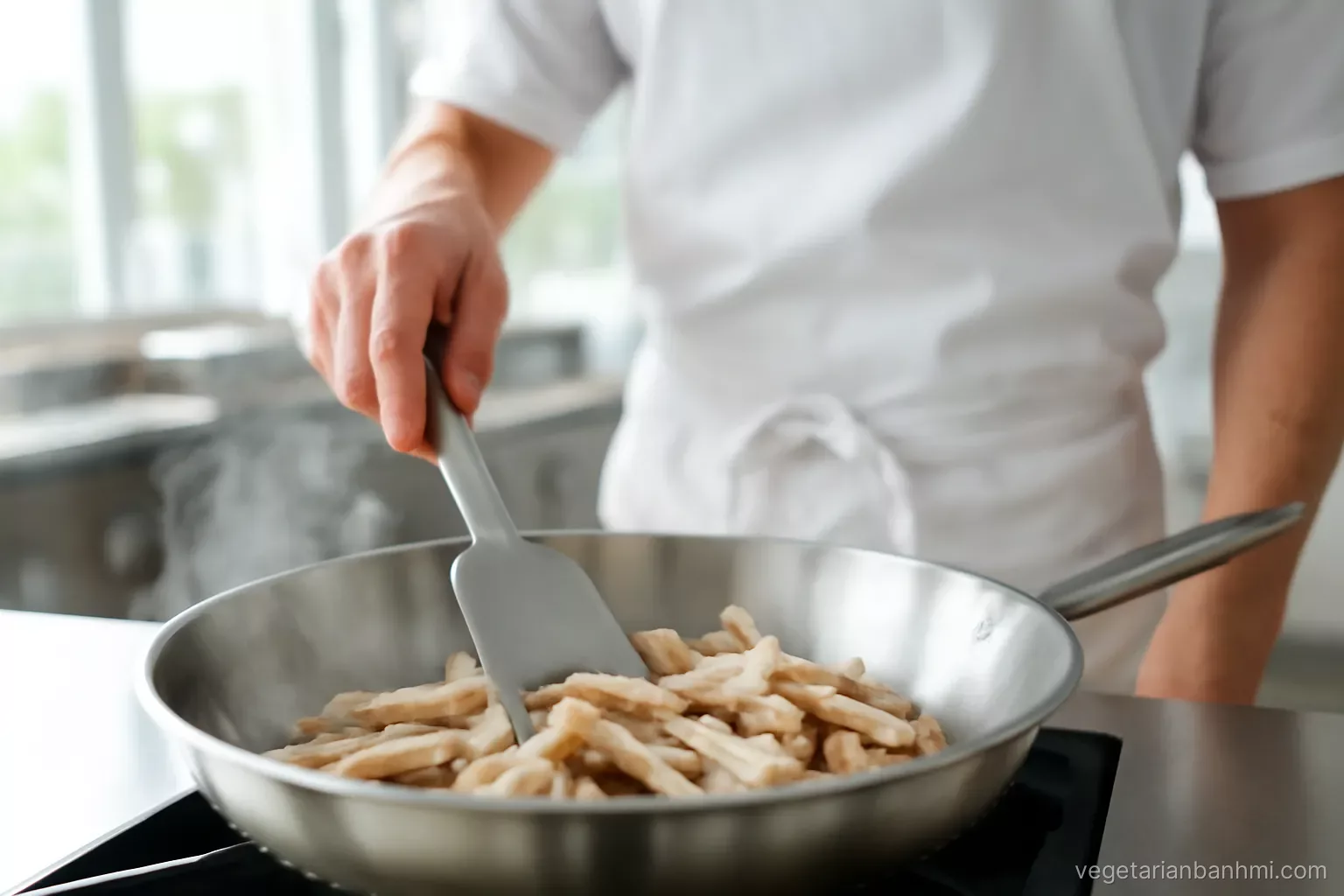
- Lemongrass-chili strips (mì căn xào sả ớt style): slice simmered seitan into thin strips, pan-fry in 2 tablespoons oil until crisp at the edges, then toss with 2 tablespoons minced lemongrass, 1 minced chili, 1 tablespoon soy sauce and 1 teaspoon sugar for 1–2 minutes.
- Grilled-style glazed slices: marinate 5 mm slices in soy sauce, garlic, a little sugar and five-spice for 30 minutes, then sear or grill until charred in spots.
- Cold cut slices: chill a steamed log overnight and slice it 2–3 mm thick; layer it with pâté, mayo, pickles and herbs. See the full recipe in our vegan banh mi recipes.
Seitan absorbs sauces and stays moist, so it is forgiving in a sandwich and holds well in lunchboxes. Pair it with something rich, such as a vegan pâté from our sauces and spreads section, and plenty of pickled carrot and daikon for contrast.
A weekly seitan plan
Seitan rewards batch cooking, because the dough takes the same effort whether you make one portion or four. A practical approach is to make a double batch of dough on the weekend and divide it: roll half into a tight log for steaming, and cut the other half into slabs for gentle simmering. While the log steams for an hour, the slabs simmer in a broth of 1.5 liters (6 cups) water, 4 tablespoons soy sauce, a few slices of ginger, 2 crushed garlic cloves and a stalk of bruised lemongrass. Let both cool in their wrapping and broth, then refrigerate.
During the week, the log becomes cold-cut banh mi for lunches, and the simmered slabs become quick dinners: lemongrass-chili strips one night, glazed slices another, and the last pieces chopped into a fried rice. Keep the simmering broth; strained, it makes a good base for noodle soup or for reheating seitan so it stays moist. If you plan to freeze some, freeze slices or chunks in portions sized for one or two sandwiches so you only thaw what you need.
Troubleshooting texture
- Spongy or full of holes: boiled too hard or wrapped too loosely. Simmer gently, or switch to steaming in a tight wrap.
- Rubbery and bouncy: over-kneaded or too little liquid. Knead less, add blended tofu or beans, and replace some gluten with chickpea flour.
- Bready or doughy center: undercooked or too thick. Cook longer, or shape thinner pieces.
- Bland: season the dough itself boldly, then cook in a well-seasoned broth or finish with a glaze.
- Falls apart: too much added flour or beans. Keep vital wheat gluten at least about 80 percent of the dry mix.
Nutrition, storage and who should avoid it
USDA FoodData Central lists vital wheat gluten at about 370 kcal and about 75 g protein per 100 g of dry powder. Once mixed with liquid and cooked, seitan typically ends up roughly one-quarter protein by weight, depending on the recipe, which makes it one of the most protein-dense plant fillings for a banh mi. It is low in fat unless fried. On the other hand, gluten protein is relatively low in the amino acid lysine, which is one reason cooks often combine seitan with soy or chickpea flour; a varied diet covers this easily. For more on building balanced vegan meals, see our plant-based nutrition section.
Seitan is essentially pure wheat gluten, so it is not suitable for anyone with coeliac disease, a wheat allergy or non-coeliac gluten sensitivity. Cooked seitan keeps 5–7 days in the fridge in its broth or wrapped tightly, and up to 3 months in the freezer. Freeze chunks in a little broth to keep them moist, and thaw overnight in the fridge.
Sources
- USDA FoodData Central – fdc.nal.usda.gov (vital wheat gluten)
- Coeliac UK – coeliac.org.uk (coeliac disease and gluten)
- USDA Food Safety and Inspection Service – fsis.usda.gov (refrigerator and freezer storage)
Frequently asked questions
What is mì căn?
It is the Vietnamese name for wheat gluten, the same food known in English as seitan. It is common in Vietnamese vegetarian cooking, often braised, stir-fried with lemongrass and chili, or shredded and fried.
Why did my seitan turn spongy?
Most often because it boiled vigorously. Rapid boiling makes the dough puff up and trap steam. Keep the liquid at a gentle simmer, or wrap the dough tightly and steam it.
Can I use all-purpose flour instead of vital wheat gluten?
Not directly. Plain flour contains mostly starch, so you need to wash the starch out first, which is the traditional washed-flour method. Bread flour yields more gluten than all-purpose flour.
How much seitan goes into one banh mi?
About 70–100 g of cooked seitan per sandwich, depending on how thinly you slice it. Thin cold-cut slices go further than thick strips.
Is seitan gluten-free?
No, it is made almost entirely of gluten. People who need a gluten-free diet should choose tofu, tempeh, tofu skin, mushrooms or jackfruit instead.
From homemade seitan to Saigon's vegan banh mi
With the right cooking method, seitan gives you tender slices or chewy strips for any banh mi. In Ho Chi Minh City, you can taste a grain-based vegan cold cut sandwich, the Chả Lát Chay, at Bánh Mì XANH, a fully vegan banh mi chain with 5 central shops open 24/7.
Explore the Bánh Mì XANH menu · 24/7 hotline / Zalo +84 923 183 183