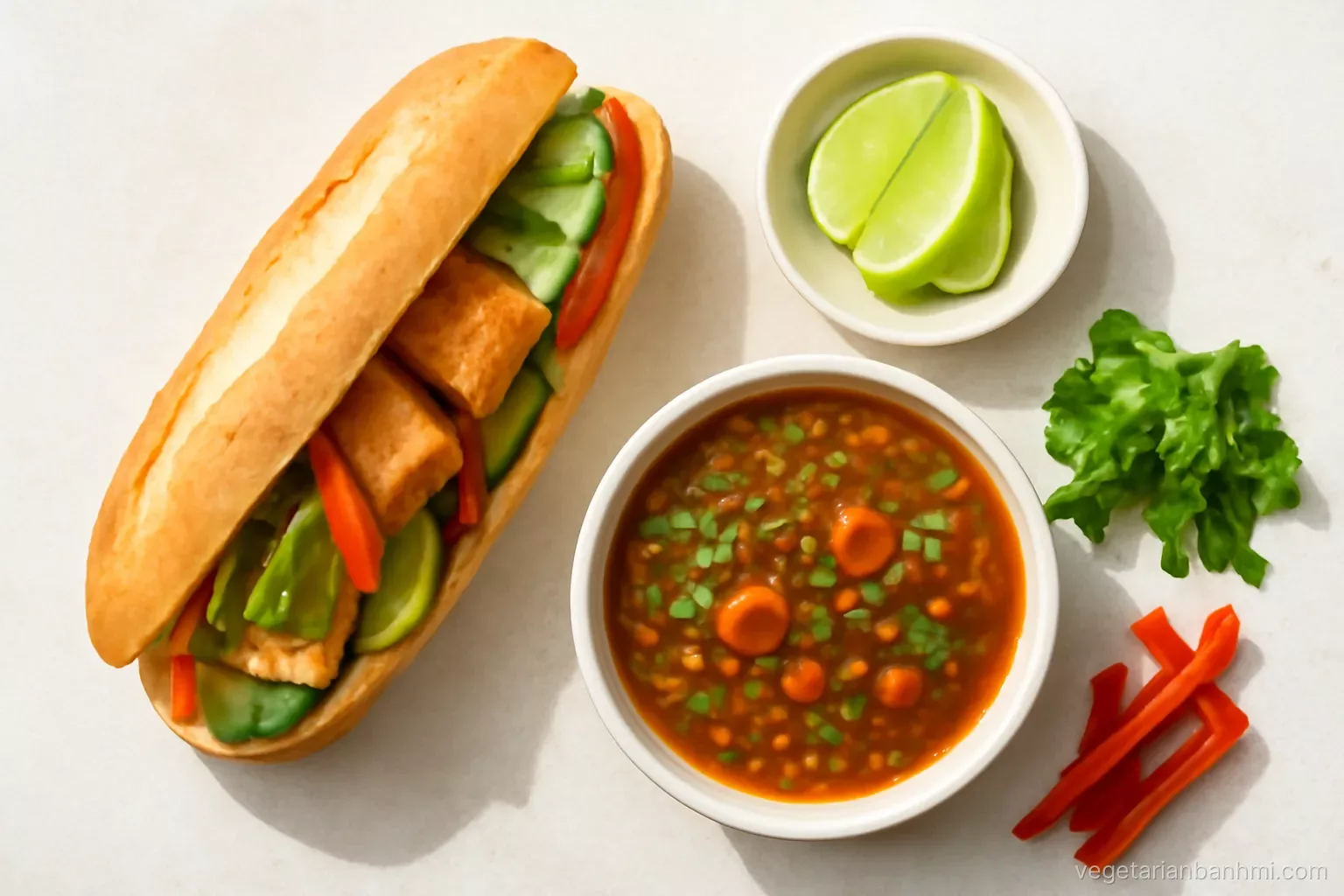
Short answer: A vegan banh mi made with about 100 g of firm tofu or tempeh lands somewhere around 22–28 g of protein, because the roll itself contributes roughly 7–9 g. A mushroom-only or jackfruit banh mi is much lower, often around 10–12 g. If you want a high-protein sandwich, pick tofu, tempeh or seitan as the main filling and add a protein-rich spread rather than relying on vegetables.
Bánh mì chay (vegetarian banh mi) has a reputation as a light snack, and in Vietnam it often is: a crisp roll, pickles, herbs, a slick of sauce and a modest filling. That is a perfectly good breakfast. But if a banh mi is your whole lunch, or you train and want to hit a protein target, the filling choice matters far more than most people realize. This guide breaks down where the protein in a plant-based banh mi actually comes from, using USDA FoodData Central values rounded to "about", and shows how to build a sandwich that keeps you full until dinner.
Where the protein in a banh mi comes from
Think of the sandwich in four layers: bread, main filling, spread, and fresh vegetables. Each pulls very different weight. The bread is the surprise for many people. White wheat bread such as French bread carries about 9–11 g of protein per 100 g in USDA data, and a typical banh mi roll weighs somewhere around 60–90 g depending on the bakery. That means the roll alone gives you roughly 6–9 g of protein before you add anything else. A light, airy Vietnamese-style roll sits at the lower end; a dense supermarket baguette at the higher end.
The main filling is the variable that changes everything. Firm calcium-set tofu provides about 17 g of protein per 100 g in USDA data, though brands vary with how much water they hold. Tempeh is denser at about 20 g per 100 g. Seitan, made from wheat gluten, varies widely by recipe but commercial versions are often around 20–25 g per 100 g. Mushrooms, on the other hand, are mostly water: raw white mushrooms have about 3 g per 100 g, and cooking concentrates them a little but does not change the picture much. Young jackfruit, the darling of "pulled" vegan fillings, is lower still at under 2 g per 100 g.
Spreads and vegetables add smaller amounts. A mushroom-based vegan pâté contributes only a gram or two per serving, while a pâté built on cashews, sunflower seeds or white beans can add 3–5 g. Pickled carrot and daikon, cucumber, ngò (cilantro) and chili add flavor, crunch, fiber and vitamins, but essentially no protein worth counting.
Protein by filling: a side-by-side comparison
The table below estimates one sandwich built on an 80 g roll with about 15 g of vegan mayo, a 30 g spread where noted, and the usual pickles and herbs. Numbers are rounded from USDA FoodData Central entries and will shift with your exact brands, so treat them as a planning guide, not a lab result.
| Main filling (per sandwich) | Filling protein (about) | Whole sandwich (about) | Notes |
|---|---|---|---|
| Firm tofu, 100 g, pan-fried | 15–17 g | 23–26 g | Calcium-set tofu also adds calcium |
| Tempeh, 90 g, glazed | 17–18 g | 25–27 g | Also about 8 g fiber per 100 g |
| Seitan "cold cuts", 80 g | 16–20 g | 24–28 g | Wheat-based, not for gluten-free diets |
| Mixed mushrooms, 120 g cooked | 3–5 g | 11–13 g | Big flavor, low protein |
| Young jackfruit, 100 g | 1–2 g | 9–11 g | Texture filling, not a protein source |
| Tofu 70 g + mushrooms 60 g | 12–14 g | 20–23 g | A good everyday compromise |
Two patterns jump out. First, a tofu, tempeh or seitan banh mi delivers roughly double the protein of a mushroom or jackfruit version. Second, the bread is doing real work in every row, which is one reason a banh mi can feel more satisfying than a salad with the same filling.
How much protein do you actually need from lunch?
The Recommended Dietary Allowance for protein set by the US National Academies is 0.8 g per kilogram of body weight per day for healthy adults. For a 60 kg (132 lb) adult that is about 48 g a day; for 80 kg (176 lb), about 64 g. Many people like to spread that across meals rather than loading it all at dinner, which makes 20–30 g at lunch a reasonable, practical target. A tofu or tempeh banh mi gets you there in one sandwich. A mushroom banh mi gets you less than halfway.
Needs differ with age, activity, pregnancy and health conditions, and athletes often aim higher. If you have kidney disease, are pregnant, are managing a medical condition or are planning a diet for a child, talk to a doctor or registered dietitian rather than working from general figures like these.
Seven easy ways to add protein without ruining the sandwich
The fastest wins come from swapping or stacking fillings, not from forcing protein powder into places it does not belong. These moves keep the classic balance of crunchy, salty, sour and fresh intact.
- Double-layer the tofu. Slice firm tofu 1 cm (about 3/8 inch) thick instead of using a few thin strips. Two full slabs of about 50 g each fit in most rolls.
- Use a bean-based pâté. Blend 240 g cooked white beans or chickpeas with sautéed mushrooms, a little soy sauce and black pepper. It spreads like classic pâté and adds a few grams per serving.
- Pair mushrooms with tofu. Keep the meaty mushroom flavor you love, but replace half of it with crisp tofu. The table shows this adds about 10 g.
- Add edamame mash. Shelled edamame has about 11–12 g protein per 100 g cooked. Smash 50 g with lime and a pinch of salt as a second spread.
- Make soy-milk mayo. A mayo emulsified with unsweetened soy milk adds a little protein compared with oil-only versions, and it tastes cleaner than many jarred vegan mayos.
- Sprinkle roasted peanuts. A tablespoon of chopped roasted peanuts (about 9 g) adds roughly 2 g protein and a welcome crunch.
- Choose seitan slices for a "deli" banh mi. Thinly sliced seitan stands in for the cold cuts of the classic bánh mì thịt (meat banh mi) and is one of the most protein-dense options.
For recipes that build these fillings properly, from pressed lemongrass tofu to glazed tempeh, see our plant-based fillings guides, and for complete sandwiches for four, browse vegan banh mi recipes.
Protein quality: is plant protein in a banh mi "complete"?
Soy foods such as tofu, tempeh and edamame contain all nine essential amino acids in useful amounts, which is why soy is often described as a high-quality plant protein. Wheat protein, which includes the bread and seitan, is relatively low in the amino acid lysine. Beans, lentils and soy are rich in lysine. Put those facts together and a tofu banh mi on a wheat roll is a naturally complementary pairing, even though it was never designed with amino acids in mind.
You do not need to combine proteins perfectly at every single meal. Mainstream nutrition guidance says that eating a variety of plant proteins over the course of the day is what matters. The practical takeaway: if your banh mi is seitan-based, it is nice to include soy, beans or lentils elsewhere in the day, for example tofu in a soup or a bean salad at dinner.
Common mistakes that shrink the protein
The most common one is the "tofu garnish": three skinny sticks of tofu hiding under a mountain of pickles. It looks generous because the roll is overflowing, but the protein may be well under 10 g for the whole sandwich. Weigh your filling once at home so you know what 100 g looks like in your roll; after that you can eyeball it.
Another is assuming that a "meaty" texture means meat-level protein. Jackfruit and oyster mushrooms shred beautifully and soak up marinade, which makes them excellent eating, but they are vegetables in nutritional terms. Enjoy them for texture and add tofu or a bean pâté if protein is the goal. A third mistake is over-frying tofu until it is mostly crust: you do not lose protein, but you add a lot of oil and calories. Pressing the tofu first gives you crispness with less oil, because there is less water to drive off.
Finally, watch the hidden extras. Sweet chili sauce, plenty of vegan mayo and sugary pickles change the calorie and sugar picture without adding protein. They are part of what makes banh mi delicious, so the answer is portion awareness, not elimination.
Eating vegan banh mi in Vietnam with protein in mind
Street-side bánh mì chay in Vietnam is often filled with tofu, mushroom-based "pâté", vegetarian ham made from wheat or soy, and generous herbs, so protein can vary from stall to stall. If protein matters to you, choose fillings built on tofu or a grain-based vegan cold cut, or order a larger size. When you travel, it also helps to think about the full day: a bowl of tofu noodle soup at dinner or a soy milk with breakfast fills in the gaps easily. For travel planning around food, our sister site vietbanhmi.com covers where and how to eat banh mi across the country.
Sources
- USDA FoodData Central – fdc.nal.usda.gov (tofu, tempeh, French bread, mushrooms, jackfruit, edamame, peanuts)
- National Academies of Sciences, Engineering, and Medicine – nationalacademies.org (Dietary Reference Intakes for protein)
- NIH Office of Dietary Supplements – ods.od.nih.gov (nutrient fact sheets)
Frequently asked questions
Is a vegan banh mi a good source of protein?
It can be. A banh mi with about 100 g of firm tofu, tempeh or seitan provides roughly 22–28 g of protein, which is a solid lunch for most adults. Mushroom or jackfruit versions are closer to 10–12 g, so add tofu or a bean spread if you want more.
How much protein does the bread add?
White wheat bread has about 9–11 g of protein per 100 g, and a banh mi roll usually weighs around 60–90 g. That puts the roll at roughly 6–9 g of protein on its own. Airy Vietnamese rolls sit at the lower end of that range.
Which vegan filling has the most protein?
Seitan and tempeh usually come out on top, at around 19–25 g per 100 g depending on the product. Firm tofu follows closely at about 15–17 g. Check the label of the exact brand you buy, since water content varies.
Is jackfruit a protein replacement for meat?
Not nutritionally. Young jackfruit has under 2 g of protein per 100 g, so it replaces the texture of pulled meat, not its protein. Pair it with tofu, beans or edamame if protein matters to you.
Do I need to combine proteins in every meal?
No. Current nutrition guidance says eating a variety of plant proteins across the day is enough. A tofu banh mi on a wheat roll is naturally complementary anyway, and you can balance a seitan sandwich with beans or soy later in the day.
Build a Banh Mi That Actually Keeps You Full
Use the table above to pick a filling that fits your protein goal, press your tofu, and stack it properly at home. And if you are in Ho Chi Minh City, compare notes with the real thing at Bánh Mì XANH, a fully vegan banh mi chain with 5 central shops open 24/7, including a spicy tofu sandwich and a big-size premium option.
Explore the Bánh Mì XANH menu · 24/7 hotline / Zalo +84 923 183 183